
I wrote this lengthy article back in 2011. That was when it was announced by a professional politician that so desired to be re-elected to a second term, he was willing to throw foul-smelling goo against the faces of Americans and see how much would stick. Americans wallowed in it, they loved it so much. So, where this quatrain says “will soon die,” think of that in terms of a bad dude here today, then – ‘poof’ – gone in an instant.
Knowing how the bottom-feeders of Internet trolling have the attention span of Joe “Labotomy” Biden, I doubt anyone will read very far into this that I spent some time (obviously) writing. I am counting on that general state of stupidity to keep this as secret as possible. I purposefully have not made this public because it can anger many factions of people. Let the United States world be angry with Israel and I.C.E, like they are these days and this post will drift slowly down to the muck and be lost.
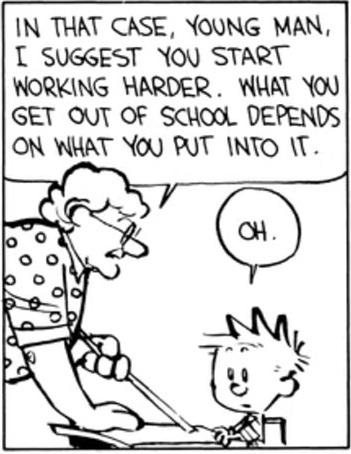
Americans are like Calvin of Calvin & Hobbes, but modern parents have raised their children to never grow up. So, like Calvin, they struggle with being educated.
The quatrain numbered as II-62 (the 62nd 4-line verse in Centurie Second) is said to translate to read:
“Mabus will soon die, then will come,
A horrible undoing of people and animals.
At once one will see vengeance,
One hundred powers, thirst, famine, when the comet will pass.”
Another translation found translates this quatrain to read:
“Mabus will soon die, then will come.
A horrible slaughter of people and animals.
At once vengeance is revealed coming from a hundred lands.
Thirst, and famine when the comet will pass.”
Another states:
“Mabus then quickly at this time will commit (mass) murder, there will come
Upon men & beasts, one horrible fate;
Then one shall see a coup of vengeance upon all,
There is a great taking (of lives), thirst, anger, when the comet shall pass.”
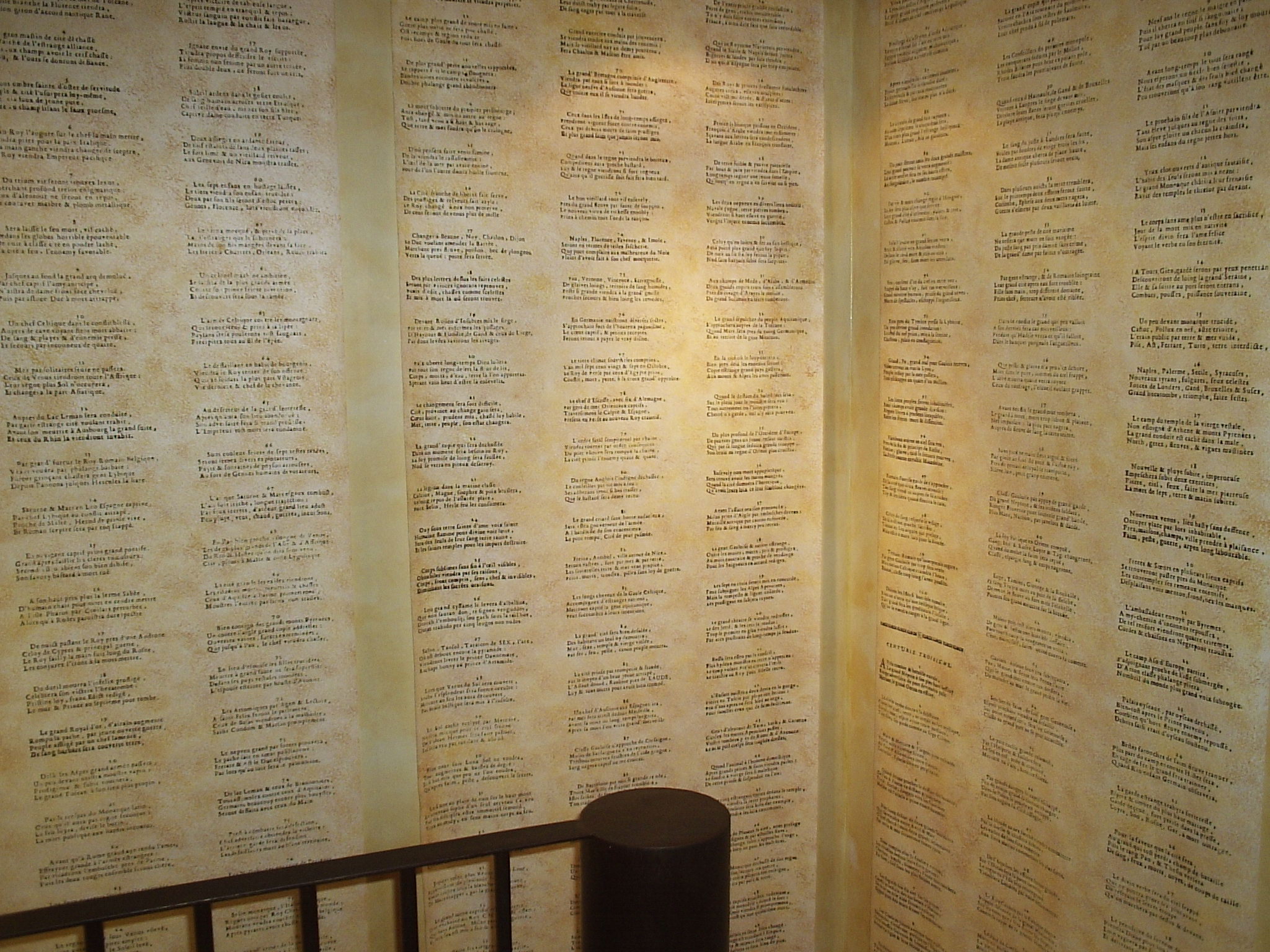
In reality, Nostradamus wrote this:
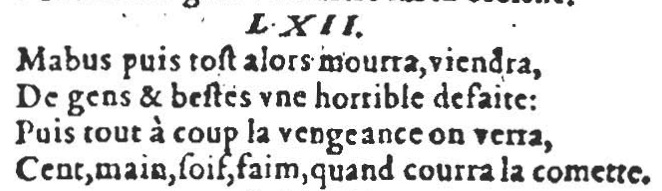
Mabus puis tost alors mourra, viendra,
De gens & bestes une horrible defaite:
Puis tout à coup la vengeance on verra,
Cent, main, soif, faim, quand courra la comete.
Now, this is obviously not English. It is Old French, and Nostradamus lived in southern France during the 16th century, meaning he wrote in a tongue native to him. This means one cannot just run around saying that Nostradamus wrote anything in English.
Second, without any need to translate anything, look at the punctuation and symbols written by Nostradamus. In line two, Nostradamus used an ampersand, which has been translated to be the word “and”, which is a liberty that requires a certificate of approval to do so. Since there are no such animals in existence (certificates of approval to change anything Nostradamus wrote to suit one’s needs), the use of “and” is a mistake. Next, there is a colon at the end of line two, which is absent in the English translation. A colon is accompanied by a different set of language directions than a comma, which means the use of a comma is incorrect. One version has taken some words from line four and placed them in line three. That has just become the fantasy of that writer, not Nostradamus. Finally, there are four internal commas in line four, but less than that in the English translations. This means the English translations have combined words to make one phrase, or series of connected words. This is incorrect.
Third, the capitalized first word of the quatrain has not been translated in the English translation. This is an indication that one does not know “Mabus” as a recognizable word in French. However, by simply rewriting “Mabus” as if it were a proper name, it implies it is a proper name. There is no proof of anyone in history (up till the times of Nostradamus) who bore that surname or Christian name. It certainly is not an indication that Nostradamus could see the names of people in the future, and name them without question. If he did this, people would not speculate about his writing “Hister” as meaning “Hitler.” Nostradamus did not specifically name anyone that would be found in the future. He only named historical characters from history or classical literature (ex.: Lycurgus, Plancus, Castor and Pollux, etc.). These names were used to reflect upon times and people of the future. Nostradamus certainly did not write so specifically that he would name the former governor of Mississippi (Ray Mabus), and anyone who makes such claims needs to produce the logically required document of authorization to make things up for Nostradamus (i.e.: a letter Nostradamus wrote explaining The Prophecies).
This means Mabus must be read as M. abus, where the capitalized M is a recognized French abbreviation for Monsieur, which means “Mister, Sir,” and refers to a Frenchman of high rank or station (Merriam-Webster). The French etymology literally means “My lord.” Randal Cotgrave listed Monsieur in his 1611 dictionary and added “Master” (Maister), which then allows for a “Teacher, a Religious leader, an Artist capable of teaching, Model of an ideal, Governor, Ruler, Victor, Superior, Chief authority, and Skilled” (to name a few presented by Merriam-Webster). When that is seen as attached to the French word abus, this means “abuse, excessive use of something, disorder, pernicious use, abused, stunned, waste, and complete use” (thanks to Wiktionnaire English translations).
This means Mabus is not a proper name, but the important description of a male that is a “Master abuser” or a “Chief authority deadly.” With that basic logical deduction done, we can carefully attempt to translate what was written, so that it CAN read like this (not limited to only this):
Commander deadly after soon at that time will decease, will arrive,
To inhabitants of a country & animals without reason a hideous overthrow:
Moreover everything in blow there revenge one will note,
Hundred, public authority, desire to drink, hunger, when will make speed the blazing star.
Before one can begin to attempt to make sense of this quatrain, one has to understand that one is dealing with poetry, even though the rhyming words of Old French have disappeared. The A words, viendra and on verra, and the B words, defaite and la comete have changed to “will arrive” and “will note”, along with “overthrow” and “blazing star.” The missing rhyme can have no effect in realizing the lines cannot be bled into one another. This will always be a poem, and therefore the granting of poetic license makes each line a purposeful statement that connects to the other purposeful statements, in a purposeful manner of order.
In the order that controls a Nostradamus quatrain (an individual prophecy of God, which connects to the whole, as The Prophecies of God, through Nostradamus), is the same order that controls anything written. Any work of logical significance states a topic or theme first, from which all the supporting details become the body of the work. A quatrain is no different, but because it is only four lines, it must state the topic or theme in the first line. Everything else in the quatrain (lines two, three, and four) is the body, which supports that theme. However, with the poetic element needing to be considered, especially as order that is purposeful, there is one other caveat.
The caveat is related to the ABAB rhyme scheme. In that rhythm, the first A (line one) is where the theme that controls the flow of the whole quatrain is found. Instead of the first B being wholly supportive of the theme of the first line, it plays a role of balancing that A theme with a B theme. The B theme is based off the information stated in the first line (the first A), but it states a secondary theme, which acts to isolate the main theme, as one specific event in history (past, present, or future), as opposed to one event that has several similar events that make choosing one difficult. The use of a secondary theme becomes an important limiting element to the overall theme; and as such, the second A and B lines (lines three and four) become supportive to two themes.
This means the main theme (the first line, rhyme A) is supported by all subsequent lines. The secondary theme (the second line, rhyme B) is supported by the other B line (line four), while leading to the second A line, which is directly supportive to the main theme, while being relative to the secondary theme. The third line (the second A rhyme line) then leads one to the final line, along the main theme of thought addressing one prophesied event (as a series of identifying markers, which can be subsequent relative events). The last line (the second B rhyme) then directly supports the secondary theme, while being relative to the third line, and the overall main theme. Each line has a very specific role to play; and just as a poem has reason for lines, rather than a paragraph of prose, one does not have permission to restate Nostradamus as prose and still call it something “Nostradamus said.”
With that basic training in how to read a quatrain of Nostradamus’, one can readily see that the first word of the first line is “Mabus”. This word is not a proper name, and it is not a clean word in French. Simply because the rules of language commonly agree that a new line begin with a capitalized first letter, as one would do in English to begin a new sentence, the first word of a new line is not a signal that a proper name has been introduced. As such, no one reading this has interpreted the last sentence as being about someone or some place named “Simply”. However, because line one introduces the main theme statement for this quatrain (II-62), one must determine an educated guess for how the letters, “M-a-b-u-s”, can become a word of meaning, which will unlock the meaning to the whole prophecy.
When one looks at the translation I have presented, one sees that I have removed the word “Mabus” and replaced it. I have, in fact, replaced it with two words, “Commander deadly”. I chose to combine “Commander deadly”, but any combinations can be viable, with all combinations possibly being correct.
Still, because “Mabus” is not a recognizable word in French (nor Latin), it could be an anagram. I prefer to use anagrams as a last resort, having found maintaining the order of the letters written, to become a combined form word from either French or Latin to be the first option; but in some cases, an anagram cannot be avoided. In the case of “Mabus”, it easily becomes “Musab”, which is a proper name, one from Islamic history, which has become a common name for Muslim males. The use of this option depends on the information that comes from the rest of the words in the quatrain; and that would require a setting where a Muslim (the only one that could be identifiable through some relationship to the name Musab) is the focus of the main theme.
While a word that begins a statement cannot be assumed to be a proper name, it can be seen as an important word. This importance is denoted through capitalization. Every word that Nostradamus capitalized is important, such that only important words begin the lines of the quatrains. This rule is steadfast, always in place, even when an article, preposition, adverb, or adjective is the capitalized first word. With this rule understood, one can see how the translation possibilities of “Maistre” are indications of an important person. The title is important, but “Mabus” identifies one who “abuses” that position, to such a degree that the acts of the person become identified with the title.
With this in mind, look at the translation that I first posted, “Commander deadly”. Next, fit the combination “Chief ruler waste” into the important first position. Then try “President misspending”, or “Overseer abuse”. All these combinations paint a picture of an important leader, one who has used the talent of a “Master imposter” to become a “Governor” “of inhabitants of a country” (from the secondary theme important first part, “De gens”), who becomes known as a “President misspending”. Think about that for a while; and realize that Nostradamus is not capturing opinion, but rather truth (prophecy only deals with truths). However, the truth is always known, even though it may not be readily provable, because God always uncovers sins through thoughts to expose them, which in turn becomes the opinions “of people” who talk loudly.
When one takes the words of Nostradamus and runs them across the lips like one does normal words processed by a reading-friendly mind, one is missing the story being told. This is evident in the fact that one cannot generate a clean sentence from the translation that I have given. It breaks down in the process, such that the words cease to be able to make a fluid stream of thoughts as words. The reason it does not read like a sentence is it is not a sentence as our minds normally process the written word. Each word of Nostradamus must be looked at individually, just as if it is a one-word statement, as we can see “Mabus” turned out to be.
The next word, “puis”, can translate to mean, “then, after, moreover, or furthermore,” but in some cases it means, “draw well, or pit”. With these translations, one can see that a title already earned comes before something else, while also being an indication that one would not be seen as having the capability of creating that title until “after” gaining the position of leadership.
The word that follows, “tost”, means, “quickly, presently, swiftly, suddenly, or soon”. This is relative to the change that is to occur “then”, following the “deceit” or “misspending” of the “Master imposter.” This word also guides one to see that “after” the “abuse”, which will occur “swiftly”, something else occur in the near future, or “soon”.
The next word, “alors”, can be another form of the word “puis”, as both can translate to state, “then”. This is another word that is directive of time into the future, such that “tost” can mean “presently”, leading to a moment “then”, as next beyond “presently”. As such, the word “alors” is best translated to state, “at that time”. When things are seen to be moving “swiftly” and “quickly”, “then” will be the “time”, “at that time”.
We then come to the first of two future tense verbs coming one after the other to end the main theme line, with a comma between them, indicating that one future action will occur before a subsequent and related second action. The first verb is “mourra”, which is the future tense of the verb “mourrir,” meaning “to die, to decease, to depart this life, to perish, or to decay.” This word is most reflective of the action of death, where life ceases to be, in the physical sense, of one human body. This singularity misses the metaphoric usage, where something that existed before “then” transitions through a state of degeneration, to the point it can no longer exist as it had before, such that “at that time” of greatest change it “will die” and be transformed. What once was will be no more.
The second future tense verb, which is stated after a comma’s mark of separation and pause, is “viendra”, which is the future tense of the verb “venir”, which means, “to come, to arrive, to approach, to happen, or to chance.” Obviously, if some physical body was “to die”, that body would not be able “to come” anywhere, or “arrive” any place on its own. As such, the entity that “will decay” will change to a new state that “will happen”. The body will beincapable of keeping that future change from “approaching”. The “decayed’ state will open the door of opportunity, where there “will be a chance” to take advantage of the death, by the “arrival” of someone else to lead.
Now, with all the words of the main theme analyzed individually, and somewhat tied together, so a fluid stream of thoughts can create the image of an event unfolding, we are left with the nebulosity of “Mabus” “will die, will come”. This means that the form of “death, or decay” (the action verb) needs to be relative to “President misspending” (the subject). When the words “President misspending” are used, the “death” “will be economic”. When the words “Chief ruler abuse” is used, the “death” “will be political”. When the words “Governor disappointment” are used, the “death” “will be governmental”. When the words “Teacher deceit” are used, the “death” “will be educational”. If all the above are allowed to be read into the context and meaning of the main theme statement, the “death” “will be societal”. All the parts of a working system of rule, will be led to ruinous change by one important “Master” of “deadly”.
This is the main theme of this quatrain, from which all other lines are supportive. Simply by knowing this meaning, which is rather limiting, in that it tells of a time when one leader will destroy a country through gross mismanagement. The acts of this person will not be accidental, but instead by design. From this knowledge, one can flip through the history books to see how often this has occurred since the days of Nostradamus. All those possibilities need to then pass the test of the supporting information that comes from the next three lines. By the timeline four is analyzed, only one time in history will be clearly evident. If there are no times of history when such a leader led a country to ruin, then this quatrain can be believed to be a prophecy of God that such a time “will come”.
Now, the secondary theme must be seen as a separate theme, which does not need to directly relate to the main theme. As long as it supports the main theme, as a relevant separate event that is a direct result of the actions of the first line, it is free to focus on an entirely different point of view or perspective. Still, it does connect to the main theme, in particular to the last word written in the main theme. Thus, in quatrain II-62, there is a direct correlation to line one’s “will come” and line two’s first two words, “To people”. However, the words “De gens” can also translate as, “From folk, With inhabitants of a country, Of nations, or From followers of a man”. Any of those combinations are viable translations, and all can play a role in assisting one to understand what “will come, will arrive, will approach, will happen, and/or will chance”.
When the main theme is identifying a “Mabus”, which is a “Chief ruler” known for “abuse”, those being so “abused” are then identified in the secondary theme. This supports the theme of a “President, Commander, Governor, or Overseer” as being the head “Of people”, and as having “come From” the masses, as would be the process in a form of government where the “people” elect one leader for all the “people”. This is then identifying the overall body that “will decay, will perish, will die”, in a figurative sense, due to the leader’s “deceit” and “misspending” the powers allowed by the “people”.
With this connection understood, where the secondary theme has supported the main theme statement, so the main theme is further clarified, “De gens” then becomes the primary focus of the secondary theme. This could translate independently as “Of inhabitants of a country”. This becomes the subject of the secondary theme, but this leads to an ampersand. An ampersand has special values in the writings of Nostradamus, such that using it to denote the word “and” is the least of those values, although that conjunctive word it part of the intention. Primarily, an ampersand is a signal to be prepared to encounter a separation from what has just been stated, with the following word(s) being significant. As such, the word that immediately follows an ampersand has the power of acting like a capitalized word, in the application of importance placed upon such a word.
The word that follows the ampersand is “bestes”. This word is in the plural case, which matches the plural of “gens”. The importance that this word carries is to identify the “people” or the “inhabitants of a country”, or the “followers of a man”, relative to “Mabus”. These “people” are now being identified as “beasts”, which must be seen as figurative language, matching the use of metaphor in line one, where “to die” was figurative. When the Latin root for the French word, “bestes” is seen as “bestias”, one can see how the figurative is defined through a translation such as, “animals without reason, brutes, or dull fellows”. As human beings are “animals”, from the Animal Kingdom, “people” are “beasts” in one sense. By seeing the power of reason (brain capacity) being what separates man from “beast”, one could translate “bestes” to figuratively to be stating, “people acting without thinking”. Again, this is relative to the breakdown of a society, where the “people” are forced to experience the “death’ of their known way of life.
This old way has been replaced by “one” that is “horrible, terrible, detestable, abominable, and/or hideous”, in comparison. This new way is so “horrible” that it has turned “one” nation into “one” where the “people” have lowered into a state where they act like “animals without reason”. The “brutes” act together as “one”, acting out against those who are weak. Those who are led by morals and reason (the old ways) see the change as “detestable” and “abominable”.
To see these changes in the “people” signals their “defeat”. The “nation” has “come” to the state of “overthrow”, with its social order “ruined”. The ways of before have been “undone” and “destroyed”, all translations of the French word “defaite”.
Now, as I mentioned earlier, the ampersand can now be seen as an abbreviated way to write the conjunction “and”, although the two phrases of the secondary theme line are primarily important as identifying the subject (To inhabitants of a country), followed by the conditions the subject find themselves having to deal with. After this understanding has been reached, the secondary theme then combines to make one statement. That statement involves both “people AND beasts”. With the country in turmoil and weakened by the “abuse’ of a leader, there “will come” some form of “destruction” that will not discriminated between what living creatures it “destroys, or ruins”. Something of this indiscriminate level could be poison released, bombs dropped, or diseases that affect both humans and animals. If the “people” are fearful of attempting to help those in need, due to the “chance” of “brutes” attacking them, the “ruin” will grow.
When one sees line two as a combination subject, as “people AND beasts”, this is then the result of what “will come”, which ended line one. This is then prophesied to “happen” “at that time” “then” “swiftly” “after” “Commander deceit”. Every creature of “one”, “From nations AND brutes”will experience “a hideous overthrow”. A world that sees “one” country as either the leader of “nations AND animals (nations) without reason” will see their greatest ally, or their greatest foe, “one” that will be greatly changed. All will be able to see how “horrible” this change will be, as all are connected as “one”, in an ecology of the “one” earth, such that is something has “ruined” “one”, all will be equally “undone”. To bring about the “defeat” of “one” giant, where elements will be used to see that “one” “destroyed”, all being “one” will end up “defeated”.
It is at this point that one must place focus on the punctuation that ends the two theme statements. The secondary theme statement ends with a colon, which is a symbol that leads one to expect to find following an example or clarification of what has just been stated. That which has immediately been stated is a great “defeat” that will affect “one”, on a level that can only be seen as “brute”-like, from figurative “animals without reason”, directed “To inhabitants of a country”. This “defeat” is one that has been predicted by men of anger, who have said it “will come”. This “coming” has been dependent on making “one” of great power weakened from within, so it is unable to defend itself from being “ruined”. The “defeat” will not be through a war of attrition, with a slow loss of power, but instead “will come” “quickly” and “suddenly”, through the surprise elements of war. That “one” “will happen” “at that time” of weakness to “come” into a trap, “after” having been significantly weakened by a “President misspending” the assets of that “one”, a “Chief ruler” who had been elected to protect and serve. As such, line three can be expected to give information that clarifies, or lists as an example this scenario.
The capitalized first word of line three is the second use of the word “puis”, which was the second word of line one (the main theme statement), following “Mabus”. The word “puis” is most frequently translated to mean, “then”, but can also be used to denote, “moreover, furthermore, and after”, while having a secondary noun use, as denoting a “draw well, or pit”. In the systems that are consistently applied for one’s understanding of Nostradamus, multiple uses of the same word, no matter how small (such as the prepositions “de” and “à”, or the articles “le” and “la”), have multiple translations, such that if one use of “puis’ is read as “then”, then the second use would be reading differently.
Since this second use of “puis” is capitalized, it has a meaning that indicates importance. Following a colon, it states an important element that acts to transition to an important clarification of “defeat”. In the respect that the secondary theme line used the word “one”, a translation of “Puis” as “Moreover” means, “beyond what is stated”, or “in addition to what has already been said.” In this sense, it clarifies the colon as additional important information, while also being a way of importantly stating, “Furthermore”. As line three is a continuation of events that naturally follow line two, and also add supporting details to the main theme, as the second A rhyme, line three is beginning by making an important statement of an “After” event, which helps clarify the meaning of “defeat” and “destroyed”, while also stating importantly what “will come” to be.
This important transition leads to the word “tout”, which translates to mean, “all, whole sum, and/or everything”. This is a clarification that “one” is indeed “Moreover” than simply “one” “inhabitants of a country”, but “all” “nations AND animals” of the “one” earth. While the “overthrow” will be directed towards “one”, the “one” led by “Mabus”, the “Master (of) abuse”, it will influence “everything”. The effect will not be so much immediate, as it will be to the “one”, “Of people” who will be misled to weakness, who “suddenly” “will come” incapable of defending their greatness. The effect on “everything” will come significantly “After” the initial “defeat” of “one”. It will be as if “everything” will have been thrown into a deep “pit” of despair. A capitalized “Pit” would then be of a Biblical nature, as the “Great Abyss”.
This brings one to the French directional preposition “à”, which can translate to state, “in, with, at, to, from and/or (in telling time) till”. This is directing one to see how “everything” is “in” both the “Pit” and the “After” effect of “one” being “ruined”. It means “all” are in the same boat “with” the “one”, both facing the “defeat” that war brings to “all” who are peaceful, and to the “whole sum” of societal order. It means that “everything” “will decay” to the point of anarchy. Everyone is caught up “in” this breakdown.
The next word written is one that is used commonly in English, from its French root, which is “coup”. This use is a shortened form of the French “coup d’etat”, which is defined as meaning, “stroke of State”. When one uses the word “coup” in an English statement, it usually is meant to express a governmental “overthrow”. In that sense, the use of “coup” in line three is repeating the translation value the French word ‘defaite” can have, which ended line two’s secondary theme statement, and was followed by a colon. In actuality, the word “coup’ can also be used to mean, “blow, knock, thump, hit, and touch”, in addition to “stroke”. In the flow of words found in line three, “all” will be found to be “in” the “Pit” created by the “stroke”, or “blow”, or “hit” made against the “one” “inhabitants of a country”, foretold to “come”, “After” “Mabus” has caused the “sudden” “death” of a mighty “nation”, by “Master deceit” keeping it from an ability to defend itself from attack. This then becomes a mighty “blow” that has global impact, or a residual nature.
At this point, Nostradamus wrote the word “la”, which is typically seen as the feminine article, “the”, which is placed before a feminine gender noun, as is the case with the word that follows it, “vengeance”. To see this as simply meaning “the”, nothing can be gained on an interpretative level, other than be forced to look at the next word. This is not the way “la” should ever be read in The Prophecies, when it stands alone, as a separate word. When Nostradamus intended the use of the article meaning “the”, either “la” or “le”, he would join it with the word it indicated, such that one could read “the vengeance” from “l’vengeance”. As such, whenever one encounters the word “la” in The Prophecies, it must be interpreted alone as “là”.
One must remember that the lack of an accent mark allows for one to place an accent mark, if an accent mark enhances one’s ability to make a logical interpretation. The lack of an accent mark means that “la” can still mean “the”, only not in the primary interpretative sense. Only when Nostradamus would accent a word, such as finding “là” appearing in print, is one limited to how those letters can be read. If published with an accent mark, “là” can only bear the meaning of “là”. As such, the French word “là” is not an article, but instead an adverb of place. In the 1611 Old French to Old English dictionary mentioned, it translates as, “there, thither, yonder, and/or in that place.”
This translation adds to the flow of meaning all of the words have maintained, such that the “blow” effecting “everything” is relative to “one” “hit” that too place “in that place”, or “there”, where the “one” was initially “hit”.
This awareness then leads one to find the word “vengeance”, which is then explaining why the “blow” against “one” took place, which in turn, “After”, would effect “all”. This word is very important, coming in line three, as it is key to supporting the main theme of “President misspending”, which would cause a society to “perish” and “decay” “swiftly”. This leader “will come” because of “vengeance”. The word is a form of the French word “venger”, which means, “to avenge, or to revenge”, such that “vengeance” is a state where “revenge” exists as the motive. The English definition of “vengeance” includes the meaning of “inflicting punishment in return for wrong committed, as well as retribution.” The word implies “great violence or force, and to an extreme degree.” This means that the acts predicted (by the anger of men) to “come”, which would be purposeful “hideous” acts, designed to bring about the “ruin” and “overthrow” of an enemy seen to have caused wrong, will be because of “revenge”. These acts will spread to have an effect on the “whole sum” of the world’s “people AND animals”.
The following word is “on”, which only has one meaning, “one”. This is a repeating of the word found in line two, “une”, which also means, “one”. The difference between the use of “on” is it is typically used in general terms, identifying “one” group of human beings. Thus, the example of its use, as shown in the 1611 dictionary, shows, “on dit’ to translate to mean, “men say”. The use of “une” (the feminine form of “un”) is numeric, as an indication of “a” person, place, or thing, as being “one” of such. This means the use of “on” is relative to “one” “people”, found written in the secondary theme, who are the “they” of “all” “people”. In effect, the use of “on” can mean “you”, which is then “all” who will read these words, as “they” will be the “people” of this future prophesied (by God, through Nostradamus) that “will come”. As such, “you” will know of this “blow” of “vengeance”, and “all” of its global impact.
The last word in the third line is “verra” which is the future form of the verb “voir,” (also “veoir”) meaning, “to see, to behold, to view, to look, to perceive, to oversee, to mark, to note, to heed, to observe, to regard, to examine, to search into, to consider of, to devise, to survey, and/or to find some means for.” As such, this means there will be physical characteristics of this “blow”, and its “whole sum” effect on “everything” “in” its path. It will be so visible that “one” “will examine” these effects on many levels. However, as a prophesied level of destruction that will be known “to come”, one will also be able “to regard” these effects as those warned by God, through “all” the prophets, as the result of not regarding the teachings of Jesus Christ. It will be possible for “you”, as “one” of “all’, “to see” how “everything” brought upon the world out of “vengeance” is because wrongs were allowed to go unpunished, so that the wronged will have reacted so violently the end of “all” will be at hand. In that sense, the “one” “defeat” that “one” “will witness” will be the “one” event preached about since Jesus appeared to John and had him write The Revelation, also known as The Apocalypse of John.
This leads one to the final line in quatrain II-62. Since line three ends with a comma, one is able to discern that the information in line four is a natural flow of information, subsequent to that found in line three’s final word, “will see”. It then is telling what “one”, or “you”, “will observe”. Line four is also a continuation of line three, in the sense that line three followed a colon at the end of line two. This means that line four is further clarification of what will constitute a “horrible defeat”. Still, line four, as a line of quatrain II-62, will be true to the main theme of a “Chief ruler” bringing “disappointment” “To inhabitants of a country”, such that their way of life “will perish”, as line four will assist in telling what “will come” to be.
In that line of thought, where “one” “will see” what is “to come” before it happens, which is another facet of God ensuring that his “people” will have prior warning, this will not only be through the understanding of prophecy. This in-depth breakdown of how to understand The Prophecies, such that being able to “see” how the future end of the world “will come”, will not come in a vacuum. It only “will come” “After” “people” will have developed the capacity to “destroy” the “whole sum” of the world, and “everything” “in” it. Those times arrived when the atomic bomb was invented and since has proliferated through efforts to become the strongest nation of the world. Further, this future will not come without those who have been wronged having made known their threats of “vengeance”. Those times have already arrived, “Moreover” when the twin towers were “destroyed” by a strategic plan of “one”, who planned such an “overthrow” of the “one” causing wrong. There have been public statements for “all” to know, which have stated the planned punishment of “all” the “inhabitants of a country”, who have failed to step up and control their “Governor fallacy”. In short, Nostradamus simply confirms what is already known to be coming, but from an “all” “seeing” perspective.
This brings one to the capitalized first word of line four, which is “Cent”. In French, “Cent” only has one meaning, which is “Hundred”. The word “Hundred” is usually read as “one hundred” or “a hundred”, meaning a singular count that is a “hundred” in total. A comma then follows this number, such that it stands alone between the comma that ended in line three, and before the comma that separates it from the second word of line four. As such, “Hundred” is making a statement all by itself, in reference to be after what one “will see”, supportive of a “abominable overthrow”, and relative to the theme of what “will come” “quickly”“after” those led by “Mabus” “will die”.
When one word makes a complete statement by itself, all aspects of that word must be considered. In the case where one word only has one translation, it is very important that its translation is examined to the full scope of definition, in all contexts of usage. In the case of that one word being an important (capitalization indicates this) “Hundred”, one has to see this as more than a specific cardinal number, telling the reader how many of something one should look for. While cardinal, ordinal, and nominal versions of “Hundred” can be seen in some form as adding to the depth of this quatrain, seeing it as a percentage adds a new important light.
When one speaks of percentages, the greatest (most important) percentage is a “Hundred” percent (100%). While it can be said that an infinite number of higher percentages can be stated, the reality is that one “Hundred” percent means “all”, or the “whole sum”, or “everything”. Once that threshold has been achieved, no other number percentage matters. In the case of “death” “To inhabitants of a country”, once one “Hundred” percent has been killed there are no others left to change the percentage. That is unless one then changes the total to include “people AND beasts”. It would be so important as to announce a state of “All out” war, with nothing held back. Still, once “everything” living is “destroyed” there is nothing left to add to that one “Hundred” percent number. In this sense, the capitalization of one word fits the flow of thought in this quatrain and is supportive of the other verbiage.
Still, there is another option that can be looked into, when one is looking for more than one translation. When reading Nostradamus, including his quatrains and letters concerning The Prophecies, he wrote in two languages that are commonly known to be languages. Those languages are French and Latin. Nostradamus’ use of Latin is primarily connected to words that elevate to a religious level of meaning, he used Latin quotes from the Bible, often those related to Jesus. Latin thus adds higher importance to the translation. The word “Cent” is capitalized, indicating a level of importance, which makes it a good idea to check Latin and see if there is a viable word, from which “Cent” is a root. We can look for such a root because “Cent” is derived from the Latin word “Centum”. In the case of “Centum”, it is used to state, “any indefinitely large number”, according to the Notre Dame Latin Dictionary and Grammar Aid online. However, another Latin word could also be considered.
The Latin word to consider is “Cento”. This word can also be written as “centonis”, and in a way is related to an “indefinitely large number”, as it translates to mean, “patchwork, a blanket or curtain made of old rags sewn together, or rags in general.” These are examples of a large quantity of small pieces tied together to make a whole; and it is a way to get full use out of something, before it becomes completely useless. In other words, a “Cento” means getting a “Hundred” percent out of what is left. Such a translation would add to the understanding gained from “Hundred” percent, because this would indicate a “whole” area is covered, with “all” effected, but with “patches” of “people” still surviving, finding each other for safety in numbers.
While those traditional translations of “Cento” are universally accepted, such that the word “cento” is commonly used to denote a collection of poems or other writings, by various authors, while also denoting a conglomeration, where mismatched parts are thrown together, there is a more modern usage, again provided by Notre Dame. That translation of “Cento” is said to be a usage relative to war, where they state the word means, “coverings to ward off missiles or extinguish fires.” This adds to the understanding, while also helping to explain why there would be “patchwork” groups that could be quilted together. These groups will have been protected from attack, and more able to recover due to being prepared to react to attacks.
This capitalized stand-alone word then leads to the first of three more stand-alone words, each separated from the others by commas. The word following “Cent” is “main”, which in French typically translates to mean, “hand”. This translation, as a stand-alone statement, makes no sense. This is why most translators of Nostradamus have pretended the comma did not exist and combined it with “Cent” (which also made no sense alone, to them), so it could be read as “One hundred hands”. That too is meaningless, when one sees how one has been led to see the Apocalypse unfolding before one’s eyes, because such “destruction” would have to come from a greater number (cardinal) of “people” with “hands”. Just as one found with the word “Cent”, there are alternative translations.
While the modern use of “main” has dwindled down to it only having meaning as “hand”, there were other possibilities in the 16th-17th centuries. The 1611 Old French to Old English dictionary shows that “main” can translate to mean, “the grapple of a ship, the iron hook that holds the bucket of a well, a three-fold hook used by wine pressers, a quire of paper [less than a ream], and [in Law] public authority or public power.” These options make the one word “main” be able to stand alone and make several statements, one which makes a clear connection to line three’s “Puis”, where when seen as a “Draw well”, “main” becomes the connection that allows one to dip for water. When widespread “ruin” is the topic, covering “everything”, “Hundred” percent, finding ground water would be a challenge for survivors, particularly is surface water had become poisoned in any way. However, I see that as secondary, although certainly a viable side effect of “Total” War.
When one sees “Cent” as an abbreviation of “Cento”, and representing a “Patchwork” of survivors, beyond simple survival (food, water, shelter, rest, defense, etc.), some order of hierarchy is required to ensure that all groups are working together, rather than against one another. In this sense, “main” is telling that there has to be those who will step forward and “publicly” bring those who are lost and scattered into a rag-tag group of organized human beings. If one has ever watched a survivor show on television, such leaders are absolutely necessary to maintain the focus of the group, for the common good.
The next stand-alone word is then supportive of “main” and “Puis” being related to drawing water out of the ground, because “soif’ translates to mean, “thirst, drought, and desire to drink.” What becomes important to realize at this point is the order of the words being laid out as stand-alone statements. The first words occur in time before the following words. As such, while “main” can be an “iron hook that holds the bucket of a well”, that would require a leader being chosen, who would make sure such instruments for wells were devised. The word “soif” is more likely making a statement about a growing issue, related to rain. Since rain is what sources ground water, poisoned rain can contaminate those existing clean water sources, making it more difficult to find good drinking water. This would drive an increased “desire to drink”. If the rain ceased to fall naturally, meaning a “drought” made rainwater scarce, or dwindled ground water wells, “thirst” would be an immediate problem with severe consequences. One can survive without food longer than one can survive without water.
Food become the next subsequent stand-alone issue, as Nostradamus wrote, “faim”. That word translates as, “hunger, dearth, famine, and an extreme want of victuals [foods fit to eat].” At this point, one finds that the food chain will be significantly disturbed, which becomes a logical degenerative state from “drought”. Without water for plants, there is not enough food for “animals”, which in turn are raised to become food for “people”. Without meats, or plants as food for humans, regardless of the cause of one’s “thirst”, being able to stay alive by finding well water leads one to find the pains associated without food. The result is “famine”, and like the “thirst”, both of which will affect the “public powers”, this domino-effect will be covering one “Hundred” percent of the world and its peoples. This makes “famine” stand out as one of the prophesied plagues that will befall mankind, in The Revelation of John, brought by the “Black horse rider”. Nostradamus wrote the word “faim” in many quatrains, usually accompanying the words, “war, plague, and death”, the other horsemen from The Revelation.
Following the comma after “faim”, the remainder of line four has four words that lead to the final period mark. The first of those words is “quand”, which is a word of timing, translating to mean, “when, at what time, when as, although, notwithstanding, and until.” Since the comma marks a break in time, such that “quand” follows “faim”, one is learning what will come after “famine” has taken firm hold. One is about to learn “when” another step in the process will be identifiable, “at what time” “desire for victuals” has dwindled the population of the earth down to the bare minimum.
The next word is the future tense verb, “courra”, which stems from “courir”, meaning, “to run, to gallop, to make speed, to go very hastily, to pass very swiftly. To ride a running horse, to hunt, to follow hard, to pursue hastily, to overrun, to ravage, to ransack, to make hostile incursions upon, to be current, to be in date, and/or to be in fashion.” Any or all of these translations can fit into the timing factor, for what “will run” “at that time” following (a comma) “famine”. Most translations give a sense of urgency and speed, such that there will be a change that “will overrun” those left fighting for life.
This verb leads to the second appearance of the letters “la”, which is the feminine article “the”. Whenever Nostradamus repeated a word in one quatrain, the same translation or meaning is not read into both, unless a word has only one meaning, and cannot be found to have an alternate translation. In line three, where “la” first appears, it had more value adding to the flow of thought up to that point, when it was seen as accented, as “là”. This presentation of “la” can also be read as accented, such that it does not translate as “there”, or “in that place”. The modern French English dictionary shows “là” to be an adverb of place, as “here”, and oftime, as “then”. All possibilities can be read, in either use of “la”, if the same translation does not appear in both at the same time.
When one sees this second “la” as meaning “then”, it is making the statement flow that “when” “famine” has followed “drought”, withering those who will have survived by working together to find the bare essentials of life, time “will pass very swiftly”. This is a statement that “here” will be the end of the line, as life “will make speed” to death “then”.
This then leads to the final word, which is “comete”. This word translates to be “comet”, or “blazing star”. The Latin equivalent is “cometes”, meaning “comet”, which comes from the Greek word “kometes”. The Greeks used this word to describe a “comet” as a “long-haired star”. This word links to the previous word, “la”, such that it can then be read as “the comet”. Whenever the article “the” is used, and even the articles “a” and “an”, a singularity is being expressed that indicates “one”, meaning not just anyone. When one is looking at “the comet”, a specific “comet” that will come “then”, “when” “thirst” and “famine” has taken their toll, one is looking at something like an asteroid strike on earth.
It would be natural for one to look to a known “comet” as the focus of this word being written. In our modern world one might lean towards seeing Halley’s “Comet” as a likely possibility. Such a guess would be giving a specific date, as it is only visible in the skies of earth roughly every 75 years. The next appearance is predicted to be in July 2061. However, there is nothing that makes this “comet” stand out any more than any other, as it was not know by that title until the 18th century, 150 years after The Prophecies was written.
The answer could be more of an asteroid, than of an actual “comet”, as space science has classified such things. Science has made an asteroid impact a greater danger to beware of simply because they are not as predictable as “comets”. There are said to be countless asteroids, many of quite sizeable dimensions, which science has been unable to log and track, much less name. To identify one specific asteroid is certainly difficult, but there is one known entity, which would appear as “the blazing star”, to which this line is referring. To identify it, one can return to the Bible and find in The Revelation of John the announcement of the coming “of a great star from heaven”. It is said to come, “burning as it were a lamp … And the name of this star is called Wormwood”. (Rev. 8:10, 11, King James Version). This happening says that “many people died”, because of “bitter waters” caused by Wormwood. (verse 11)
With “blazing star” being the last word of this quatrain, one can assume that the word is not associated with the Sun, the only true “star” of the solar system that includes earth. Although a pronounced solar flare could lead to the end of all life on earth as we know it, one should see such a meaning as secondary. This is because the word “comete” certainly was coined to differentiate a “moving star” from a fixed star, like the Sun or a more distant light. This allows for one to see an asteroid as meeting the description of a “blazing star”, or a “long-haired star”, once it has entered the earth’s atmosphere, and its mass would burst into flames and be seen in the sky as a meteor. Such an event would have a very short duration, but a very powerful impact, should the size of the “comet” or asteroid be significant. However, the use of “comet” should be seen as meaning precisely what its common use intends, which leads one to look at past events that would mirror a “comet” impacting earth.
In July 1994 the “Comet”Shoemaker-Levy 9 struck Jupiter as a widely publicized event. The “comet” had been captured by the large planet’s gravitational pull 20 years prior, attracting it to eventually strike Jupiter. As scientists were projecting the impact, well before the time it occurred, the “comet” separated into fragments as it came closest to Jupiter, before its final orbit. All of these fragments (at least 24) slammed into the atmosphere of Jupiter, one after the other, between July 16 and July 22. The events captured the attention of the entire world, because for the first time in our history mankind has a space satellite telescope that could record everything in minute detail. While all of this would seem completely separate from earth’s future demise, it has to be seen as a sign to be aware of.
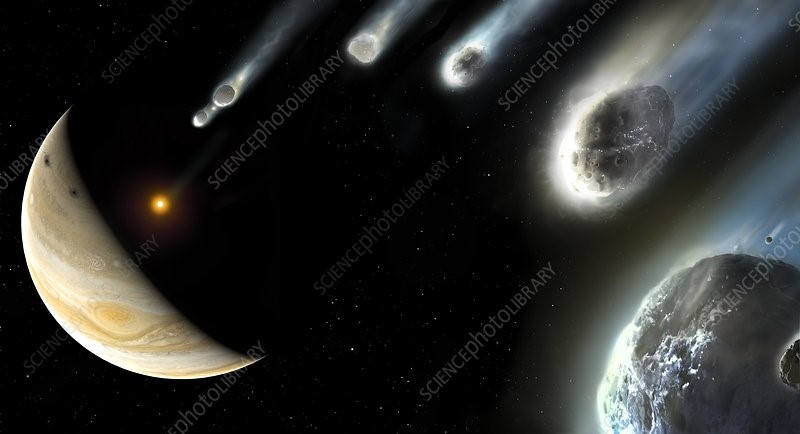
On July 4, 2005, NASA fired a rocket into the “comet” Tempel 1, as part of its Deep Impact program. This program is designed to determine the viability of a defense program that would protect the earth from stray “comets” and asteroids. The impact was recorded by the spacecraft that fired the rocket, and NASA celebrated the event as highly successful, although follow-up information about the status of the effect on the “comet” was not made readily available. This event was the first successful scheduled blasting of a “comet”, as a prior attempt in November 2003, on the “comet” Encke, when the Contour spacecraft ceased to make data transmissions back to earth. It was guessed the spacecraft was destroyed, but there was no information as to whether it fired its rocket, or if the rocket hit the target. There was no way to record the success of that mission.
The point is mankind has grown brave enough to tamper with space, and the results of its tampering may be the point of line four ending with “comet”. The purpose of prophecy is not to show God’s power to destroy his creation, but rather to show God’s love of his creation, such that God will send prophets with messages designed to stop mankind from destroying God’s creation. God is willing to help mankind avoid the errors of its ways, but one has to believe God first, to take advantage of God’s help. In line four of quatrain II-62, one is finding out the result of a world “destroyed” from its own doings.
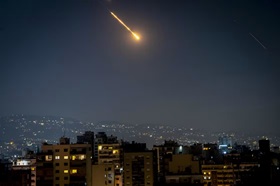
The unleashing of “death” and “ruin” will have led to only “Patchwork” groups struggling to survive, through “drought” and “famine” caused by the actions of men, with the creations of Man. Would it not be poetic justice if the final days of life on earth were “when will hunt here” “the comet” mankind had hunted and shot, just to see what would happen, to have it in return to “hunt” the source of such violence? In this way, one can see how the total End of Days will be brought about by the “hand” of Man, who sought to be its own god, a “Hundred” percent all-inquisitive, while being a “Hundred” percent fool.



 Nostradamus Blog