These quatrains listed as “Naval Battle” are all linked to one suprise attack on a U.S. fleet in the Persian Gulf. I posted an article in 2016 about this still unfulfilled future event, due to tensions rising there then. Certainly, now that 2025 has brought the United States a step closer to this deadly battle, I feel it is time to review those quatrains again. Now, I am listing them individually, to make them more readable to the illiterate smartphone addicts with the attention span of a gnat.
—–
In Erika Cheetham’s 1973 edition of The Prophecies of Nostradamus, she pointed out that the verbiage of quatrain IX-100 (only two quatrains before quatrain X-02) was similar. Her notes begin by saying, “There seems possibly to be a connection between this quatrain [X-02] and IX. 100.” That connection is more than possible, it is certain.
Here is what Nostradamus published in 1568 (edited from 1566):
IX-100
Navalle pugne nuit sera superee,
Le feu aux naves a l’Occident ruyne:
Rubriche neufve la grand nef coloree,
Ire a vaincu & victoire en bruyne.
Before I present a translation, look at the word that make the connection Ms. Cheetham referred to. The capitalized word “Navalle” is the immediate focus of importance. Line two tells of the “naves,” or “ships,” which is a word repeated in quatrain X-02 [“Dix naves proches”]. We are then shown supporting details to the main theme and clarification to line two through a reference to “grand nef” – “great ship” – where “grande” and “Grande” were in quatrain X-02, while the main theme was about a “nef cachera” – “ship will catch.” In quatrain X-02, line four began “Great vanquished,” where the feminine spelling of “Grande vaincue” matches line four of quatrain IX-100, which states, “Ire a vaincu” as the masculine form for “vanquished.”All of this repeating verbiage IS how quatrains link together to tell a story in deep detail.
Knowing that, one translation of quatrain IX-100 then can be:
Naval punch darkness will be vanquished [or overcome, surmounted, surpassed],
It fire [or light; dead, deceased, departed] at them ships has the West ruined:
Marked red strange here great ship colored,
Wrath to vanquished & victory upon hot mist that blasts.
Here, we add the word “pugne,” which is Ancient French, meaning “grip,” but more related to the Latin root, “pugnus,” meaning, “fist.” One makes a fist while gripping something. Because the old name for boxers is “pugilists,” where they exchange punches with the fists, the Vocative case spelling. Still, “pugne” means “a handful” and “a punch,” where it is applied navally and also at “night.”
Something that can enhance an important “Veiled” encounter is “darkness.” Thus, another meaning for “Ten” can now be applied to the time of day, where 10 PM is after nightfall. While that would be a secondary application of “Dix,” we are learning from the statement of “nuit” when the sucker-“punch” will be thrown, and how that strike will make everything go “dark.” Still, even though this punch “will be” such that the one struck “will be vanquished,” it will not instantly be fatal, in the sense that the strike “will be overcome.”
It is worthwhile noting that the use of “superee” is synonymous with the uses of “vaincu” and “vaincue” inquatrains X-02 and IX-100. This use here, in the main theme statement of quatrain IX-100 directly links to line four of quatrain X-02, as both line speak of overcoming, surmounting, and vanquishing. In this way, Nostradamus displayed the multiplicity of word meanings in the use of synonyms. As such, a search of one word in a concordance for The Prophecies will only show a limited number of choices. Add in the fact that words like “ruyne“ and “bruyne” are also spelled as “ruine” and “bruine” and an even further limitation is cast.
The secondary theme statement (line two) then ends with a colon. That mark signifies the statements in line three [each word makes multiple statements] will clarify that theme by example, especially that “ruined,” or make a list or points supporting that already said.
In quatrain X-02, I discussed the capitalization of “La,” stating that an article cannot convey the level of importance that the adverb “Là” can. The first word of line two in quatrain IX-100 also begins with what appears to be a capitalized article, in this case “Le.” There is no need to accent this word (although that is a possibility – “Lé”means “width, strip or length” in paper terms), as “Le” becomes important as a pronoun. In this case the importance is shown as “It,” which relates with the “pugne” done “Navally.”
Seeing this, “It” creates “light, fire, death, deceased, and departed.” “It” is what is “from them” who represent the “ships” of the East, which are sent “to them” that are the “ships of the West.” By this reference, and although we still do not have a specific name for the “Great” of “the West,” the implication can be deduced as the United States. “It” is, therefore, a weapon that is known to be what “the West has” on their “ships.” “It” is what makes one “Great.” However, now “It” will be what “has the West ruined – subverted – destroyed – wrecked – overthrown – and utterly undone.”
If you get the big picture of just how important “It” is, as a weapon of power, you can grasp the next capitalized word – “Rubriche,” which means significantly “Marked in red,” or “Made red.” Still, as common citizens who are the absolute last to know what the latest in warfare technology has created, there is some doubt that a nuclear bomb would be used where so many “ships” are “nearby” to one another. when “feu“ is most commonly used to denote “fire,” it is easy to see how “fire” and “red” are somewhat synonymous. Still, as “fire” creates “light,” the “darkness” can be unveiled. However, when “feu” has a secondary meaning as “death, deceased, and departed,” the factor of “fire” and “light” can be seen as some form of laser technology having been developed – much like the ray guns of 1950’s science fiction. It can then be assumed the United States and Russia share this technology, but Iran would be the “least” nation expected to possess “It.”
The importance of something “Marked in red” is then said to be a “new, strange, uncouth, fresh” kind of “red.” “It” even can be said to be a “Marking” that was (in Nostradamus’ time) “unknown, unused, and unheard of before.” This could be a “Marked in red” hue that glows, pulses, or glitters, unlike anything Nostradamus had known. This strange “Red marking” has not only “colored” the “ships of the West,” symbolizing their destruction, but it has “Marked a red-letter” day for those who had previously deemed themselves “great.”
Following the comma at the end of line three, which separates this significant reddening from line four, in time and/or space, we find capitalized the word “Ire,” which means, “Ire, Anger, Fuming, Wrath, Rage and Indignation.” As line four represents where supporting details can be found directly relating to the secondary theme, it is an important statement about the deep hatred that exists between Americans and Iranians, because the two reflect the long time hostilities between Christians and Muslims. This act was done out of severe “Anger,” while the act was done because of the extreme “Indignation” America had shown towards Iran, for their support of terrorism. This “Wrath” unleashed cannot be undone, thus once it takes place the whole world will have been “vanquished” and “destroyed.” Still, for the moment, the “Anger” shared by Communists and Islamists alike will win the day, and their enemy’s “fleet of ships” will be “overcome.”
In the middle of line four is an ampersand, which is a special mark in all of the quatrains and letters that signifies an important statement will follow. It also acts to denote where opposites and similarities are divided, before being joined together as one. This means an ampersand can never simply be read as “and.” It is a very complex mark.
The important statement that follows concerns this “victory” that was brought about from extreme “Rage.” The use of the word “bruine,” which is spelled with a “y” in three quatrains (including this one) and with an “i” in three others, plus with a “y” in the plural once and as an adjective (“bruyneux”) in yet one more quatrain, means (as a feminine noun), “A hot mist that blasts and burns plants.” Accented, as a past tense verb, it means “Blasted or burned with mist; hoary, as a thing that is covered in a misty rind.” Because the color red is part of the determination of meaning, one could eliminate the dew-like image of hoary, unless this was part of a cooling down change. Most likely, the mixture of “fire” and sea water would create a “hot blast” that would leave a mist; and this would be yet another detail about how this weapon is used.
Back in 2016, due to aggression in the Persian Gulf by Iran, I posted an article that lists six quatrains Nostradamus wrote, regarding a naval battle. Now, after recent news has reported Iran being bombed by Israel and the United States militaries, Iran just recently retailated by sending a wave of missiles towards the U.S. military facility in Qatar. That addressed U.S. airplanes based there, which is not from from the island nation of Bahrain (just to the north of Qatar), where U.S. naval presence is based.
I will not present each of the six quatrains listed in 2016 and offer views on them individually. Just know they do not stand totally alone. While each is a divine prophecy, they gain greater strength when read as connected, in an epic poem. The epic poem that is The Prophecies of Nostradamus warns of the End Times that will be brought on by faithless human beings following demonically possessed false shepherds. The epic poem tells how to avoid this soul destruction that will bring about the earth no longer being able to sustain life as it has been (a brave new zombie world); but people prefer to skip how to save their individual soul and leap onto the frightening stuff. Onward to the frightening stuff.
Not long ago (a few days now), the news was that four Iranian patrol boats came close to a U.S. navy destroyer in the Persian Gulf, near the Strait of Hormuz. Later, the news reported that the American ship fired a warning shot (a flare) when two of the Iranian boats came as close as 300 yards to it.
On the television news recently, a retired U.S. general was interviewed about this incident. He said the Iranians were testing the response of American ships, which is restricted by directives from the Commander in Chief – Barack Obama. While the official word from the White House was that the Iranian behavior was unacceptable, the general pointed out that the president has done nothing to establish a position that will keep future tests like this from happening. The general added that Iran is acting in ways that demonstrate its readiness to take control of the Middle East region, as the supreme power for other Islamic nations to depend on.
Within seconds of the talking head “reporter” agreeing that this is an important development, she said, “Now a look at the stock market.” This shows that important news is little more than entertainment for an audience that will forever have bad news reported, but never any reports of something being done to stop that flow of bad news. Therefore, one should expect Iran to keep testing U.S. ships in the Persian Gulf, in the Strait of Hormuz.
Later that day, as I ate lunch and watched the news, I caught the tail end of a report about a Chinese spy that was caught giving China the secret codes for the technology U.S. Navy ships have to instantly communicate with one another. This seemed to be a problem, simply because the Chinese have since installed a similar program in their fleet communication capabilities. The viewing audience was told to stay tuned for a prime time series about the spies caught stealing American secrets, which would portray the one who was caught stealing this naval intelligence program.
There was no mention of the possibility that China could sell this technology to other foreign governments, whose militaries would love to “tune in” to the chatter going on between US Navy ships. That seems like a worse danger to the safety and security of American ships and sailors.
Such news reports as these reassure me that what I have seen from putting multiple quatrains together, about a tragic naval defeat in the Persian Gulf, will come true (if “reassurance” is the right word). Erika Cheetham saw two of these quatrains linking, and she saw them as possibly about the surprise attack on Pearl Harbor, on December 7, 1941. President Franklin D. Roosevelt called that “a date that will live in infamy.” Still, as with every quatrain thought to have already been fulfilled, if it has happened once, then it can happen again. The two quatrains she noted as about Pearl Harbor (possibly, not certain) are perfect for setting up a scenario that makes the recent news reports of utmost importance … should being forewarned truly mean being forearmed.
The first quatrain I would like to present to you for consideration (as forearming information) is quatrain X-02. It states (in Old French):
Voille gallere voil de nef cachera,
La grande classe viendra sortir la moindre
Dix naves proches le torneront poulser,
Grande vaincue unies a soy joindre.
One translation (there is always more than one way to put words to a prophecy) says:
[It] Vailed galley willing of ship to catch,
There great fleet will come to issue here inferior
Ten ships close by it turning to violent challenge,
Great vanquished united ones has itself to grapple as enemies.
The main theme statement (line one) begins with the capitalized word “Voille.” A capitalized word always indicates an important statement, made in one word. The word “voile” is actually not a word, although it is easily seen as being the same as the word “voile,” so the word is translated according to the primary intent. Still, “voile” is a simple anagram, where the extra “l” must come out and be attached to the beginning. Therefore, the true important word stated is “l’Voile,” where the importance of “Veil,” “Sail,” or “Ship” (since a vessel with a sail was a ship in the 16th century) is individualized as “the Veiled.”
The reason “the Ship” is not the primary intent is the following word “gallere” means “galley,” which was a large sailing ship in the 16th century. This means the importance of “the Ship” is its ability to be “Veiled,” such that it is a “galley” with the ability to be hidden. It is like “A Ship behind a curtain.”
This has deeper meaning itself, whereas the people most commonly wearing veils are women in the Middle East, who are Muslim. Since the Middle East is known for sand and oil, rather than having large sailing ships, the “curtain” that keeps the ship from being seen is one developed by Russians, who were known for the secrecy they demands behind their forceful “veil” of iron – the Iron Curtain. Therefore, from a perspective of modern historical knowledge, line one is making the statement about a stealth naval vessel, implying it was manufactured in the former Soviet Union, and sold to the Iranians. This sale was initiated in 1991, soon after the Iron Curtain collapsed.
The word “voil” is an Ancient French form of the verb “volonté,” meaning “wish” or “will,” where a “willingness” or “desire” is the root cause for a cloaked sea vessel being developed, manufactured and sold. The owner of such a secret ship has only one reason for that possession, which is to use it in an act of revenge, from the element of surprise.
This willingness is then where one finds the third word in line one that can be translated as “ship.” The “wish” is to have the capacity “of a ship,” to use “to a ship,” to be freed “from a ship” that is superior to all the other ships one has been known for having. This means this past history of being weak in naval war capabilities will play a role in drawing in a “ship,” so it can be “caught.” Thus, the “desire” is to have a “ship” that will act as a trap that will “catch” other ships.
With the main theme focusing on a veiled alliance, where weapons are sold for cash, between two nations with a common enemy (or enemies), line two is separated by a comma at the end of line one. This separation makes the secondary theme free to associate with that enemy. Line two then seems to begin with a capitalized article, “La,” but the primary intent of this important word is not as “The,” but as “There,” where “La” is accented as “Là.” An accent mark can be added where one is not shown, but one shown can never be erased.
The adverb “la” is then written in two places in line two, one capitalized and one in the lower case. If multiple translations are possible of a word, then multiple uses should be fitted into the text. Since “la” can mean, “there, here, or then,” the opposite duality of “Here and there” or “There and here” makes for good application, but “Then” can also can and should be a consideration.
Because the trap is to be set up where least expected, drawing the enemy “There” is most important. The enemy is identified then as “great,” which is a statement about an individual or collective of individuals seen as one, who are of “great” power, wealth and influence. This greatness is then modified as being known for its “fleet,” which is rooted in the Latin word “classicus” or “classis,” meaning “the armed forces, especially the fleet.” The use of a Latin derivative in any quatrain is pointing to an association with Rome. As an enemy to both Russia and Iran, the common factor is religion, where both have disregard for Christianity. Therefore, the initial focus in the secondary theme is drawing to “There [Iran, Persian Gulf] the mighty fleet of the keepers of Christianity,” America. That “fleet will come” into that trap, in order to protect the weak nations that have plenty of oil, who need protection. The West sees those “inferior” powers as worth protecting, while they see Iran as “lesser” in power than America. The trap depends on that “great fleet” not expecting an equal or greater power lurking underwater, as “then” and “here” (the Persian Gulf) will be an “inferior” entity.
The news about Iran trying to develop a nuclear device gives the impression that the only way to obtain such weaponry is to make it yourself. In this sense, even if Iran had processed enough uranium-235 to make one atomic bomb, the number of such weapons held by the United States (not to mention its Western allies) would be far superior. This means the secondary theme is referencing the attitude, based on intelligence “here” in the United States, as of that time “then,” that it would be okay to send in a “fleet” … “There,” because of that “great” imbalance of power.
Because line two does not end with any punctuation, the statement of line three becomes an immediate flow of thought in reference to a fleet of a powerful nation arriving to present an ultimatum to an inferior power. Based on the last word of line two being “less, lesser, inferior to” and “least, smallest, most low,” line three then begins with the capitalized word “Dix,” which is the number “Ten.” The capitalization tells the reader that the “lesser” or “inferior” number is “ten,” but that number if relative to a very powerful “Ten.”
Because line one is the main theme of the “inferior,” as far as the “great fleet” is concerned, with that inferiority based on a single nation’s military might, without consideration to a “Veiled” alliance and purchased “ships” of stealth capabilities, line two is focused on the enemy of that union. Line three, however, despite being a direct flow of thought about the arrival of American warships into the Persian Gulf, is offering supporting detail to the main theme of an Iranian-Soviet [call it Russian if you want] pact. “Ten” then becomes the number of “ships” purchased, while “Ten” also represent the level of threat this confrontation will have reached.
According to the Wikipedia article about the U.S. Navy’s Fifth Fleet, it is stated:
“The Fifth Fleet of the United States Navy is responsible for naval forces in the Persian Gulf, Red Sea, Arabian Sea, and parts of the Indian Ocean. It shares a commander and headquarters with U.S. Naval Forces Central Command (NAVCENT) in Bahrain.”
About Bahrain, another Wikipedia article states:
“Bahrain is an island country situated near the western shores of the Persian Gulf in the Middle East. It is a small archipelago centered on Bahrain Island, its largest land mass.”
Google states the report made by the Washington Post that, as of February 23, 2016: “The 5th Fleet is currently deployed in the Persian Gulf, and as of Feb. 23, the naval forces included: two carriers, 20 ships, 103 strike aircraft, approximately 20,000 sailors and marines.” This is a total of 23 sea vessels, but one would assume not all would ever be in the Persian Gulf at one time, with the Fifth Fleet also patrolling the Arabian Sea and the western fringe of the Indian Ocean. Another report stated 18 ships were in the Persian Gulf, with five more headed there. Whatever the number, it is more than the “ten” stated in line three, which are “Ten ships” of significance.
When the next words in line three it stating “close to ones” or “neighboring ones,” this is saying that the “Ten ships” are “ones nearby” to the enemy ships. This makes the aspect of “Veiled” be closely related to the “Ten,” where for them to be “close to” the enemy “ships,” they would have to either be invisible (not likely) or submerged. This means American submarines would not be able to detect their presence, nor any sonar readings of surface ships. I get the impression that the “Ten ships” are stationed on the sea floor.
From that fixed position, we are then told they “will be turning,” as if waiting for the fleet above to pass. This is probably why Iranian patrol boats have been testing American warships, as a distraction from underwater activities that take place simultaneously. In this case, the “turning” will be “to violently challenge” the superiority of the larger fleet. This violence will come as a “pulse,” “to push, thrust; inforce, compel, or violently put on; to drive on or beat in; to jostle or jolt.” This becomes the moment of action that will have been planned for decades.
Line three then ends with a comma, denoting a separation of time and/or space. This then leads to the capitalized word “Grand,” which now acts as supporting details for the use of a lower-case “grande” in line two. It is having large “fleets of ships” that makes America a most powerful “Great” nation. It has been our willingness to confront evil powers and fight so the weak are protected. America is “Great” because it has “violently challenged” the likes of Saddam Hussein and Adolph Hitler. Now, in line four, where the supporting details for the secondary theme of American warfare greatness is found, that “Great” state will suddenly be “vanquished.” San “inferior” power will “overcome, subdue, foil, surmount and overmaster,” through the elements of equal weaponry and surprise.
In the eyes of America’s enemies, this defeat will be “just,” as the playing field (or battlefield) will have been made “equal.” Just as America is called the “United” States, and just as America is “united” with Bahrain and Saudi Arabia (et al) in the Middle East, Iran and Russia will have become “united ones” against the “Great” Satan (as Iran has often called America).
Now, as I have made several leaps of assumption by naming Iran, Russia, and the United States, when neither is directly stated, I expect people to challenge what I have stated here, about quatrain X-02. A brave and courageous individual will raise a voice and question these leaps. However, a coward will simply disbelieve and walk away silently. The questions can be answered by seeing how this one quatrain does not stand alone as a single prophecy. It is one piece of a string of pieces, where the leaps are confirmed in the additional statements made in related prophecies. When many quatrains of similar verbiage are realized parts of a single story, The Prophecies of Nostradamus become evident as an epic poem, where the random presentation is like a box of puzzle pieces that need to be put together to see the whole picture.
Par cité franche de la grand mer Seline, …………..For warned to appear free with there high sea Islam,
Qui porte encores à l’estomach la pierre: …………Which entrance again ones to him womb there rock:
Angloise classe viendra soubz la bruine, …………..English fleet will come beneath here hot mist,
Un rameau prendre du grand ouverte guerre. …One branch to seize from it mighty open warfare.
These can be rearranged so repeating words link up and a story in epic poem style is visible. The translations are multiple. These are just some possible to see.
I would like to make it clear that there are many other quatrains that tell this story, putting it into greater and deper detail. But, given the audience, six is enough to begin with.
Nostradamus wrote in Old French the words of quatrain X-43 that are this:
Le trop bon temps trop de bonté royalle :
Faiz & deffaiz prompt subit negligence
Legier croira faulx despouse loyalle,
Luy mis à mort par sa benevolence.
One way to translate this into English has it read as this:
He mightily upright opportunity mainly with virtue him kingly:
Act & overcome unlooked for prepared drowsiness
Lively will believe it false to wife it allowable,
Him placed at death by reason of his favor.
Certainly, the same words of Old French can be translated to present other ideas. Some can be in line with this above thought, while others can be very confusing and misleading. That is the nature of divine language. The fact that Nostradamus wrote words in divine language says he was a true prophet. The words he wrote are, therefore, not his but those of Yahweh.
The same divine language is in every word of original text in the Holy Bible. The English translations of those words written in divine language are just like the translations of the above quatrain of Nostradamus: They sound an inviting tune that oddly seems to miss some notes or go offkey. Rather than adjust the song of an angel so it sounds pleasing to the mind, it is easier to make stuff up that is confusing and misleading.
The work produced by Nostradamus is entitled Les Propheties, which cleanly translates as “The Prophecies.” Of course, many read those words of English and have their mind think, “The Predictions,” which further leads them to think Nostradamus is just a man writing down his thoughts. In the same error of judgment, English-speaking Christians think, “That Paul sure was a man with a lot of thoughts about Christianity.” The error is in missing that the words came from the pens of men who were Saints, not ordinary men. Saints do not think, “What shall I write today.” Saints hear the voice of Yahweh telling them, “Write this down, exactly as I say this.”
All the words that seem offkey and confusing are by heavenly design, because to understand them requires one also to be a Saint. To know what a prophet wrote, one must also be a prophet. That means reading the books of the Holy Bible and The Prophecies of Nostradamus are not about one thinking, “What do I think this means?” Instead, it is what Yahweh says to your soul, when He asks: “Why don’t you think about this a different way? I will pat your back when you get closer to the truth.”
This quatrain above speaks of that. It is a divine possession that overcomes one’s soul. Yahweh offers His Spirit to those souls who sacrifice themselves to Him, as His wife-souls in bodies of flesh. Those who get enough pats on the back can be seen as His bridesmaids, where the wise ones do all the work necessary to keep oil in the lamp of truth. That lamp burns bright to keep one awake and alert to the truth, so one does not fall asleep to the dreams of false shepherds. Seeing truth brings vigilance for more truth, so those wives-to-be (in both male and female bodies of flesh) will be ready when the bridegroom comes, and Spirit and soul are joined as one in Holy Matrimony.
The joining of a soul with the Spirit of Yahweh means the immediate resurrection of the soul of Jesus, alongside the soul of Yahweh’s new wife. Just as your mother did not have somebody down at some store in the mall make your body of flesh, which she came in and visited every day for nine months, you were born from within your mother’s womb. Jesus must also enter the wife-soul as the womb in which he is reborn of flesh and blood – Yours. That means a Saint has a name like Saul, but when Jesus is reborn within that soul, Saul no longer has the ego to say, “My name is Saul.” Instead, one bows one’s egotistical head and declares, “I am nobody; but I speak in the name of Jesus, as a Christ blessed by the Spirit of Yahweh. I do not think of things to say in his holy name. I just say what he tells me to say.”
In the main theme statement above (line one), the English translation I have been led to share says, “He mightily upright opportunity mainly with virtue him kingly”. The capitalized pronoun, “He” (Le), is both a Saint and a wife-soul married to Yahweh, who speaks in the name of Jesus. As such, “He” stands newly upon the earth “mightily,” through divine possession by Yahweh. “He” has become “upright” because of the possessing soul within his or her soul-body no longer being whoever they were before, as one has become in the name of Jesus. Jesus is the inner Lord who keeps a soul-body “upright” (bon) in a righteous way of living on earth. This state of new being is because one has taken advantage of the “opportunity” (temps) presented to him or her by Yahweh.
These “times” (temps) are sourced in life becoming “too much” (trop), where the “good” (bon) seen in the promise of religion (Judeo-Christian) is the beacon that leads a soul in misery to offer itself to Yahweh, in a committed relationship. A soul must reject the proposals of the worldly domain and demonstrate it realizes it is “time” to submit to a higher power. By oneself offering to serve Yahweh as His wife-soul, Yahweh proposes an everlasting relationship. However, for a wife-soul to prove this commitment and complete subjection, one must prove one’s devotion by doing the work involved gathering the oil of truth to place in one’s lamp. Before Yahweh will say “Yes” to a bridesmaid, it must prove to be wise (not foolish) by developing a “time”-tested commitment to sacrifice self for a higher purpose, through servitude out of love.
When Yahweh comes in the middle of the night (metaphor for when unexpected), those in love with Him will be awake because of having kept the light of truth burning in their lamps. The wedding ceremony is then the outpouring of Yahweh’s Spirit upon one’s soul and flesh, cleansing one’s soul of all past transgressions. It is through this Holy Baptism of Spirit (not water) that the presence of Jesus’ soul enters a wife-soul, through the Consummation of Marriage. The soul of the Son then becomes the Lord that is “mainly” (trop) ruling over everything a wife-soul of Yahweh will do. Together as one, the soul of Jesus resurrected alongside the soul born into a body of flesh lives with “virtue” (bonté) and “uprightness.”
This is because the soul in a body of flesh (regardless of human gender) has become “him” reborn into one’s flesh, with him being the ruler over that new “royal” kingdom (royalle becomes l’royale, with l’ a lower-case le). The Spirit of Yahweh (in divine Marriage or Union) has made one’s soul-flesh a Holy tabernacle in which the soul of Jesus can become High Priest. This is his kingdom not be of this world, but the spiritual (soul) presence trapped in a body of flesh. This become the truth of Jesus being “kingly” (l’royale).
This is where punctuation must be read as a direction of importance. The main theme statement ends with a colon, which is not often the case in the quatrains of Les Propheties. A colon’s usage projects “a punctuation mark used chiefly to direct attention to matter (such as a list, explanation, quotation, or amplification) that follows” (Merriam-Webster). This means an explanation of this main theme, as a clarification of “him royal,” will be found to follow, in the secondary theme statement. Because the secondary theme statement begins with an important one-word statement, cut off by the use of an ampersand, the explanation of “Him mightily upright opportunity mainly with virtue he kingly” says “Acts”.
In the secondary theme statement (line two), I have been led to translate it into the English shown above as, “(You) Act & overcome speedy without forethought carelessness”. This follows a colon mark ending the main theme statement, making the secondary theme be a clarification or example of that theme following it. This begins with a one-word statement that is capitalized Faiz, where this should be read as a plural form of Fais. That is a form of the verb Faire, in the first and second-person singular present Indicative (as a present Impératif), which is rooted in what “I” or “You do, make, perform, commit, work, or effect.” The plural is then a statement of the multiplicity of ones that each “Act” as both the “I” of Jesus” and the “You” of a soul joined with him. When one realizes the four Gospels are followed by the Book of the “Acts” of the Apostles, the importance of capitalization clarifies one’s divine marriage, becoming reborn from above as Jesus again in the flesh, the purpose of that divine presence is so “(You) Act” as your Lord within commands.
At the point this is realized, an ampersand is presented. That symbol does not symbolize the word “and.” Instead, it is a marker symbol that announces, “What follows here is important to grasp.” Following the importance of “Acting” in the name of Jesus, it is important to know such “Acts” will “overcome” any ordinary and common desires of life, to act sinfully. They will “overcome” (desfaiz) one in a “speedy” (prompt) way; but those who “Act” as Jesus directs will “defeat, destroy,” and “ruin” (desfaiz) those impulses “quick,” with him “ready at hand” (prompt). This will not take long, as if one will languish worrying about sinning or rejecting sin, as Jesus will “Act” with “sudden” (subit) response with “unthought of” (submit) need to be concerned about “negligence.” The presence of Jesus’ soul with one’s wife-soul of Yahweh is forever and eternal, whereby he will never “neglect” a servant soul, not let it fall into “drowsiness” or Spiritual “sleepiness” (negligence).
This means the Book of Acts was not about a bunch of men and women thinking, “What shall I do next, so people will think I am special because I walked around with Jesus when he lived?” Instead, the “Acts” done by Saints come from “unlooked for carelessness” (submit negligence). That says to think with a human brain, trying to figure out what people look like when they want to be seen as righteous dudes is neglecting Yahweh’s commands, sent through His Son. One will “Act” as commanded, immediately, without hesitation.
The secondary theme statement does not end with any punctuation marks, meaning that theme continues into the next line. Still, in all quatrains of Nostradamus, line three will be found to present supporting elements to the main theme, relative to that stated in both themes. As such, my translation above says in English: “Lively will believe false witness of wife the allowable”. Here, the continuation follows line two ending by saying, “quick unlooked for negligence”. Line three then begins with the capitalized word Legier, which says, “Lively, Wavering, Quick and Light.” That makes it important to realize that “Quick” as an Old English term written in the Nicene and Apostle’s Creeds, saying “He will come again in glory to judge the quick and the dead, and his kingdom will have no end.” This makes “Quick” be an important statement that continues the secondary theme, while supporting the main them, where the presence of Jesus’ soul within a wife-soul makes one “Lively,” not dead. This means being dead is being without this divine possession “coming again to judge” the way one serves Yahweh.
When the secondary theme leans in a direction that says what one does when “unlooked for carelessness” brings “Wavering” (Legier), which is a human trait of spiritual “negligence”, this becomes relative to what one “will believe, trust, and have confidence in” (croira). When the capitalized “Act” is how one responds to the directions of internal Jesus, one become “Alive” (no longer dead) and “will have faith” from personal experience of this divine presence. When the word faulx is seen as an Old French spelling of faux, meaning “false, counterfeit, untrue, lying, deceiving, unfaithful, and treacherous,” to then read the word as l’faux adds the pronoun le to this, as “he” who tricks unsaved souls to sin, who is Satan.
When croira is read as “will think assuredly, where thinking becomes an action of a human brain, led by the influences of the world testing one’s soul, as professed to be a Christian (when not committed, just a foolish bridesmaid), “thinking” will lead one to become “with spouse” to Satan. To be the wife-soul of Satan means to be dead spiritually, willingly doing everything one is influenced to do, as “it allowable” (reading loyalle as l’loyale). This states the dual nature of possession, where demon possession is a soul being “of spouse” to Satan, while divine possession by the soul of Jesus protects one against “him false,” so what Jesus leads one to do as “of wife” to Yahweh, his commands are “it allowable,” due to “it” (a saved soul) proved to be “loyal” to Yahweh.
Line three ends with a comma mark, which symbolizes a pause or disconnect from the line of thought that explains faithlessness, identifying sinners as the wives of Satan (demonically possessed, rather than divinely possessed). That means line four is free to head in a different direction, separate from line three, while still addressing self-sacrifice to an eternal spirit. Here, the English translation I was led to write above says, “Him placed at death for his favor.” Here, again, is a capitalized pronoun being Luy, translating importantly as “Him.” This, once more, is both a soul-body that has been divinely possessed through Spiritual marriage to Yahweh, having been reborn in the name of His Son, which is a masculine identification (because all that is eternal is masculine, while all that is material is feminine). This makes “Him” be one who is in the name of Jesus. Wherever “He” is “placed, put, laid, planted, grounded, thrust into,” or “set” (mis) is then a Spiritual transfer “to” (à) one who has self-sacrificed, to marry one’s soul to Yahweh. In the same way a human girl “dies” (mort) of her daddy’s last name when she says, “I do,” to all the Covenants of marriage spoken at the altar of union, every soul-body must experience “death” of self, becoming “dead” (mort) to the old. This, repeating what I said before, is why Saul the Pharisee changed his name to one meaning “Little” or “Small.” Saul had become “Him,” Jesus, so Saul was “laid to dead” (mis à mort). This self-sacrifice was “for” (par) a better reward, on a heavenly and divine level of eternal salvation. It is “by reason of” (par) oneself offering love and commitment to Yahweh, to be tested and proved a viable marriage candidate seeking “his favor” (sa benevolence). Once approved by Yahweh, a wife-soul will become reborn from the “dead” – resurrected – due to the soul of Jesus being sent in for “his benevolence” to forevermore lead that soul.
Now, when one realizes this is one quatrain out of nine hundred fifty quatrains, with all of them written under the divinely inspired title “Les Propheties,” one should ask, “Why would Nostradamus be led to write such a spiritual lesson, when all I have ever been told [false witness] was he was a fraud, looking into some crystal ball, or using the evil practice of astrology, with all the TV shows about him saying he predicted Hitler, war, famine, and all kinds of terrible things to come?”
Well, the answer is Nostradamus was led to write a divinely inspired epic poem, not a bunch of random thoughts about what the future might hold. As an epic poem, there is a beginning, middle, and end, with the beginning being Yahweh’s warning to those who read His Word that says, “Join with me in divine marriage and realize where your soul will be headed by turning away from this proposal. Join your soul in sacrifice to Me and be reborn as My Son in human flesh, so you will hear the voice of My Son Jesus telling you what the meaning is. Join with Me and let My Son lead your soul to Salvation, so you do not perish in the world’s self-caused ruin. Join with me and become My Son reborn, so you can Act in his name and tell others the truth I offer through divine prophecy.”
This quatrain states the first step towards understanding The Prophecies is all about dying of self and ceasing all worship of brains that think up ways to ruin the world. To find it first printed in 1566, as in the middle of Centurie Dixieme (tenth group of one hundred) – the last ‘chapter’ of Les Propheties, says everything was written before the first publication in 1555. From that epic poem written, with a beginning, middle, and end, this was part of the beginning. Everything was then tossed into the air and scattered into a meaningless order, which became the way it was and has been presented in print. Still, the story of these divine prophecies means staying “Alive” amid the End Times requires one “Act” as directed by an inner Jesus. The only way to have that neighbor to love as oneself is to commit oneself to Yahweh and start now proving your love and devotion to Him. Show Him your soul is willing to serve Him eternally and He will send you the Advocate for that eternal Salvation, to be reborn again from above.
All you non-astrologers bear with me. I am about to speak in a “foreign language,” but I will try to keep everyone up to speed. That language is the one astrologers speak, so if you do not know astrology you will not know what I am talking about … at first. I understand most people do not speak astrology, so I will explain just enough to get you through to the end, without attempting to teach anyone astrology unwillingly.
Less than a year before I suddenly began to understand the meaning of The Prophecies, I had a sudden revelation that pertained to the meaning of the traditional astrological association of planets to the twelve signs of the zodiac. Traditional astrology reflects the general constants of the art that have lasted thousands of years, and are the foundation for the astrology we know today. In that standard there has always been the Sun, the Moon, and the five visible planets (Mercury, Venus, Mars, Jupiter, and Saturn), for a total of seven orbs. I will not explain this deeply, but the twelve signs are assigned to the seven orbs, in a way that has the Sun and Moon rule one sign each, with each of the five planets ruling two signs each. In that manner, seven divides into twelve perfectly (1+1+(5×2) = 12).
I began to question why the planets were each assigned two signs and the luminaries (Sun & Moon) only one each. I saw that as a reasonable question, since after thousands of years of that “traditional” alignment, the invention of the telescope made it possible to discover new planets. The planets Uranus, Neptune, and Pluto had to be placed somewhere (I imagine someone had that original thought), so they “displaced” three of the visible planets. The three modern discoveries were allowed to rule one of the signs previously assigned to each Mars, Jupiter, and Saturn. I learned that new rulerships alignment as a newbie astrologer (late 70’s) and had never thought anything about it afterwards. That was, until I had my epiphany about traditional planetary rulerships.
I had found that most young astrologers, ones new to learning astrology, did not have a clue about the traditional rulerships of the displaced planets. For instance, Jupiter ruled the signs of Sagittarius and Pisces for thousands of years, but after someone decided Neptune should rule Pisces, people must have stopped teaching the newbies that Jupiter AND Neptune rule Pisces. Most of the astrologers I talked to in 2001 thought Neptune ruled Pisces, not knowing anything about Jupiter having been its ruler originally. While a good number still knew that Mars was the traditional ruler of Scorpio, along with Pluto the new ruler after its discovery, few realized that Saturn had lost its rule over Aquarius to Uranus. It seemed tradition was being lost.
For some unexplained reason (well, I had some free time on my hands), I wanted to know why that system was set up the way it was originally set up. What was the origin of those traditional assignments? Who was it that deemed modern planets should displace the traditional rulers? Inquiring minds want to know.
All I could find explaining the traditional rulership model was Ptolemy’s Tetrabiblos. That is the quintessential book on astrology, from which Western astrology has sprung. Still, the language of Claudius Ptolemy (2nd century – c. 90 AD – c. 168 AD) is difficult to follow, and he really did not go into great detail explaining why something was the way it was. He talked of such things as wet and dry and hot and cold (the four climates of planets), much of which is largely ignored by modern astrologers (post-1970). While Ptolemy addressed the What of rulership, he did not address the Why. That meant everything about the old ways of astrology fell under the, “Just learn this and don’t ask why” model. I still wanted to know why.
I am not smart enough to solve Nostradamus by myself, since I have so many shortcomings that so-called experts could easily scoff at them and write me off without any serious consideration (which several have done). I am also not smart enough to figure out the whys of astrology. As a professional level astrologer (I have been paid to tell someone what their chart meant), I have learned the basic rules and simply followed them. I had never felt the motivation to write about the meaning of astrology, although twinges of urge to write were ever-present. I certainly never felt I had any worthwhile, specialized tidbit of astrological study to explain to someone, because all I knew I learned from what someone else wrote.
In my astrologer life, I have experienced the value of astrology. I went to a university to learn psychology because that “science” and the art of astrology require knowing techniques in one-on-one analysis. The funny thing is no one would ever go to a psychologist and sit on the sofa and say, “I filled out the form in the waiting area (name, date of birth, place of birth), so tell me what is wrong with me.” They do that to astrologers all the time, and astrologers act like it is their responsibility to put on some kind of magic show to impress the “patient.”
I must admit that I see astrology as something that can be harmful if misused. This, to me, means it should only be practiced in environments where it is safe. You need to have a relationship with a client, even if it is purely business. The client is the key to any successful readings being done. Because of this need for a relationship, I have always felt uneasy about charging people money for my astrological services; although I have often used a barter system, trading my services for those offered by a client. Because it all boils down to astrological counseling is nothing more than giving advise, advice is only good if someone pays to hear it. Otherwise, it is perceived as worthless. Free makes people wary and think something free should be ignored.
I do not know of a more important subject than The Prophecies of Nostradamus. This is because I know it is a true prophecy of God, through a prophet. That makes it as important as the many elements of the Holy Bible, because it says the same information, from the same source, only differently worded. The Holy Bible and The Prophecies both give good advice, but that only goes as far as one knowing what to do with good advice goes. Nostradamus is thus like astrology, in the sense that the majority of the people in the free world avoid anything stating his name and anything stating astrology, for reasons that can be summed up as fear-based.
I have been able to stay somewhat distanced from astrology, to the point it is not a regular practice of mine these days. It hasn’t been for over a decade. I know it well enough that it is like riding a bike. It does not matter how long I don’t use it, it comes back to me quickly. I stay at a distance from astrology groups because of the madness that surrounds the people running them, who are “head-over-heels-in-love” with astrology. I see those group leaders as parallel to the Laputan Grand Academy members, from Gulliver’s Travels, who put in way too much time detailing minutia, for minimal result, and often getting things totally wrong. People in astrology groups (the ones I have been a member of) get too involved with it. If they know that Ptolemy wrote that astrology can be helpful if known, but it should not become an obsession. They have ignored that warning.
My intellectual pursuit of astrology has found it to be like a road map, which is best read before going to some place to which you don’t know how to get. Even then, once you map a course, you have to put the map down to get there. My limited desire to play astrologer is based on knowing I have enough of a grasp of astrology to be dangerous. The same can be said of driving a vehicle. You can never take anything for granted.
All this history means that I never decided to come up with an AGENDA to solve the WHY of Traditional Planetary Rulerships. It just happened. The same can be said of my devotion to Nostradamus, which would begin several months later. Nothing was planned to turn out the way things have.
Just as with what I saw in Nostradamus, I was amazed by what I saw explaining the perfection of the traditional rulership model of astrology. When one sees that as perfect, one is left with the realization that Uranus, Neptune, and Pluto represent space debris, and little more. None of the symbolism associated to them has any close relationship to the mundane lives of individual creatures on Earth. By that, I mean no one would ever say, “Oh my! I might want to stay home today because Neptune is about to square my Mercury.”
The outer orbs are what astrologers refer to as Trans-Personal or Generational, meaning large groups of people are experiencing the same symbolic life evolutions, rather than them reflecting a unique personal experience on the individual level. As such, they reflect grand changes in social direction that mirror adjustments everyone must make collectively. That relates to their not being visible by the naked eye (one of the physical senses), meaning they are invisible in a human life. Sure, they have a place; but that place has nothing to do with the places traditionally ruled by the visible orbs.
The outer planets do not meet any expectations that would have them reflect on any individual human life, on a day-to-day or even year-to-year basis. They move too slowly to symbolize the speed of life. Uranus makes one revolution through the zodiac every 84 years, or the current life span of human beings. Not too long ago, life used to be much shorter, on the average. Neptune takes almost 165 years to make one revolution, with Pluto taking 248.5 years. Pluto is “fast-tracking” when it moves 3 degrees a year (counting forward movements and backward retreats), but its rate of motion changes from time to time, due to its highly elliptical orbit.
All this means none of those distant planets (or asteroid, in Pluto’s case now) are worthy of taking a position on the Traditional Planetary Rulerships chart. This includes all of the other space dust in our Solar System, much of which has been named for goddesses (asteroids, planetoids, moons, and invisible “what-if” orbs). Most of those are only important in the minds of the women who are the pervasive organizers, teachers, and moneymakers keeping astrology on the population’s consciousness. Even though there are good reasons for placing focus on everything in the Solar System, and good reasons to have people who specialize in all of those minute elementary pieces, it is like being a podiatrist, versus being a general practitioner.
There is plenty of reason to have people specialize in foot doctoring, but most people have no need to know any more than the basics of a healthy lifestyle, which includes a body with feet in good working order. Most insurance companies require a doc-in-a-box to recommend someone see a specialist. Specialists tend to charge more for their services. When that is seen as a parallel to all the capitalist astrologers in the world, it is important to understand the basic value of advice.
Astrologers do not need to give the impression that Chiron (a planetoid), to use just one example, is more important than it is. Sure, Chiron has value and it can be helpful to explore that value as part of the whole; but that value has been created well after its discovery, way back in 1977. It is only of specialized interest. The same can be said for Uranus (1781), Neptune (1846), and Pluto (1930).
The reason that I write this now, today, is I have begun writing about the WHY of Traditional Planetary Rulership. I came up with a slide presentation and a lecture that I presented to an astrological group in Houston,TX, back in late 2000 or early 2001. Unfortunately, I lost that over the years (hurricanes do a lot of damage). My focus on Nostradamus since then has been much more important to me, such that trying to return to an astrology topic and take time to re-word all that meaning has seemed like a waste, before now. Now, after a decade of crying “Wolf,” there is little more I can do to warn people of the need to see for themselves what a true prophecy says about where the world is going (hint: to hell).
So, why not write about astrology. Maybe the pagans will listen to that? I feel there is not enough time to change the course we have set. Since the map provided by Nostradamus appears to be too complicated to read, maybe it is time for a last minute astrology map.
Still, in my free flow of insights that come to me while writing about things I am too stupid to figure out on my own, I had this thought come to me. The times of The Prophecies are reflected in the times of new planet discoveries. The telescope allowed us to find Uranus,Neptune, and Pluto, and astrology affixed symbolic meaning to them, which reflected their times of discovery. That matches the themes and stories Nostradamus wrote.
Those planets reflect the times stretching from the 18th century to the 20th century. On the most broad stroke summary that parallels the theme of Nostradamus, people began dethroning the rulers of nations en masse during the “Age of Reason,” which began in the 18th century. That was roughly when astrologers began thinking about displacing planetary rulers too, although Uranus was still called Herschel well into the 19th century. However, the astrological associations modern astrologers have since assigned to those new planets further symbolize the story contained in Nostradamus’ work.
That is Revolution (a keyword for Uranus), Confusion (a keyword for Neptune), and Death (a keyword for Pluto), with Pluto being the Roman name for the Greek god Hades. Both Pluto and Hades are known as the ruler of the underworld. We all know that by the common name, Hell, which means the discovery of Pluto links the theme of The Prophecies to that of The Revelation of John, and all the stuff found in the Holy Bible about the End Times.
That will apply to every human being (trans-personal). All will see the Change (Uranus) from royal rulers to elected commoners as commonplace, desirable, and necessary. The Industrial Revolution (Uranus given rulership over Aquarius) would pave the path to the Technology (Uranus given rulership over Aquarius) that has taken humanity from being self-sufficient to being pitifully self-inept. All have found themselves led to experiment with the new discoveries of chemicals Hidden within plants (Neptune), more than the traditional processes of turning grain to beer and grapes to wine. The spread of coffee, cocoa, tea, hemp, opium, and other natural plants of mind-altering properties led to searches for more Addictive (Neptune) additives. Eventually, chemists began creating artificial elixirs that imitated natural medicines. All of which would need to be ruled by the agents of government.
All will find how the human mind will be unable to contend with all the Change (Uranus), once all have been enslaved by the Numbing (Neptune) effects those additives and technical advances will have had on the breakdown of the human body, especially the Nervous System (Uranus) and the Immune System (Neptune). The value of religion has been so Clouded (Neptune) even the priests and ministers find it difficult to judge right from wrong, and good from evil. Meanwhile, people with big brains have been tasked to break the codes of DNA and to split the atoms of Uranium (element of the times of Uranus) and Plutonium (element of the times of Pluto). Those Scientists (an impersonal Uranus as ruler of Aquarius) are the Slaves (an impersonal Neptune as ruler of Pisces) sent to find new Power (an impersonal Pluto as ruler of Scorpio) that will elevate their masters higher, while further placing all humanity under the yoke. The sacrifice of souls comes out of fear of those with weapons so powerful and so numerous they could eliminate the entire species.
Those three planets, as seen by the symbolisms of astrology, sum up the whole of what Nostradamus warned human beings to beware. In these modern times, there is less and less faith in God (Jupiter ruling Pisces, being displaced by Neptune). Too many people’s lives are dependent on the Illusion (Neptune) of Freedom (Uranus). Individuals like to think they have the Power (Pluto) to scale the walls of ordinary life’s Imprisonment (Neptune) and Fantasize (Neptune) of the promise land of material wealth (not Heaven).
I just wanted to let this out now. I am taking my time writing about the Why of Traditional Planetary Rulerships. In case I don’t finish in time, I wanted everyone to have a chance to see how modern discoveries are a reflection of why the world is going to Hell in a hand basket.
Additional Thought: To sum ALL this up simply, the outer planets do not have rulership over any individual signs. Instead, they have AFFINITIES with the Quadruplicities: Cardinal, Fixed, and Mutable. Each division contains one sign of each element. Thus: Uranus has an affinity with the Cardinal signs; Neptune has an affinity with the Mutable signs; and Pluto has an affinity with the Fixed signs.
In a reading, an astrologer should look at what signs the outer planets were at birth and in their slowly developing transits. They do not have the same restrictions placed on them as do the traditional planets, because they cannot be in rulership, exaltation, fall or detriment. Instead, this should be what one should see, based on positioning:
Uranus (a planet reflecting the impetus of the active Cardinal signs) will symbolize a sense of freedom to explore in Cardinal signs (Aries, Cancer, Libra, Capricorn), a sense of responsible devotion in a Fixed sign (Taurus, Leo, Scorpio, Aquarius), and a sense of nervous adjustment in a Mutable sign (Gemini, Virgo, Sagittarius, Pisces).
Neptune (a planet reflecting the dissolving aspect in the changing Mutable signs) will symbolize an altered state or proceeding in Cardinal signs (Aries, Cancer, Libra, Capricorn), a purging of established values in Fixed signs (Taurus, Leo, Scorpio, Aquarius), and an inspirational insight for life changes in Mutable signs (Gemini, Virgo, Sagittarius, Pisces).
Pluto (a planet reflecting the volatility of evolution in the steadiness of Fixed signs) will symbolize a bluntness of course in the activity of Cardinal signs (Aries, Cancer, Libra, Capricorn), a deepening of resolve in stagnation of Fixed signs Taurus, Leo, Scorpio, Aquarius), and the radiation of power in the environs of Mutable signs (Gemini, Virgo, Sagittarius, Pisces).
Please see this as a most broad-stroke example of how to view these planets. They must be seen as modern add-ons, brought about by the inner conflicts of a modern world. Please realize that it is inconceivable that Uranus be given explosive change powers (revolution, independence, and lightning fast ideas) and then connect those traits to rule the fixed sign of Aquarius – the sign that is the steady teacher-father, opposite the son-children raised in Leo.
Update (April 6, 2022):
When I updated this in 2018, I was writing what I planned to be two books, the first focused on the astrology in the Gospels and the second the divinity of astrology. In 2020, when the world bowed down to a Chinese biological warfare plan to enslave Americans to its current Chinese puppet dictator (falsely enthroned via corrupt technology), I saw how futile it was to try and put anymore effort into telling an insane world about anything divine. So, I stopped writing book two (the astrology book that included the traditional rulership model of astrology) early in 2021.
In my first astrology textbook (a crudely printed set of pages that had been hole punched and placed in a binder with semi-hard covers) the half-page that told of the traditional planetary rulerships was mostly a graphic that looked like this:
Learn this and this will make those who can see the perfection a good astrologer. This is a profound statement of the duality in astrology, which reflects the duality that exists within mankind. The plus signs reflect the outgoing and physically dynamic aspect each of the five planets (and the Sun) reflect. The negative signs reflect the internal and spiritually uplifting aspect each of the five planets (and the Moon) reflect. This duality produces six axes, the easiest to see is the axis of Saturn opposite Sun-Moon. This is what I call the Axis of Self, where one is a product of the Father (Saturn) and the Mother (Moon), as the Child (Sun). That is a physical aspect; as the Spiritual shows God the Father (Saturn) opposite one’s physical body (Moon) and one’s soul (Sun).
Consider this drawing:
Every one of the traditional planets reflects a duality of possessing internal and external expertise. All function in the real world as a duality. The Sun and the Moon also have a real world duality, where the Sun’s expertise is to always be outgoing. The Moon’s is likewise dual in the real world, but its expertise is in feeling and sensing internally. This perfection cannot be changed, simply because new unseen planets and orbs are discovered.
The presentation I did spellbound those astrologer students who had never heard such profoundness before. I was amazed at what I had somehow been led to see. Simply by knowing the duality of life, astrology becomes a map of what has happened, what is happening, and what can be looked forward to happening. I doubt I will write any more on this any time soon.
July 2025: In case you missed it. Look at the above graphic and notice how the Sun & Moon represent one duality, which is the core of the Self and the center of our Solar System. The dualities per planet then go from Mercury to Saturn, as the closest to the farthest visible planets. There is no room for outer (invisible) planets to disrupt this perfect assignment. The rulers (more domicile designations) are for the fast pace of normal life. The outer planets project generations.
According to a headline on Aljezeera (June 22, 2025), this quote is published:
Iran’s Foreign Minister Abbas Araghchi accuses the United States of betraying diplomacy, says will face “everlasting consequences” after it joined Israel in its air campaign against his country.
Think about this for one minute. In quotation marks is “everlasting consequences.”
Can you see how “everlasting” is a statement of the time nuclear radiation takes to make it possible for human life to exist where a nuclear bomb has been exploded?
The word “consequence” is defined as “a result or effect of an action or condition.” (Oxford Languages)
This says the “results” of actions taken by the United States, in league with Israel will mean the use of nuclear bombs, in retaliation to bunker busting bombs dropped on Iranian underground installations, believed to be where Iran was attempting to manufacture nuclear warheads.
It would make sense if Iran were to surrender, saying, “I’m sorry. We give up,” rather than respond by using verbiage that implies a hidden message that says, “You missed.” That means Iran has nuclear missiles to use, which Israel and the United States ‘intelligence’ (an oxymoron) has all wrong.
The Iranians pretending to be on a course towards being able to develop its own nuclear weaponry is a ‘red herring’ (a clue or piece of information that is, or is intended to be, misleading or distracting). While all eyes are on Iran, all the secret stuff is going on behind the backs of Israel and the United States (and every Western-Christian nation in the world). Meanwhile, other Muslim nations are playing a role in moving Iran’s many nuclear weapons (in crates carrying the different parts that make them up) to strategic locations for later use.
That later use will be when the “consequences” will take place and “everlasting” nuclear radiation will pour out upon all Christian-Western nations. This will not include Israel, as the Muslims see that land as Palestine, the home of the Palestinian people. The “everlasting consequences” will remove all alliances with Israel, allowing Arab people to storm that land and kill all the Zionist Jews there, without any help capable of coming to their rescue.
Where did Iran get so many nuclear missiles? The Soviet-Russians, led by Satan’s little helper, Vlad ‘the Impaler’ Putin. They are ICBM nukes that were supposed to be destroyed in the Strategic Arms Limitations Treaties signed by the Soviet Union. The lying Communists would not let inspectors see that ‘secret’ process. There were complaints, until everyone stopped complaining. Then the nuclear missiles in parts, in crates, in a secret location, found a buyer in Iran.
All of this is detailed deeply by the quatrains of Nostradamus. One can get a glimpse of the story those quatrains tell from the Epistle to Henry II, where Nostradamus wrote:
Puis le grand empyre de l’Antechrist commencera dans la Atila
Then him great empire of him Antichrist will begin within there Atila
&Zerses descendre en nombre grand
& Xerses to descend upon number great
&innumerable,
& innumerable,
tellement que la venue du sainct Esprit procedant du 48.
in that fashion that here arrival to the holy Spirit keeping on a course to the 48.
degrez fera transmigration,
means unto will cause changing of place,
deschassant a l’abomination de l’Antechrist,
driving away with the horrible thing from the Antichrist,
faisant guerre contre le royal qui sera le grand vicaire de Jesus Christ,
making war against him royal who will be him great vicar of Jesus Christ,
This speaks metaphorically, but here is how I see some capitalized words:
L’Antechrist is Osama bin Laden, the commander of a plan to destroy Christianity.
Atila is generally Eastern Europe, behind the Soviet Iron Curtain, thus controlled by Putin.
Xerses is the supreme leader of Persia, which is the Ayatollah or his puppet the president.
sainct Esprit is only means to defeat this enemy of Yahweh, where those “consecrated” by the “Spirit” of Jesus (as Saints) will rise in the end.
48. degrez is the north parallel, which runs through Hungary, Slovakia, Ukraine, Romania, Moldova, Russia, Kazakhstan, China, Mongolia, the northern border between the United States and Canada, northern France, German, and Austria. The people in those places will be on the move.
Jesus Christ is who the Antichrist fights but cannot defeat. Still, the ones “making war against him” (“Jesus” resurrected in the flesh of those Anointed by Yahweh as a “Christ”) will be of “royal” blood (i.e.: a king of Europe keeping faith alive within).
That is an explanation made by Nostradamus (divinely inspired to write that, in that way) that matches the stories detailing this future of “everlasting consequences.” The line has already been crossed. Osama bin Laden declared a fatwa against the United States, on September 11, 2001, calling them the “Great Satan.” That is “it Antichrist” calling another “Antichrist” evil. The End Times War will come. The purpose of The Prophecies is to save the souls of those who individually act from belief and become “consecrated” and “made holy” as Saints, who will then be filled with the “Spirit” of Yahweh’s “Anointment” as a “Christ,” so “Jesus” will be reborn in the flesh of an army of Christian soldiers (carrying no weapons, only faith) that will defeat Islam and Communism, once and for all times.
This means “consequences” are like the pendulum’s swing. What goes one way then returns to go the other way, back and forth. The law of physics that is Newton’s Third Law of motion says, “For every action, there is an equal and opposite reaction. When one object exerts a force on another object, the second object exerts a force of equal magnitude and opposite direction on the first object.” Whatever “everlasting consequences” the Iranians put into “action,” “an equal and opposite reaction” will be set in motion.
They tell Trump, “What goes around comes around.” Yahweh says, “I Am rubber. You are glue.” Be an “Antichrist” and try to destroy Christianity, will you? See where that gets Islam and your pal Communism (the enemy of my enemy is my bedfellow).
In the philosophical discipline of Logic, especially when deciphering the meaning of poetry, words often have metaphorical applications in poetic verse, whereby the most logical way to accurately discern the intent of a poem is from asking the author. The author is the best source for the meaning behind his or her words; but sometimes authors die before anyone reads their works; and sometimes authors want to keep people guessing about the meaning. However, most authors have no problem explaining the meaning of their works.
For instance, the Beatles produced a song entitled, “Lucy in the Sky with Diamonds,” which used very surreal wording, such as “plasticine porters with looking glass ties” and where “rocking horse people eat marshmallow pies” was sung. This imagery is created by surreal wording, especially during the drug days of the late 60s. They seemed obviously to be a poetic representation of a psychedelic acid trip. That then led to the assumption that the three capital letters in the song title, L.S.D., meant the song was John Lennon’s marvelous way with words, to sing a song about a drug the members of the band had recently experimented with.
Reporters went right to the source, to confirm that the meaning of the title was LSD. However, John Lennon told them that was a coincidence. He told everyone that the title was the same title as one of his son Julian’s finger paintings, which he brought home from school. John had asked Julian what one of the paintings was about; and Julian said, “That is Lucy (a classmate) in the sky, with diamonds around her.” John then named the song he was working on the same as Julian’s painting. John Lennon maintained this happening as the meaning behind the title of his song, up until shortly before his tragic death.
The point of this example is that despite John Lennon repeatedly telling the meaning of the title, Lucy in the Sky with Diamonds, there are people that still maintain the title means the song is about LSD. These people can only be seen as fools, who can only offer conjecture and opinion, when others can offer proof to the contrary, from the mouth of John Lennon (not to mention visual evidence, since the painting has been preserved).
The Prophecies of Nostradamus are two letters of prose, amid 950 poems of metaphor. The epistles are the prose that explain the metaphor. Thus, the same can be said of those who boldly state that Nostradamus saw glimpses of the future, while staring into a pool of water, boiling over a flame, in a bowl mounted on a tripod of bronze, while he waved a wand in the air, as though there was some traditional practice (black magic?) that could make visions appear in the steam.
We are to believe that Nostradamus followed this procedure each night; and every time he saw a vision, he then wrote of it in poetic verses that he just constructed on the fly. After he wrote one down on paper, he would look back at the mystical bowl and a different vision would appear, in no way related to the previous (nor the following) vision. Some say they have come to this conclusion because Nostradamus wrote these lines:
Seul repous sus la selle aerain, (line 2 of quatrain I – 01)
Baston tortu en main, bouche serree. (line 4 of quatrain V – 75)
La verge en main mise au milieu de BRANCHES (line 1 of quatrain I – 02)
Le tout accord & presag l’vne partie tripode aeneo. (Letter to Henry II)
Translated as:
Alone thrust upon the stool of brass,
Staff crooked in hand, mouth closed.
The wand in hand placed in the middle of BRANCHES
The whole accorded & prophesied the one distinguished tripod copper.
Now, of these four lines of words, three come from quatrains, which are 4-line poems. That, by itself, says a line of text is taken out of context, to make some statement of support for a wild claim of how Nostradamus predicted the future. However, the question: How did Nostradamus predict the future? is then answered by what amounts to being his predictions.
We would prefer more of the line that comes from the Letter to Henri II, because that is one of Nostradamus letters explaining the meaning of the quatrains. To jump to the conclusion that the quatrains themselves explain the quatrains would be like someone supposing the lines of Lucy in the Sky with Diamonds explained the title. That supposition is wrong; and likewise, we cannot accept statements made in Nostradamus’ poems to be explanatory of all the poems he wrote, in Les Propheties.
Now, about the statement that comes from the Epistle to Henry II, the tripode aeneo is not something that can be assumed to be real, as much as a historical reference. This possibility of the words used being designed for such a reference becomes even more possible when we see the word “presage” preceding it. When we see this use of the past tense form of the verb meaning, “to prophesy or to foretell,” we are then told to look for the one that becomes most distinguished from such an art. We then find (by searching for meaning) that the Oracle of Delphi, a sibyl or prophetess ceremoniously named Pythia, would sit in a tripod seat, which was aligned over a fissure in the rock, where vapors rose. The god Apollo would speak the truth through the oracle, answering truthfully to questions posed by querents, giving the answer that would be found in the future. The tripod is said to have been constructed of copper or bronze, with some saying the tripod was made of gold, but the lid (seat) was made of brass.
When this part of the statement in the Letter to Henry II is understood properly, it says, the whole (experience of prophecy) was accorded to me, meaning it was yielded unto me & by that I mean not by my design, because I prophesied as though I was in the one distinguished tripod of copper, with the spirit speaking through me. In other words, this statement is, in fact, Nostradamus stating his utter and complete lack of personal manipulation of special articles that would allow him to see the future. He is stating the future was shown to him, merely with him being a vehicle for the truth to be told.
When we understand this explanation, which is just one small fragment of the Letter to Henry II, we can then turn around and see this explanation further explained in the quatrains (the same ones listed above). As such, being “Alone,” while also being “thrust upon the stool (or seat) of brass,” indicates an invisible presence with Nostradamus, one with the power to thrust.
The word Nostradamus wrote, pous, is a modified form of the Old French word, repouls, which meant, “repulsed; repelled; foiled; thrust; or driven back.” Some have transformed this word into a form of, repos, making it as though Nostradamus made himself comfortable in a brass seat, because that word means “peace; rest; and pause.” The correct translation shows a powerful force taking hold of Nostradamus, while he did sit on a metal stool.
We can also get a sense that the other two statements agree when the word “Staff” is used (Baston and verge). One refines the other, by a separate word being used, which further describes the Staff (Baston) as small (verge). We also see that there is nothing indicated that this “Staff” or “Wand/Rod” was in the hand of Nostradamus, which means the “hand” (main) and staff could have become elements that appeared, while Nostradamus was “Alone.” Further, when Nostradamus wrote, “placed in the middle of the BRANCHES,” there is absolutely nothing that tells us “BRANCHES” are to be interpreted as the legs on a tripod.
The Old French translation for the word branche indicated primarily the “branch or bough of a tree.” This then was the foundation for the use (as in family tree), where lineage, or line of a pedigree was the translation. As such, that quatrain is stating that Nostradamus was transported (in one way or another) to a time that was, in the middle of someone major’s lineage. The importance comes from the word BRANCHES being written in all upper-case letters, instead of normal type. That importance would then be related to the La verge in main, which can translate to state, “Here single branch upon public authority.”
When the word staff is seen as symbolic of a shepherd, the “BRANCHES” of shepherds would be the “BRANCHES” of religions in the world. However, La (capitalized first-word) becomes meaningless as an article (A, An, or The), meanings importance is conveyed when accented, as Là. That is an important statement of “There” to “Here,” where a “small staff” (verge) is in the presence of or “in the midst of” all the other “BRANCHES” of Yahweh. For the Catholic Christian that Nostradamus was that single branch would be the Biblical BRANCHES from Adam to Jesus, i.e.: Jewish lineage. Nostradamus, as the grandson of a converted Jew, was of this Spiritual line.
Yahweh told Moses to pick up the staff that made him a BRANCH of the Son, becoming a Son of man.
To defeat sins and avoid death, Moses told the wayward people to become BRANCHES of Yahweh, as Sons of man raised from death.
Certainly, to reach this conclusion logically, supporting evidence of explanation written by Nostradamus in his Preface and Epistle to Henry II would have to be shown. If Nostradamus claimed this divine presence as his source, then agreement must be made relative to that established parameter of meaning.
The title of the work – Les Propheties or The Prophecies – is a major statement that everything relative to that work is: “an inspired utterance of a prophet,” as a “divinelyinspired revelation.” Nostradamus explains this in his Preface and poems. Thus, all quatrains must be read as a Christian book, on the level of a book of prophecy like those in the Old Testament, with ALL books of the Holy Bible the utterances of prophets. In Nostradamus Preface, he quoted the Bible. In both epistles and in the verses, he wrote in Latin, which is symbolic of the language of the Church of Rome. Therefore, The Prophecies is an apocryphal Book of the Holy Bible, where its doubt comes from the minds of human beings not spiritually possessed to understand.
That is explained Scripturally by Nostradamus as “Give not that holy unto dogs, nor cast pearls before swine, lest they turn and rend them” (Matthew 7:6) and “you have hid these things from the wise and prudent and exposed them to children” (Matthew 11:25). Only the divinely led children of rebirth can realize the truth to be found in what seems to be insanity, but is “unique intelligence, without here to have anything put with ambiguous not amphibologic calculation” (epistle to Henry).
Everyone has an opinion. I am about to express mine on this page. However, the problem with some opinions is that they are flawed; and this is because some opinions are not based on sound reason, logic and critical thinking skills. There is a myriad of examples that show how this lack of reason often arises; but these are best viewed on a site that is designed just for that purpose.
A good site that I found (around 2010) was About.com (now defunct), in the category of Religion & Spirituality, under the heading of Atheism. Who is better than an atheist to do the Lord’s work and explain precisely just how much logic plays the key role in confirming that Nostradamus has been illogically argued for so long? Alas, the atheists at about.com went away; but there is another option. Go to school and learn how to think logically. Duke University offers a free course that is to study at your own pace, with five months to complete it. Study at home and get a business certificate from Duke.
Go to Coursera and enroll in an Introduction to Logic Critical Thinking Specialization course (study for free at your own speed), taught by professors at Duke University. Complete the course and get a “Career Certificate” (Link to website)
As a branch of Philosophy, Logic was not invented recently. It goes way back in time, to when mathematics was first figured out and advanced. So, it is a valuable tool that protects one from ads on television or the Internet (one’s smartphone knowing what you like), which are designed to use one’s ignorance of Logic to make sales. It is a gift that keeps on giving.
As to the argument over Nostradamus, it appears to be centered on the disagreement that exists over believability. Either you believe that a human being has the capability to see the future, from some unexplained and amazing powers, or you don’t. The people that believe that Nostradamus had this ability point to several quatrains that they believe are examples of this power. They base their opinion due to a high level of accuracy that they see, between the written words of Nostradamus and known historical facts pertaining to one event. They see Nostradamus’ words as clearly descriptive of those facts. Three specific examples that have been argued by believers, on a television show about Nostradamus’ believability, were three quatrains that: foretold of Henry II being killed in a jousting accident; foretold of Napoleon coming to power; and foretold of Adolph Hitler coming to power. The result of this debate, held at a major university campus (by a show of hands at the end) was: there is no reason to believe in Nostradamus.
That result was just as illogical as the argument for belief in Nostradamus; and it shows the sensationalism of commercial television programming. If television ever produced a program that would disprove Nostradamus once and for all, it would kill the golden goose that would lay the next program about Nostradamus. Television is all about raising interest, peaking you towards belief, then letting out enough air to bring you back to ground, before ending with more doubt cast, so you will tune in the next time to see if anything new has been discovered. Seeing Nostradamus be defeated on a television program is about like watching Penn & Teller (old as dirt, near death) lower a ball at Time’s Square, to show that they correctly predicted the winner and score of the Super Bowl. It’s only entertainment.
If there was any logic used in a debate over Nostradamus, there would be disagreement over the translations that the believers have used. These are not Nostradamus’ actual words written. They are paraphrases of what is believed to have been meant by Nostradamus, when he wrote in a language that is clearly not a standard form of language used to clearly communicate ideas. With a disagreement over something so basic, no argument can ensue over believability in Nostradamus.
That televised debate was between the people that did not believe the people that believed in Nostradamus; and the people that believed believed because they turned the words of Nostradamus into words they wanted to believe. The defeat goes to the people that said what they believed Nostradamus said. The defeat does not go to Nostradamus. It goes to the translators of Old French words into paraphrases composed by someone not Nostradamus.
In fact, Nostradamus did not predict the death of Henry II in a jousting accident. He was a devout Frenchman and had a relationship with King Henry II of France and his queen Catherine de Medici. If he saw his king dying in a jousting accident, then he would have rushed to warn Henry not to take any dangerous risks. Even if that warning changed nothing and Henry still had an accident and died, he would have pointed to that quatrain that Catherine de Medici said was prophecy by Nostradamus and said that himself. Catherine produced hearsay, which Nostradamus might have told her (politely) she was wrong. That is a logical inference that should be made, because if Nostradamus knew this and did nothing, he was a fraud and cheat.
He also, in fact, did not predict the rise to power of Napoleon. People say Napoleon was the second of three Antichrists Nostradamus wrote about. Napoleon was a French hero. The quatrain presented that has been attributed to Napoleon does not fit history. It is twisting words to fit a preconception, based on one or two words. The history of Napoleon is much like the history of Hitler, as both found Russia an inhospitable place in winter, especially is an army is not prepared for cold weather. That justifies the axiom that history repeats. If Hitler was like Napoleon, then the details in the words must fit both totally, or one is just guessing. Guessing is not valid reasoning, as it is more often fifty-fifty (at best), which is not a reliable percentage of accuracy.
I will agree they got the one on Hitler right, partially; but the partial credit is another one of those history repeats examples. There are quatrains that Nostradamus wrote that point to the times that would bring Hitler to power. However, the one they debated was not one. Still, if that is a ‘gimme’ or a gift as a Hitler quatrain, that means only one of three was argued successfully. When partial incorrectness is subtracted, this doesn’t even yield a 1 out of 3 ratio (33%). When that one is realized to be out of 950, that is only a 1 out of 950 ratio (.01%); and the law of probability throws that one out.
How do I know these are facts, you might ask? I went directly to the source. I got Nostradamus to tell me what he meant; and I did this by understanding the two letters that he wrote, for the purpose of explaining his meaning. That is a logical step for critical reasoning.
It all boils down to the only true argument that can be had, which is one between belief in Yahweh and non-belief in Yahweh. This is because when logic is applied to what Nostradamus wrote, he clearly says that Jesus is the source of everything that he wrote on the subject. He said that every quatrain will be found infallibly correct.
In a logical debate, nothing can begin without some agreement reached. This is like setting the ground rules of Logic. Understanding what is agreed upon is the point of agreement, from whence to begin an argument. This means that The Prophecies is stated by Nostradamus to be from a divine source; so the agreement first made must be acceptance of Yahweh and divine prophecy. Without that agreement reached, it is illogical to argue anything Nostradamus wrote. Prophecy is defined as the utterances of a prophet. Nostradamus’ work is entitled The Prophecies and he explained in his letters this divine source bringing everything he wrote to be. That must be a given; and I’m on the belief in Yahweh side. Logic tells me so.
The Preface: Reigns, Sects, & Religions (Part III)
As stated prior, the Latin words presented by Nostradamus are very similar to the Latin translation of the original Greek from the Book of Matthew (7:6). The original forms of those sources contain no punctuation, as punctuation was a later invention of Western civilization. The English translations publicly recognized (multiple versions) all present punctuation (of some type, but not all the same) at the same points that Nostradamus’ text presents punctuation. However, the use of punctuation in The Prophecies (letters and quatrains) cannot be read in the same manner that the application of syntactical punctuation is.
In the preface, the “quote” from Matthew 7:6 is divided into four series of words, with two commas presented before an ampersand. The method for reading Nostradamus calls for reading each word, in the order the words are written, and developing a complete understanding of the full-scope of meanings each word has, which is demonstrated in the multiplicity of translation possibilities. All of these possibilities are then connected to the multiple possibilities of the next word, so that the appearance of “sentence” structure is only an illusion that limits the full scope of meaning that a limited number of words create.
The original texts of the Holy Bible are written in the same manner, but it has become a practice to translate what was written without punctuation and add punctuation to it. In ways, this pares that which is written down to one important meaning, but in that process it can strip away peripheral meaning that is also intended to be read. This is how learning to read Nostradamus actually adds to how one can read the books of the Holy Bible, because although each book has different writers (just as Nostradamus is the writer of The Prophecies) all books are from the same higher source. This source cannot be limited by punctuation in the way “normal” syntax has been developed to restrict language to a narrowed point of focus. This means punctuation present anywhere in The Prophecies is for direction purposes only, never to restrict the verbiage.
With this perspective grasped, one can then see the colon at the end of the last series, following the word “Savior,” as a symbol indicating a clarification follows, which is then found to be a direct quote attributed to Jesus. It is “also” an example of the “truth” that will be found coming in the “future times,” which are the “times” of focus in The Prophecies. Further, those living in those “future times” must place importance (from capitalization) on “Considering” the meaning of the words that follow the colon, written in Latin, the divine language of Europe.
The first series contains four words, which as “Nolite sanctum dare canibus.” As a whole, this must be seen as a “truth.” Still, each word must be understood individually, with the word “Nolite” recognized as a capitalized word, thus bearing a level of importance that adds to the translation. The word “Nolite” is actually derived from the negative (ne) being applied to the word “volo,” becoming “nolo.” This root word means “that not to will, that not to wish, and/or that not to want.” The “-ite” ending (“Nol-ite) makes the word take on the form of the second person plural active imperative, meaning a plural “you” is implied, thus making the translation become, “You be unwilling.” This is an important understanding that must be grasped.
The quote from Matthew 7:6 is one of Jesus’ instructions given to the people who came to listen to him give his “sermon on the mount.” These instructions began with Matthew chapter five, and lasted until the end of Matthew chapter seven (29 verses alone in chapter seven, according to the KJV). This means Jesus was speaking to the “multitude” (from Matthew 5:1, KJV) that came to hear him speak. These can then be seen as the first Christians, as they were the first to hear the words of Jesus (as a Christ).
The capitalization shows the importance of speaking to Christians today, in the second person. That becomes a way of personally recognizing all of “you” who admit to this “religion,” but with the capitalization pointing directly to “You,” the reader of this, and the reader of the preface to The Prophecies. “You” are collectively and individually expected to “be unwilling” to accept the changes stated prior. This comes from your admitted “Savior,” and he tells “You” this in this letter, just as Jesus told those who saw him speak personally, who physically heard his voice. It is an important instruction about what “not” to “be willing” to allow. Further, as an example of “truth” for what will provide “Salvation” from the “Savior,” “Nolite” is telling “You” what the “Savior” is “unwilling” to accept from “You.”
The next word is “sanctum,” which is either a masculine or neuter singular form of the noun “sanctus,” which means, “that which is sacred, saintly, divine, pious, made inviolable, venerable, blessed, holy, and august [awe inspiring].” As a statement by itself, this word is a reflection on Jesus, Yahweh, and the Holy Spirit (the Trinity), as only that in connection with Yahweh can “truly” be deemed “holy.” This means the words spoken by Jesus were “divine,” while Jesus was “saintly” as a son of man. Still, it means each individual (“You”) is capable of being likewise “saintly,” as long as one maintains his or her own connection to Yahweh and Jesus, though the heart centre, which then leads the mind. This element is completely under the control of the individual, who needs “to be willing” to accept this connection to lead one’s life.
When one observes the Greek presentation of Matthew 7:6, the verse can be written in Aramaic form as, “me didomi ho hagios ho kuon.” This can literally translate to state, “God forbid you [pl.] to give that (most) holy to the dogs.” The element of “willingness” is implied through the word “me,” which can mean, “any but (that), forebear, God forbid, lack, lest, neither, never, no (wise in), none, nor, (can-)not, nothing, that not, un(-taken), or without” (according to Strong’s). This makes the Latin’s presentation of the word “Nolite” make the same negative statement, telling what should “not” be attempted, while adding the concept of “will.”
The word “will” is associated not only with the decision of an individual, as in possessing the “gift” of free-will, but also the future projection of what “will” happen, based on that free-will. The future is thus brought about by “will,” either from desired effort, or by allowing the desired efforts of others to supersede an individual’s, “willingly”. As such, “Nolite” is projecting a warning about the future, stating that one must “Not be willing” to allow in the future one’s “will” to endanger one’s connection with that which is “most holy.”
The Greek quote, presented in the original text of a first-hand witness to the sermon on the mount, does not include this element of “will” as a future warning. It presents it in the present tense, second person, as an address to those friends who have gathered to hear Yahweh’s instructions from their Messiah. At the time, it stated what to do then, in order to follow the Messiah’s lead, and to achieve the salvation of Heaven. Still, what was good during that present time remains good for all future times, making the presence of “Nolite” an addition that preserves those instructions for future generations. Thus, the purpose of writing a book like Matthew’s is to recall those lessons Jesus taught, in the present, for those later to come, in the future.
Following “Nolite” is the word “sanctum,” which is written in the masculine Accusative singular form, from the root word “santus.” It is also the same representation of that root in the neuter gender, in both the Vocative and Nominative cases, in the singular number. In all cases, “sanctum” is shown as the subject, with the Accusative making it the direct object of the verb, which comes next, “dare.” As the direct object of the verb, the word “Nolite” is leading one to the subject, as what one should “be unwilling” “to give” (the meaning of “dare”). The most general meaning of “sanctum” is “holy,” meaning that which is determined to be “holy” should “not be willed to give.” This is a statement about “holiness not being” something anyone but Yahweh can “give.”
When “sanctum” is read as a singular statement, it places focus on that which is “holy, saintly, sacred, pious, divine, made inviolable [invincible], venerable, blessed, and august [awe inspiring, majestic].” As the second word following “Savior,” this is the “truth” of Yahweh and Jesus. The word makes the statement that the “holy” does indeed exist. However, when linked to the capitalized word “Nolite,” it acts to make a statement about what the “holy, saintly, divine, and sacred” does “not will to be.” This projects that which is “holy” as being “not” by purposeful design to be unholy (or as stated prior what “will be finding” to come, recognized as “so evil, bad, wrong, sick or harmful” (from “si mal”). As such, the “divine is unwilling” to accept anyone who willingly accepts this unholy state of being.
The third word is “dare,” which has been stated to mean, “to give.” It is the present active infinitive of the Latin verb “do,” meaning, “to give, to offer, to render, to yield, to surrender, and to concede.” From seeing this full scope of meaning, it can then be seen how “to give” is more in line with “giving up,” or “giving in.” While it does imply the act of giving, which can include a goodhearted gift, the overall theme is of surrendering, with some element of sacrifice “willfully” done.
The final word in this first series of Latin is “canibus,” which is the Dative case plural number for the word “canis.” The word “canis” literally means, “dog, hound,” but as a reference to persons it indicates “abuse.” As a slang word for those who throw dice, a “canis” is the worst possible roll. Thus, the term literally means “to dogs,” as the recipient of action, but the word acts metaphorically to indicate the worst type of human beings, whose “abuses” are sensed, if not known.
When one takes the literal as having viable meaning, one knows “dogs” are animals. While they may be man’s best friend, lovable as pets, able to perform as trained workers, and showing some degree of intelligence to understand human beings and each other, they are incapable of differentiating “holy” from “unholy.” While “dogs” are excellent companions to children and the elderly, and act to save lives without being told to do so, some even sacrificing their own lives to save a family (human) member, “dogs” must be seen as guided by angels in such actions. A “dog,” given the company of humans (in a loving environment), will innately protect the pack. However, many “dogs” are trained to protect and attack on command, with others bred and trained to fight other “dogs,” with many unprovoked attacks reported, where “dogs” are known to have maimed and killed innocent human beings, who were in some unmarked territory protected by those “dogs.” Therefore, as a literal word attached to the flow of “You be unwilling that which is holy to surrender,” “to dogs” can only mean “to animals.”
This makes “to dogs” most practical as a metaphor for humans; and in this sense, various statements can be interpreted from that warning. The least of those is a statement that says, “Do not allow obedience to be seen as saintliness.” Simply because someone is dedicated to serving “that which is holy,” a servant is symbolically a trained animal, like a service “dog,” who acts on command. The warning is not “to give” one’s “willingness” to follow a servant, lest one ends up lost. This interpretation can be understood as matching the path the Roman Catholic Church has taken, simply because of its “willingness to give” the reigns of a whole Church dedicated to Jesus (the Christ via Yahweh) to a human being who did little more than serve the Church and win popularity doing so. Still, as “dogs” can be led by angels to act to save lives, the matter of poor past popes, who meant no harm in their service, but acted innately while not chosen by Yahweh to act in that capacity, is not the lethal problem the Church faces today.
The lethal problem that this warning best suits, as a writing of eschatology, comes when one sees the symbolism of “abusers” being allowed positions recognized as “sacred.” When human beings (men) reach heights deemed closer to Yahweh and Jesus, titles of “holiness” (such as, “your eminence”) makes a human appear to be so connected. When these humans are anything but linked to such “divine” sources, with their leadership of the Church being purposefully to mislead it, the result is all of its followers being willfully led to ruin, following their leaders.
This degree of “abusers” has surfaced repeatedly over the ages, but it is the focus of The Prophecies to focus on this problem in the “future times” relative to the 16th century. In this regard, many of the quatrains link to tell one story of modern papal corruption (20th century), showing when the Church became incapable of connecting to Yahweh again. This condition will have had a top-down effect, making it a poisonous guidance become a constant creeping of disease, spreading to restrict the goodness maintained by individuals within the Church.
Those good servants are mere “dogs” who will not bite the hand of their true master, who is not Jesus, but a corrupt “abuser” that has risen to head the Church. The impact of the warning then has special merit as the Roman Catholic Church prepares “to be willing to award the title of saint to” Pope John Paul II. The quatrains of The Prophecies tell of him being but one of several “dogs” who murdered Pope John Paul I. The man named Karol Józef Wojtyła was primarily a political “dog,” to both Nazis and Communists, and never truly connected to Jesus. As part of a conspiracy, including the current pope (Joseph Aloisius Ratzinger), who took part in the murder and cover-up, John Paul II was made to appear most “pious.” It has been Ratzinger (a “dog”) who has completed the beatification of John Paul II (another “dog”), soon to make Wojtyla a “saint,” based on lies. All involved in this corruption have pretended to serve the Church, while only serving the god of evil and their own thirsts for power, control, and wealth.
Understanding this makes this warning, quoted from Jesus (a Christ by Yahweh), written into The Prophecies, state a sign of the End Times. Those “future times” will be when Christians will “be unwilling to stop dogs from giving abusers that which is saintly.” By being written in Latin, as linked to a quote from Jesus (who is the true author of The Prophecies and The Revelation), this is a statement about the “future times” when “religion” can no longer be trusted to lead the lambs to safety. Instead, when that which is “holy” is led by “wolves” (abusive canines) the lambs will be led to slaughter. That is a major theme developed in the quatrains, and repeated throughout the preface and the explanation letter to Henry. The Latin signifies the source as “divine,” and the storyline acts to become the letter to the seven churches about where the corruption has crept in.
When this element is seen, as prefacing a major element contained in the quatrains of The Prophecies, one can also see how this Latin reference (from Jesus) goes further. It also acts as a statement that warns of corruption that will be known in “reigns” (the remaining royal line of significance – the British Crown) and “sects” (the last attempts by the common man to right its experiment gone wrong – American democracy). Those modern stories (in the 20th and 21st centuries, stretched over decades for each) also tell of murders and cover-ups, which show how Jesus-led influences will have forever been lost. Both of these stories is developed in the quatrains of The Prophecies and explained in the letter to Henry. Overall, it shows how the trinity of influences watches over the people (the shepherds for the lambs), “reigns, sects, & religions,” but the safety of that protection is dependent on all of those three groups maintaining a connection to Yahweh and Jesus.
When all three become “diametrically opposite” to the way they were intended to be, mankind will be set to fail. Those will be the signs of the times. All these corruptions, individually and collectively, will occur (begin) in one century of time (the 20th). Moreover, the times reflect the degradation of positions that require “holy” representation to protect the people, with power wielded for that purpose. However, the warning is how humanity should never want to find this power “willed, through surrender, to dogs.”
By seeing how this quote from Jesus acts to overview The Prophecies, thus appropriate to be placed in a preface, one can then begin to move through the remaining three series of words in this Latin segment. The previous section, in French, stated the theme of change that would come (and has since come) over the world to threaten its survival. This would involve the separation of beneficial “religions” from the people, while elevating commoners to the thrones of kings. The Latin of the first part states a negative warning, about how one must be “unwilling to surrender holy leadership positions to abusers.” The second part takes one further into the metaphor of the animal kingdom, with a second negative warning.
In the second series in this section, Nostradamus wrote, “nec mittaris margaritas ante porcos.” This can translate to state syntactically, “neither cast ye your pearls before swine,” as the King James translation shows; but this misses the focus of the root verb “mitto.”
The verb “mitto” is the active present infinitive, which can translate to mean, “to send, dispatch; to send as a gift; to fling; to shed; to utter; to let go, release, give up; to dismiss, discharge; and/or [to pass over] a subject.” The form presented, “mittaris,” is the 2nd person singular present passive subjunctive, making it bear the meaning, “you (plural) may be sent; you may be released; you may be cast; and/or you may be disregarded.” The passive voice means the action of the verb is done to the subject, which then becomes “pearls.” This means a better translation can be stated as, “nor may you (plural) be sent as gifts pearls in front of pigs.”
With this translation, it is easier to see how the first negative warning, “not be willing to give that which is holy,” is balanced by a second negative warning of what “not to give.” One can “give neither,” as it has not been ordained one’s right of ownership, making it possible to wrap something of Yahweh’s up and serve it to some ones unworthy of Yahweh’s blessings. The first part warned, “not to recognize abusers as holy,” and this second part means, “not to bow down and worship the swine” who lord over you (plural).
Again, just as with “to dogs,” one has to understand the literal and metaphorical definitions of “porcos,” which is the Accusative case (plural), meaning “to swine.” Literally, a “pig” is an animal that will eat both plants and meat (omnivore), just as humans. They are most known as domesticated animals, herded by those who raise pigs as a flesh crop. In the wild, they are known as boars. Pigs are said to be highly intelligent, and easily trained to do tricks. They are susceptible to lung diseases, such as influenza, and they have such a high level of parasites and worms in their intestinal tracts, undercooked pork can transmit diseases carried by pig parasites to humans. It is commonly known that pigs live in sties and enjoy wallowing in mud, and rooting in the dirt. In the Old Testament, pigs were specifically designated as “unclean,” and the children of Israel were forbidden from eating pork.
As a metaphorical animal, “swine” are recognized as people who are “brutish and contemptible.” When someone is called a “pig,” it is understood this is a slur, with the meaning being, “greedy, filthy, or ravenous.” When one realizes this use of “swine” is in Latin, and thus relative to biblical interpretation, the warning is restating the commandment against coming in contact with such unclean beings. This can then be seen as a warning against one becoming something of value “before the unholy.”
In the recount of Jesus healing a madman in Garasenes, demons resided inside the man, to such a degree his name was “Legions” meaning there were so many. These demons sensed Jesus approaching and requested he allow them to leave the men and enter “pigs” grazing nearby. Jesus allowed this “exorcism,” but once the demons were in the “pigs” they immediately ran and jumped off a cliff, into a lake where they all drowned. The people who raised “pigs” (Gentiles) asked Jesus to leave their region, which he did. The man saved requested to go with Jesus, but he was told to remain and tell others about what had happened.
This story mirrors the Old Testament laws relative to those who have had contact with “pigs,” as those who have touched “pigs” must never have contact with the king sitting judgment over that unclean person. To be found “giving oneself as a pearl found before a pig,” as a precious jewel worn around the neck of an unclean beast, one has become unclean, and therefore unworthy of coming in contact with the King. Therefore, the warning is that “you (plural) may not be sent as pearls before swine.”
Jesus is the true “pearl” and evil bows before Yahweh’s Son, knowing it will be found where it should not be, causing evil to beg for escape. Jesus made no contact with that evil, or the “swine” who took on those maddening sprites. Jesus left that area where people lived with “swine,” because he would not become a teacher of “pearls” of wisdom to unclean beasts who knew nothing of the One God. It is a lesson “not” to attempt to act as representing Yahweh, when one is standing “before the contemptible.”
The third part of this Latin section states yet another negative warning, which is “ne conculent pedibus.” This translates syntactically to say, “lest (or that not) all (plural) may be trampled under foot (or treated with contempt) to feet [as something given – Dative case].” In this, it must be recognized that the implied meaning of “feet,” in the act of “trampling,” makes the actual presence of the word “feet” seemingly redundant. Thus, the element of “feet” must be more closely examined, as if the saying were, “lest treated with contempt to feet.”
The meaning of “foot” (Latin “pes”) must be seen as the opposite of “head,” and thereby the lowest part of a being, rather than the highest. This means the warning is against a negative consequence (“lest”), which is the feared state one does “not” seek to be found, which is furthest away from the Godhead. Finding “conculcent” to be the present active subjunctive form of the verb “concluco,” it is a “would be, could be, should be” state of the infinitive, “to trample under foot,” or “to treat with contempt.” With “pedibus” seen as the Dative case, plural number, where the Dative shows that which is given to, one must see “to feet” as a result.
The series then transitions from a warning of what “not” to allow, to the possibility (“may be trampling under foot,” or “may be treating with contempt”) of actions that treat others as inferior or lesser in value, the result of those possibilities is having been given the lowest level possible (“to feet”). When this is seen as following (a comma indicates a separation of sequence) the prior warning, “neither you (plural) be sent as pearls before swine,” the consequence of such allowances is “that not” heeded leads (“lest”) to one becoming a “pig,” and seeing others as oneself, in a lessened state of “contempt.” One has then lower “to feet” status, or “base” in nature.
The final part of the section of Latin states, “conversi dirumpant vos.” This can translate to state, “turning around again they destroying you,” or as has been translated in the King James translation, “turn and rend you.” This syntactical translation gives a picture of a danger of being destroyed, and (again, through the adherence to syntax) makes this a result be “should” one “cast pearls before swine.” As stated previously, “pigs” are omnivorous, and (especially in the wild) have been known to attack humans, as well as eat the flesh of dead humans. Therefore, the meaning of a severe personal danger is to be understood, but that is only on a secondary level.
The primary meaning comes from completely understanding the meaning of each word, individually, before linking them together. As such, the King James Version has the Latin word “et” to translate, which is a conjunction that directly connects the last three words with the prior series of words. In the Nostradamus version in the preface, an ampersand is found replacing “et.” An ampersand only serves as a typical conjunction (like “et”) in a secondary sense. The primary meaning of an ampersand is to introduce something of importance. This means that following the second warning, “not you trampling under foot to base,” an importance is then introduced through the word “converse,” which means more than simply “turning again.”
The word “conversi” has been translated as a misspelling of the word “conversio,” which means, “to turn again.” It is not a form of that verb. Instead, it is the plural subjunctive perfect (as well as pluperfect) form of the verb “converto.” The change can be minor, as both verbs share a meaning relative to “turning.” The translation is an indication of the present, relative to the past or the future. As such, it is stating, what “you (plural) had turned,” or “you (plural) turned.” However, the word “converto” (or “convertere”) has other forms of “turning” that must be considered.
In English, the word “convert” comes from the same Latin root. When one links the Latin language in The Prophecies to a religious reference (a higher meaning that standard French yields), the word “conversi” becomes a statement about conversion, but not to Christianity, rather away. This means the ampersand points to an important “turning again,” which is away from the conversion to Christianity, as a new conversion to “religions” that place more emphasis on idolatry, where “dogs” are called “holy,” and “swine” parade along with the “pearls” of society, and all the riches power brings. Those of “you” (plural) who will be found to “have had converted,” or those in the act of “converting,” will be “destroyed.”
As a way of restating the theme of The Prophecies, the ampersand indicates an important “changing” foreseen, relative to “dogs” and “swine” taking the “reigns” of nations, as the “sects” of philosophy replaces the “religions” of the people. This “changing” is what will cause what “they may be breaking to pieces,” or “shattering.” This is the biblical element of the iron rod smashing the potter’s clay. Without Yahweh’s protection, through the willful acceptance of Jesus, while acting while filled with the Holy Spirit, “they may see the world destroyed” by those lusting for power and its earthly rewards. However, in the end it will be “you” (plural) who will be part of the fragmentation; as all elements of society will crumble before “you” (plural).
After Nostradamus made the one-word statement “religion,” he proceeded to write another segment, again set off by the comma ampersand combination, before concluding this line of thought with a period mark. This stream of thoughts leads to a connecting but separate stream that ends with another period mark. This second two-segment flow of words ends with four series of words written in Latin, making a Biblical quote attributed to Jesus. That quote acts to show how one can connect Biblical prophecy to The Prophecies of Nostradamus, and the prophecy of “reigns, sects, & religions.”
This section states, “foy trouveroient si mal accordant à leur fantasie auriculaire, qu’ilz viendroient à damner ce que par les siecles advenir on cognoistra estre veu & apperceu. Considerant aussi la sentence du vray Savueur: Nolite sanctum dare canibus, nec mittaris margaritas ante porcos, ne conculcent pedibus & conversi dirumpant vos.”
This Old French translates to state, “faith (or trust, belief in, loyalty, fee simple) could be finding as evil agreeable (or well-fitting, consenting with) their judgment (or opinion, imagination, image of things conceived in the mind) auricular [of the ear – sense of hearing and the perception of what is heard; but also ear-shaped, and of the auricle of the heart], that they could be coming at to condemn (or to damn, to give judgment against – to death) this which through them centuries to happen one will know to be perceived (or beheld, seen, viewed, heeded, regarded ) & discerned (or perceived, marked, noted, heeded). Considering (or weighing in the mind, pondering, thinking upon) also there sentence (or saying, decree, judgment, advice given in a matter) from the true (or truth) Savior:
The Latin literally can state, “Refuse holy doing dogs, nor give up pearls before swine, indeed will trample under feet & turn around again they destroying you [pl.].”
To place all of this in a poetic presentation for easier comprehension, the entire section reads:
faith could be finding as evil consenting with their image of things conceived in the mind the perception of what is heard, that they would be coming in to condemn to death this which through them centuries to happen one will know to be heeded, & discerned. Weighing in the mind eve as there advice given from him truth Savior: Refuse sacred doing dogs, nor give up pearls before swine, indeed will trample under feet & turn around again they destroying you.
Relative to the Latin, the words written by Nostradamus are very similar to the quote Jesus made, as found in the Book of Matthew, in chapter 7, verse 6. The Latin Vulgate translation of the original Greek is said to be, “nolite dare sanctum canibus neque mittaris margaritasvestras ante porcos ne forte conculcent eas pedibus suis et conversi disrumpant vos.” The exact matches to what Nostradamus wrote are found in the bold type. Obviously, this is not the same wording, and the inclusion of punctuation makes it have a somewhat different meaning, while clearly intended to highlight that quote from Jesus Christ.
Beginning with the series of words that immediately follows the section referencing “reigns, sects, & religions,” one must understand what was written leading up to that Biblical “paraphrase.” In a rather lengthy series, Nostradamus wrote, “faith could be finding as evil consenting with their image of things conceived in the mind the perception of what is heard,” where the first word directly points back to the last word of the previous section, meaning “faith” is the core element of “religion.”
The second word of this series, “trouveroient,” is the Old French spelling of the third person plural form of the conditional present, now spelled “trouveraient.” The third person plural indicates a general grouping of “many,” a non-specific number of multiplicity, with the conditional present making a statement about what should, would, or could occur to “them.” This is then applied to the root infinitive, “trouver,” which means, “to find; invent, contrive, devise; light on, meet with, take in the manner; and also to obtain, get, and/or procure.”
This means that the matter of “faith would be contriving,” as much as it means, “faith will be meeting with,” and “faith will be obtaining.” This is then known to be relative to all who fall under the category of “faith,” which means those who claim a particularity of “religion.”
When this is then related back to the plural number word last introduced, “ceux,” meaning “those of reign,” one sees how this is an important separate series (set off by a comma ampersand combination). This “stutter” is placing focus on the misuse of “religion,” such that the ones in power will claim to be a mirror of the “religion” the people respect, as if chosen by God to “govern.” From a sense of “loyalty” to their “religion,” the people will put their “faith, and trust” in “those” common men. However, “those” people seeking the power of “rule” will have “faith” that “would be contriving,” to get the people’s (“those being ruled”) “confidence.” After gaining that “trust,” the people “could (and should) be finding” (from the obvious results caused by “those with government”) it all to be a misuse of “faith.”
The words that follow in the series states what “those findings will be,” as they are said to be “so evil,” “as bad,” and/or as a conditional “if so be that sick (harmed, pained, hurtful),” then the cause is “agreeable” or “well fitting unto.” This is then stating the “mal” (the word has many translation possibilities, all “bad”) condition that would, could, or should be is based on how willing one is to let go of their (plural) “faith” in God and Christ, and turn it over to a “faith” in man. It says that the degree of “evil” that will set upon the world “would be” equal to the degree that “evil” is “consented with,” or “acceptable.”
Nostradamus then wrote that this acceptance, or “accordance,” will be made easier “with their fantasy.” Here, the plural word “their” appears to support the plural conditional present, as an explanation that the “contriving” will be through “their imagination,” “their affection,” “their judgment,” and/or “their representation of things conceived in the mind.” This is then stating how “faith” will be gained through imaginative ways “so wrong” (from “si mal”), or so far from the truth, based on the “Philosophies” of men’s minds (“representations of things conceived in the mind”). It is a statement that it will be “so sick” that people will fall for such “fantasies,” such as the right of commoners to “govern” themselves without kings or queens. It will be “so evil” to see them as possessing the right to separate “religion” from the everyday affairs of the people. It also will be “as harmful” to see the illusion of equality being a right that allows everyone the luxury of achieving to the height of “rule.” Additionally, it says it “would be found so shrewd” how “those” seeking the right to replace the “Kingdoms” and “Church” “would find” the right of freedom, at all costs, to be the most lasting selling point.
The last word in this series then states “auriculaire,” which in general means, “of the ear,” as the equivalent to the English word “auricular.” This gives the word a meaning that represents a sense of hearing, and thus it tells that “their representation of things conceived in the mind,” which are “as evil,” are not forced upon the people unwillingly. It says that “those with reign” quests will use the art of suggestion and persuasion to woo the public to behead kings and queens, while impoverishing the Church through separation. It even implies how things said to the ear will touch the heart (“auricle”), as increasing a flow of blood to the brain, swelling the head with delusions of grandeur, that “all men are created equal.”
Still, there is a less obvious meaning to “auriculaire,” which relates back to the first word of this series, “faith,” and the last word of the previous section, “religion.” This meaning directly connects this “evil” as attacking the Roman Catholic Church, where an “auriculaire” is a term used to denote a “confessional.” In this sense, it shows a “trust” and “confidence” the people “would be finding so wrong” is one’s adaption to being “agreeable in their representation of things conceived in the mind,” to the point of no longer needing to confess sins. The placement of “auriculaire” means the people of “faith,” in the future presented in The Prophecies, “would be finding” “those of government” as the “counselor, listener, good advisor” (from acceptable translations of the Latin word “auricularius”), instead of the Church.
This use of “auriculaire” is significant in the sense that Nostradamus wrote versions of the word “ogmion” in three quatrains (V-80, VI-42, and VIII-44), after beginning a section in the letter to Henry with the words, “Le Galique ogmium.” The word “ogmios” (as well as “ogmius”) is rooted to the name Ogmios, found in Celtic mythology (also in Irish mythology, as Ogma). Ogmios is said to be similar to the Greek hero Hercules (or Heracles), only older, and much less physically fit. The power of Ogmios comes from his oration skills, and his abilities to persuade men to follow him to the underworld (Hell, or the diametrically opposite direction from Heaven). Depictions of Ogmios show an old man walking, with silver chains attached to his tongue and linking to the ears of those following him. It does not take much imagination to see how political figures are usually the least fit men of older age, while their words send nations to commit deeds of doom. I believe this is how one should read this last series of words, as “faith” in men, versus “faith” in the Church, or more importantly, in God.
This knowledge allows one to progress to the next series of words, seeing them as addressing this element of “hearing,” while also referring to the plural “they,” or “them.” This combination is found in the first word, “qu’ilz,” which combines two words as one, through abbreviation. This says, “that they,” which is a direct reflection back on “that” just stated, while being a direct indication of the plural number associated with “that.”
This reflection made, the focus is then placed on “what they” (from “que ils”) will cause from “their representation of things conceived in the mind,” by having planted seeds “so evil” into the “ears” of the faithful. Those actions “would be coming, arriving, approaching, or drawing near unto” the point of condemnation. This is stated to be “in to damn,” where the preposition “à” is stating that seed is “in, with, at, and to” the listeners, having “come from” (variation of “viendroient à”) those spreading the seeds by mouth. The word “damner” is the infinitive verb meaning, “to damn, condemn, give judgment against, and adjudge to death,” where “death” is the verdict in all cases.
In essence, those words are making the statement that the most dangerous times told of in The Prophecies are conditional. It states how this future “would they be coming,” under the condition that “those of rule” should act in ways stated to be “so evil” and the people will lose their “faith” in “religion.” If the people fall for the suggestions of the “new Philosophers” (“their representations of things conceived in their mind”), then at that time the people (in particular those of Christianity) “would be coming with” those bending their ears, as ones “to draw near unto death.” Thus, the condition makes it dependent on that outcome.
On the other hand, “should” it be that after “that bending of the ear they” (the “new Philosophers”) will propose moving away from “religion,” once becoming “those with rule,” the people can postpone the “condemnation to death” by themselves being the plural number “they,” who “would be coming in to damn to death” “those with rule.” This becomes a critical point in the storyline of The Prophecies, as the stories told in the quatrains, and reviewed in the letter to Henry, are based on the former (“to condemn to death” everyone) rather than the later (“to condemn to death” the “new Philosophers with rule”).
With this perspective in mind, Nostradamus then stated, “this” (the “damnation”) will be known to be “that damnation,” where such a distinction is made to show it as one of significance. This is due to the fact that this use of “que” (“which, who, whom; [interrogative] what, how, why; [adverb/conjunction] then, because, unless”) is not referencing some “that” previously stated. Thus, it becomes “that to damn,” and “that” is historically known because the following states, “by them (a reference to the plural number from above) centuries (reference to multiple periods of 100 years) to happen” (or “to come to pass”). This is a reference to the previous section’s use of the same word (“advenir,” “to happen”) telling what is ahead, which has been known for “centuries” to be awaiting humanity.
Due to the length of time known, one can assume (from the previous section ending with the word “religion”) that this “condemnation” is relative to Biblical prophecy of what will “come to pass.” This is then a connection to biblical eschatology and The Prophecies. This links The Prophecies to the same divine source that is recognized as the only source knowing what “will come to pass,” relative to “condemnation.” That source is God, who speaks through Jesus [making one a Christ].
To explain the meaning of what is “to happen,” Nostradamus then wrote that “one will know” (or “will understand, be assured of; be well acquainted with; discern, apprehend, perceive; acknowledge, or avow”) to be seen.” This is an indication that “one” who has the power “to condemn” is an entity who “would be coming at to damn,” being “one” who “will be known,” and “one” who has been “seen” before. However, because the time frame for this “coming” will have been “centuries,” this “one” can “be” none other than Jesus Christ. Jesus has been “seen” as a human, during his time on earth; but Jesus has also been “seen” by John of Patmos (The Revelation), and by Nostradamus (The Prophecies), such that Christians have “known” for “centuries” of the return of Christ. He will return to open the seals and unleash the four horsemen of the Apocalypse, which along with comes Death.
At this point, Nostradamus placed an ampersand, which acts to signal an important statement is to follow; but, unlike the comma ampersand combination, a lone ampersand has a secondary purpose, which is to act like an ampersand and join with the word before it. This union, as something AND something else, comes after the information following the ampersand is seen in its own light of importance first.
There is only one word that follows the ampersand, before it has another punctuation mark following it. That one word is similar to the word prior (“veu”), as both share some of the same uses as past tense descriptions of what has been looked upon. The word “apperceu” bears the translation possibilities of “perceived, discerned, marked, noted, heeded, and spied.” This means there is a similarity, yet with the intention being to show a level of deeper reflection upon what has been “seen.” From this understanding, one can see a difference in those who have actually laid eyes upon Jesus (the man) or encountered the presence of Jesus as a Holy Spirit.
The difference is to show the importance of those who have “faith” (the first important word of this section) in Jesus, without having ever laid eyes upon him or his spirit. This is not necessarily a belief in Jesus, or a belief in his return, but it is an indication that this is “discerned, marked, and noted” by believers and non-believers alike. Therefore, as a one-word statement, following a word stating “knowledge” that “will be” (“cognoistra”), it speaks of widespread awareness of the End Times having been long projected.
When this stand-alone statement is understood, one can then combine the two words surrounding the ampersand. The words “veu & apperceu” are then stating a combination of similarities of sight. Together, they represent the physical sense of the eyes AND the “sixth sense,” which is most relative to a higher feeling, said to be intuition or psychic knowledge. This is a combination of “religious” dogma “AND” unfounded “faith.” Still, when read as “seen AND heeded,” the statement is relative to the guidance factor of “religions,” and those of “faith.” The return of Christ is “perceived” from the words written into the books of the Holy Bible, but to protect the people the Church has made sure the people “heeded” those words. The words tell what “will be know to come to pass,” should this important (ampersand use) element of “discernment” not be in place. The removal of “religion” as the core of “faith” means the advent (from “advenir”) of “sects” with “reign” will leave this practice of protecting the people voided. Instead, the “sects” will be “seen” by the common folk as still protecting the masses, “AND” the “sects” will have “noted” how much “faith” the people have in “them,” to do whatever “they” say, to the benefit of “them.”
Following “apperceu,” Nostradamus placed a period mark, which indicates the end of a line of thought. This line of thought has included the theme to The Prophecies (in the first section reviewed). That theme is the changing, in the “times future,” to “diametrically opposite” conditions regarding “reigns, sects, & religions.” In the second section, Nostradamus has addressed how that theme is the same as that found in the Holy Bible. While the theme of “condemnation” and “return” (the End Times), and is consistent with several Biblical books, it makes a significant statement about The Revelation (a mirror book to The Prophecies, thus a mirror theme). There, John is told to write a letter to the seven churches [“religions”] and tell them how they will have bent to the will of the common people, rather than stay true to their purpose for God and Christ. These are the main points of these two sections.
This line of thought is then relative to the capitalized first word of the next series of words, which begins a new line of though, relative to the line of thought just stated. That capitalized word then states the importance of “Considering.” This is the present participle form of the infinitive verb “considerer,” which means, “to consider, advise upon, think of; examine, ponder, perpend [to consider carefully], revolve [to be held in the mind and considered in turn], or weigh in the mind.” This is then making the important statement about the condition of Christianity having become a major world “religion” without the vast majority having “seen” Jesus Christ, but having “heeded” his teachings, through the “religion” making that its foremost purpose. The spread of Christianity was through “Pondering” the words of Christ, as remembered by those who had firsthand “knowledge” of his life.
As the beginning of a new line of thought, one is then asked to realize the previous line of thought, while also taking the time “to Perpend” what is about to be stated. As such, it is utilizing the future’s penchant for “their representation of things conceived in the mind,” and bringing one’s mind to an important level of thought on this new focus.
This “Considering” should be done along with the realizing of the themes of The Prophecies, as the word attached to “Considerant” is “aussi,” meaning, “also, likewise, as, and/or even as.” This means one should “Ponder” this new line of thought “likewise,” and “as” relevant to the past statements of theme.
The remainder of this series, leading to a colon, says, “here judgment from the truth (or true, unfeigned,right, just, certain, undoubted, sure) Savior.” This translation is based on the word “la” being translated as “là,” meaning, “there, here, or then.” This is a direction of place, where from Nostradamus’ perspective “there” is the “future times,” while “here” is relative to this point in the themes of The Prophecies when it will be most important to be “Considering” this information, making “then” be that same “time” of the “future.” The word translated as “judgment” comes from the French word “sentence,” which can be read as that, but not as a statement of grammar. It is a statement of “judgment,” where a “sentence” is defined as “A penalty meted out.” This “opinion delivered” (viable alternate translation of “sentence”) is then stated to be “of the truth,” as well as “from the true Savior.” The capitalization of the word “Savior” is an importance bestowed on the title known by all Christians to be Jesus Christ.
At the end of this series of words, Nostradamus placed a colon, which means that which follows is an example, or a clarification of the “judgment” that must be “Considered,” as coming from the “Savior,” Jesus Christ. At this time, following the colon, Nostradamus switched languages (as well as the publisher switching fonts to ensure a switch is “seen”). He began writing in Latin, which must be seen as the official language of Rome, specifically the official language of the Roman Catholic Church. As the language of the Church, the use of all instances of Latin in The Prophecies (as indicated by the uses of Latin in the preface) is to show a higher perspective, one relative to “religion,” as of divine origin.

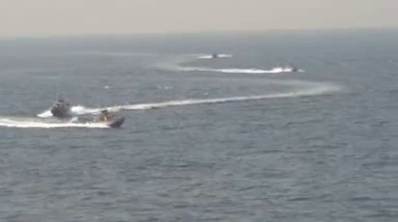
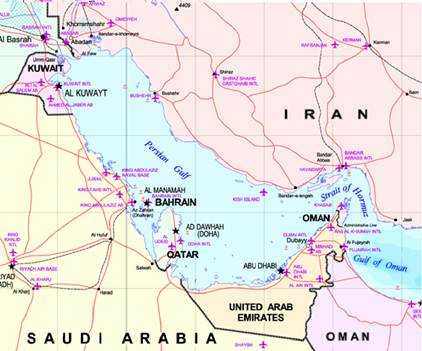
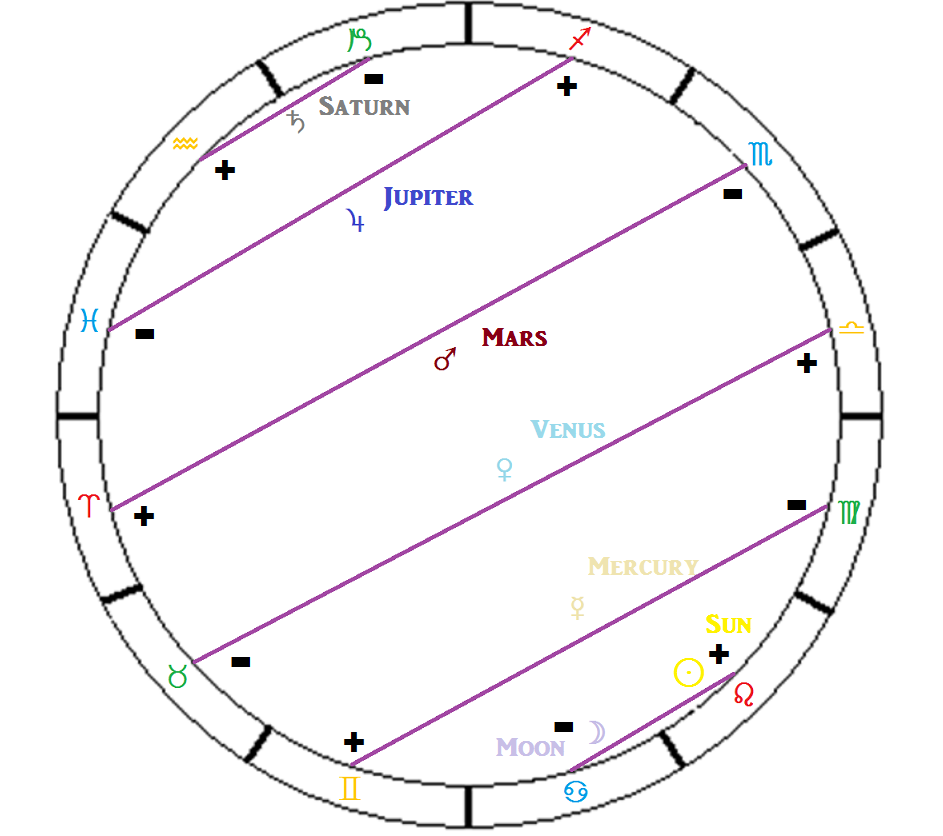
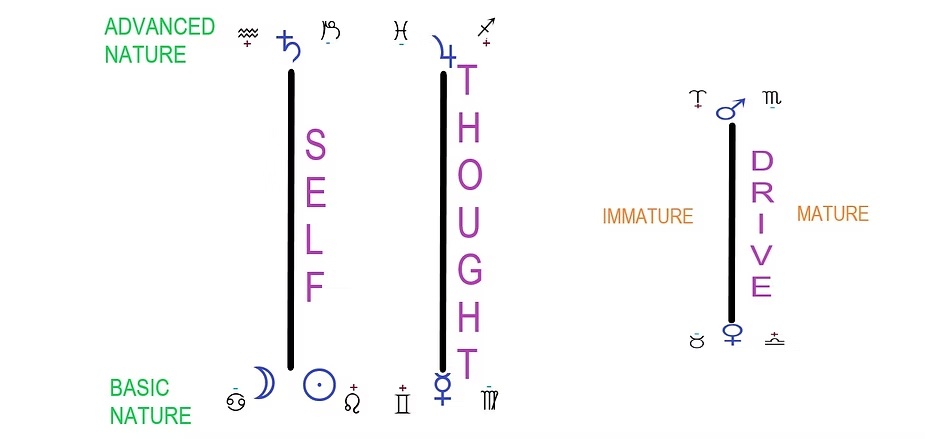
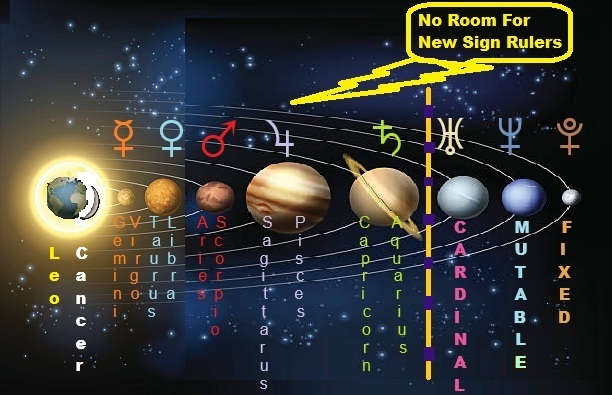
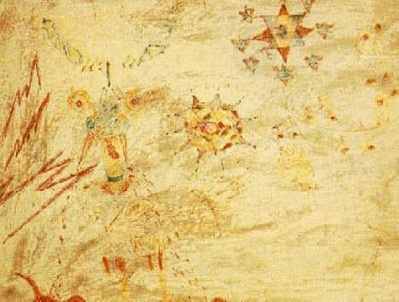
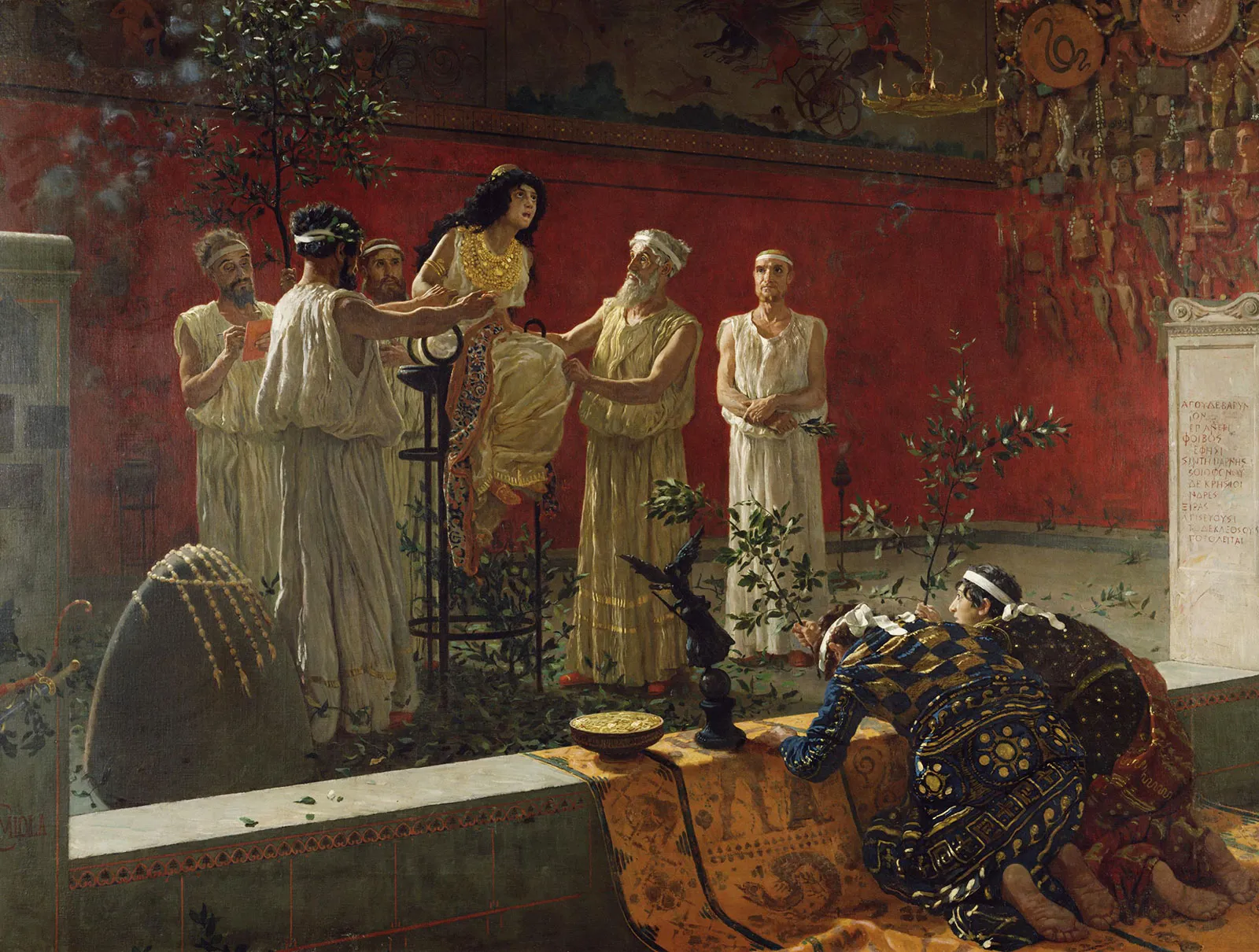
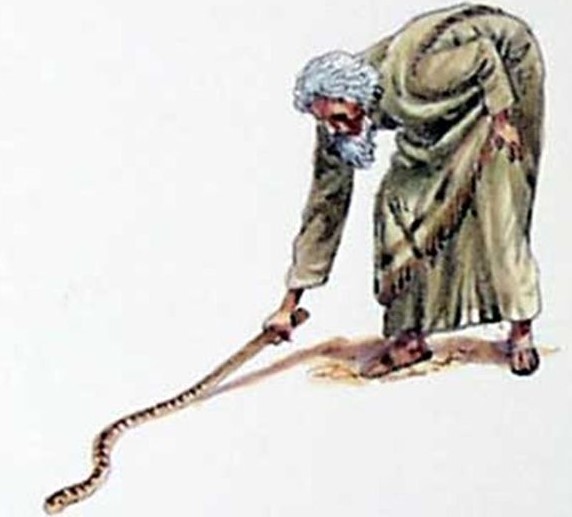


 Nostradamus Blog