This quatrain has been said to foretell of either Napoleon or Adolph Hitler. That would be amazing, if it was seen as that before either Napoleon of Hitler rose to power. As a Prophecy of something to come, it fails in that rgard; but the failure is on the ones who make those claims. Those claims are false, as this quatrain is not about Napoleon or Hitler, it is about that pesky A-rab, Osama bin Laden (who is not dead, believe it or not).
Here is quatrain III-35 in print:
Here is how the Crystal Links website translates this into English:
………………..From the very depths of the West of Europe,
………………..A young child will be born of poor people,
………………..He who by his tongue will seduce a great troop:
………………..His fame will increase towards the realm of the East.
In this quatrain there are multiple uses of the French word de, both capitalized and in lower-case, with it a stand-alone word or a contraction with an article or noun (Du and d’Europe). This word is a directional preposition, which means “to, from, with,” or “of.” In The Prophecies, it is important to try and not repeat the same translation for one French word repeated, so the multiplicity of meaning becomes apparent. Each word can translate as any of the viable translations, as long as adjustments are made to the ones that follow, so they express differently. That is an important element of this quatrain, as the directions make it possible to view this quatrain in a new light.
It is also important to realize that there is no article use in The Prophecies. This is because le, les, la, add nothing of value. Even in the title of Nostradamus’ work – Les Propheties – the Les should be read as “Them,” where that adds the important insight of “Them” plural number “Prophecies” coming from an important “Him” (Le). In this quatrain l’Occident (le Occident), Du (De le), and au (à le) should be read as “him, he,” or “it,” primarily pointing to a male that is the focus of this quatrain. This is further supported by the possessional pronouns sa and Son, which is of “His” making. These small details are important to not be overlooked.
With this said, look at how a viable English translation differs from the one offered by Crystal Links.
………………..To he added secret from it West of Europe,
………………..With wanting inhabitants of a country one lusty child will be bred:
………………..Which by reason of one’s speech will beguile mighty multitude of people,
………………..His reputation with him realm of East more will grow.
This changes profond from a general assessment “of the Western of Europe” as some mysterous place “deep” in there and says “Western Europe” is where “He” has directed “To.” That movement is an “additional” step “Of him” who has a plan involving “Western Europe.” That plan is “secret,” so “With him added to Europe,” he does not make himself publicly known as there. Instead, “he” goes “deep” underground, and stays in a “secret” lair. This is then Osama bin Laden going “To” the Pyrenees Mountains of “it Western,” as the natural border between France and Spain, two nations “of Europe.”
With that main theme statement projecting this movement of “him” to be where his plans of destruction will be focused, a comma mark separates this theme that governs the whole quatrain, allowing the secondary theme statement (line two) to begin a new line of thought that is relative to Osama bin Laden being in a Pyrenees cave. There, “he” will be “With wanting inhabitants of a country,” who are the Basque people. Their ancient kingdom became usurped by France and Spain, such there are indigenous Basque in southwestern France (French citizens) and in northwest Spain, primarily in the Pyrenees region of Navarre (Spanish citizens). The Basque are “wanting people” because they want to again be “one” autonomous nation, separate from France and Spain.
This is where Osama bin Laden will bring a “youthful” perspective to an ancient problem. It will mean the liberation of the Basque from their overlords “of Europe.” This will fuel the passion of the Basque with “lusty” dreams that a “newborn” nation “will be born” and “will be risen” from the oppression they feel as second-class citizens of two countries. This means a unification of the Basque with Osama bin Laden and his plan to overthrow “the Western of Europe,” so the Basque will become a “child” that “will be bred” by this mastermind criminal, so they “will issue from him,” as “he” commands.
With this seen, the secondary theme statement ends with a colon, meaning line three will explain or clarify this “young infant” that “will be born.” This is then importantly focused on “That which will be bred,” where the Basque are “Who will be issued from” the mind of Osama bin Laden, as “his newborn child.” The Basque, “Who” are traditionally devout Roman Catholics, will turn away from nations founded on Christianity and the Church of Rome, “by reason of his speech.” This is not the foaming at the mouth vitriol of an Adolph Hitler, but the “reason” stated from “his” understanding the plight of the Basque, because it is the same as the Palestinians. It will be “his” explaining a plan that will make the Basque become a small, but vital part of the whole. Thus, they “will be seduced” to join forces with “him.”
The key element of this unity with the Basque people is they are considered citizens of two enemy nations and can therefore freely go places in France and Spain that will not draw attention of intelligence agencies. Therefore, the Basque being “added” to Osama bin Laden’s plan “will beguile” the “mighty” and “substantial” powers that are France and Spain. When the time comes for a massive invasion of both countries, by powerful “troops,” the Basque will be seen as a “multitide of people” fighting against those invaders. The Basque will then betray that trust and become a “mighty rabble” that will take revenge against those who refused to listen to their plight.
Understanding that as the clarification as to what “will give rise” towards the forming of a “newborn” nation, line three ends with a comma mark, separting that line of explanatory thought from the statement of line four. This then places important focus on all that will be “His,” where that is Osama bin Laden as a would-be emperor, like Napoleon and Hitler. This will be a “reputation” that has become synonymous with Osama bin Laden, which is surprise attacks that terrorism enemies. This says “His public voice” is recognized as coming from “in him,” where “His” soul is possessed by the soul of Mahommad, making “him” be the Antichrist to one’s soul divinely possessed by Jesus. Osama bin Laden has been allowed this “realm” of authority by “His” supporters “of Asia,” where the Islamic power “of the East” is Iran. They will finance all the needs of Osama bin Laden, based upon “His” plan to destroy Christianity; so Osama bin Laden will have “His” committed soldiers in this “secret” invasion. That “will grow” greater than Muslims united with Basque, because “from Eastern of Europe” will come Communist allies that want to destroy Capitalism and take the bootie of victory as their own.
This is a rather well-known quatrain, in the fact that it has made the rounds as one of the hits of Nostradamus (hit meaning he got one right). Let me introduce you to that one.
Quatrain VIII-01 states in French:
………………..PAU, NAY, LORON plus feu qu’a sang sera,
………………..Laude nager, fuir grand aux surres,
………………..Les agassas entree refusera,
………………..Pamplon, Durance les tiendra enserres.
Crystal Links shows this:
………………..Pau, Nay, Loron will be more of fire than blood,
………………..to swim in praise, the great one to flee to the confluence (of rivers).
………………..He will refuse entry to the magpies
………………..Pampon and the Durance will keep them confined.
Erika Cheetham (1973) had the opinion that the all-cap words were more sensational when the comma marks are tossed out and the letters made to say NAPOLEON ROY. That would require reading the “au” of PAU as “o.” She did admit that the three all-cap words are small communes in western France.
John Hogue (1997) agrees with Cheetham, calling the rearrangements cryptograms, with Corsican spelling making an anagram possible, while throwing in one rearranged set of words (roy being one) says Destroyer King. He then mentioned that the Amazing Randi (a debunker of magicians, having been one and knowing everything is a trick) listed this quatrain being said to be about Napoleon I his seventh greatest charade in his debunking history. Hogue then argued with Randi’s inability to see the insignificance of three small communes as reason to leap onto the Napoleon assessment.
This is a translation that would make dead Randi remove this quatrain of Nostradamus as one he debunked. And … by the way … Randi never debunked Nostradamus. He debunked those making things up and using Nostradamus’ name. Nostradamus wrote what he wrote (as published in 1568). This is that:
Here is a logical translation of this French into English, maintaining the all-caps, capitalized words and marks of punctuation:
………………..STAKE, SHIP, HIM GOLD SOME added dead that in lineage will issue from,
………………..Praise to float, to escape mighty to them cork ones [or over is],
………………..They cried out access will cast off,
………………..By reason of ample one, Duration [or A long life] them will hold restrained ones.
As you can see, there is nothing about Napoleon. People that want to see Napoleon get all hot and bothered because Nostradamus wrote L’antechrist trois in quatrain VIII-77 and the Hollywood production with obese Orson Welles read lines that made it appear Nostradamus predicted “three Antichrists.” That then made Hitler one and the one to come the second; so, … hmmmmm … I know, make Napoleon the third one! That is wrong on all counts.
The world has been filled with antichrists since Jesus lived on earth; and the Apostle John wrote about plural antichrists in his letters. Napoleon is actually a folk hero to the French, as he represents their last time as a world power (they should not have cut the heads off of innocent royals). So, quatrain VIII-01 is not about Napoleon.
An all-caps word is like a capitalized Et being like a most important ampersand. A capitalized word is one of importance. A word written in all-caps is most important to grasp. The main theme here begins with a crop cap P, with the letters AU connecting to that. Again, all ten of the first quatrains in a Centurie have a drop cap and a word in all-caps (one exception being quatrain X-01, where the letter A is in drop cap, followed by a separate word that begins with a capitalized L (L’ennemy). That makes Abe the all-important word to grasp. Here, the main theme statement begins with two all-important one-word statement, which are PAU followed by NAY.
The word PAU is listed in Cotgrave’s dictionary, where he simply defined it as meaning “A STAKE.” Dropping the article, the importance here is “STAKE,” which is a wooden rod hammered into the ground (a PAL or “POLE”). It us used to mark boundaries, while also being used in acts of punishment, where some people were burned at the “STAKE.” That then leads to NAY, which is read as NAI, meaning “SHIP,” with Cotgrave referring the reader to see it as synonymous with NEF, which adds the meaning of “VESSEL OF THE SEA, SAIL; or the “NAVE” of a church” (which is made to resemble a bark or barque). When a “STAKE” is read as the boundary of Heaven, as marking the conditions of entry, to follow this with an all-important “SHIP,” which is the Roman Catholic Church, that most importantly says they are responsible for making that “STAKE” be known by all Roman Catholics. Thus, the reason the Church is known as the “BARK” of Saint Peter is it is a “SHIP” that fished for men’s souls; but when “STAKE” is seen as threatening, the “SAIL” of the Church must always be turning into the wind (as zigzaging to keep from being blown off course), following the divine insight of Jesus.
With this in view, the comma mark that sets NAY as a one-word statement of much importance then pauses for reflection on that, before leading to the all-caps LORON. To read this as the small commune Oloron-Sainte-Marie is quite a stretch, by having to add a capitalized O to make it become that. The etymology of that name is said by some to come from the Basque word olore, meaning “fragrance” or “scent.” Still, that requires a non-existant O. This means the simple solution is to divide the word into L‘OR ON, where the contracted L’ becomes the masculine pronoun “HIM,” attached to “GOLD.” This is what distracts “ONE” or “SOME” from steering the “SHIP” towards the “STAKE” of Heaven. This then implies strongly that the popes of Rome must find Yahweh as the “STAKE” that the voice of Jesus within lead “HIM” to steer the “BARK” of Saint Peter to, with Jesus within being “HIM GOLD” that divinely possesses “SOME,” with the pope being “ONE.”
This then ends the three all-caps words, taking one to a statement that “HIM GOLD ONE” must be “added,” making a pope become “more” than simply a man, as he it then led by an inner “fire” or “light” that sets the “SAIL” towards the “STAKE.” However, if one does not become “more” than just a man, that means the man pretending to be a holy leader will be “dead,” as the soul of Jesus will be “departed” from that man’s soul. This places a pope in the same category of all lost souls in bodies of flesh as being “deceased,” alive only as long as the flesh allows.
This option of “light” and “dead” then points to “that in” or “that with,” where “that” choice of “light” or “dead” is up “to” the soul-body. This means one’s “lineage, kindred, parentage” is either holy and divine or ordinary and worldly. The meaning of “blood” is then the metaphor of Jesus being that everlasting waters of Salvation. Still, when the saying is “blood” is thicker than water, this becomes the difficulty of committing solely to Yahweh and being reborn as His Son (His holy “blood” or sang rael, poured out from the Holy Grail or San Greal). This decision made by a soul is then what “will be, exist, stand, rise,” or “issue from” within that soul-body. Thus, the main theme statement has zero to do with Napoleon and everything to do with knowing the “STAKE” that sets the boundaries of Heaven and being a “SHIP” that sets “SAIL” to that goal. It can only be obtained by joining with “HIM GOLD ONE,” becoming the Son reborn, related through “blood.”
After the separation of a comma mark ending the main theme line, the secondary theme statement begins with a capitalized Laude, which becomes the Ablative form of the Latin word Laus, meaning “Praise, Glory, Honor, Merit, Value,” and “Esteem.” Latin should be seen as a hint towards Roman Catholicism, as it is the official language of Vatican City. This makes the “blood” be dependent on who one gives “Priase” to (Satan is the “ONE” offering “HIM GOLD” of the material kind). This “Honor” will cause a soul in its body “to float” the turbulent winds and seas, without the threat of sinking. When demonic possession is the spirit one finds “Value” from, they will be able “to swim” after the “SHIP” sinks.
An internal comma mark then pauses this view, where the objective is “to escape” and “flee” from the “mighty, substantial, high,” and “lofty” demands of human life. The word grand always must be read in context with nations and peoples who give credit to Jesus and God for being “great,” in comparison to others with lesser worldly blessings. This is also a statement of the “noble” ones who have power and influence over many, such as royalty and popes. This is to find Jesus as the “great” one “in them” who believe and give him credit and “Praise.”
This then leads to the word surres, where surre is the name of an acorn from a cork-producing oak tree. This is then “with them acorns” that become the fruit of the tree. When cork is read, this become a method “to float.” Still, because Cotgrave did not list this word in his dictionary, it can be divided into sur res, which states “over are again.” This use of res (as the second-person present Indicative of rêtre) says of each of “them with” Jesus, then he is “over you,” as “you are reborn” from “above.”
With the secondary theme statement placing focus on how a “SHIP” navigates the turbulent water of worldly existence, the comma mark ending line two separates that line of thought from line three. Following the plural pronoun “them” of aux, line three begins by importantly highlighting “Them” that are not those divinely possessed, but the “dead who at lineage will be,” who cause turbulence that attempts to sink the “SHIP” before it can reach the “STAKE.” Thus, “They cried out” (from agassas being the second-person past simple form of agasser) as “Them annoyed, urged, incensed,” and “provoked” (from agassas being agaça-s, the plural number to the past simple form of agaçer). This says “They” will be “urged ones,” where an inner demon is given a mission that says “entrance” to Heaven, via compliance to the “STAKE,” “will be refused, rejected, repelled, denied, renounced, cast off,” and “foresaken.” That makes “Them” be agents of evil.
Again with a comma mark ending line three, that line of thought that focuses on the influencers that sink the “SHIP” for the fishermen of souls, line four begins a new line of thought. This appears to be one Spaish city and a French river, which certainly adds nothing of value to this quatrain’s flow of words. The first word is made into an important one-word statement by an internal comma mark, where Pamplon must mean more than Pamplona, Spain. That meaning comes from reading this as P’amplō-n, where the contracted P’ represents Par, meaning “By reason of” ot “Through.” The word amplō is the a return to Latin, with that being the Ablative and Dative form of the word amplus, meaning “ample, wide, extensive,” and “important.” The suffix -n is the adding “one” to is “By reason of ample.” This then relates to an ability to ignore “Them” who seek to block one’s “entrance” into the divine realm, as those able “to escape” such diversions because of “noble” Jesus “in them as the “blood over the reborn.”
Seeing that importance in Pamplo, the word following the comma mark is a capitalized Durance. While this is perfectly spelled to reflect the name of the river that flows from the southwestern Alps, across southeastern France, until it meets the Rhone River, near Avignon. That becomes meaningless; but the word Durance means “Durability, Duration,” and by extension a “Long life.” This says that a soul given “ample” protection by the presence of Jesus’ soul, as one’s Lord within, then that soul-body is filled importantly with the “Durability” to resist all temptations and tricks of Satan, in order to have a “Long life” that equates to eternal Salvation. Rather than succumbing to the calls to rejoin the “dead” of soul, the “light” within keeps them focused on the “STAKE” of Yahweh. This is then a result that has “them” who Jesus “will hold” and “keep” safe, as “they will enjoy” being so “restrained, enclosed” and “held hard ones.”
Hopeully, this quatrain can be seen as one that most importantly tells one how to become Saved, which cannot come from a pope or a king. Each individual must realize that self-will always fails eventually; and Satan will never tire of tempting one’s beliefs that stand apart from Yahweh and Jesus. Only with Jesus as one’s Advocate, sent by the Father to grant and maintain eternal life for one’s soul, can one resist those who are “annoyed” one has inner calm, causing them to “cry out” as distractions meant to divert one’s course. There is nothing about Napoleon in this quatrain; but Napoleon could see both the Church and State of his time were corruptions that should be led, not followed. One must have that attitude when seeking Yahweh as the only goal that is worthwile.
I have broken this quatrain’s interpretation into two part because it is rather deep and involved. As the first quatrain found after the Preface, it makes an important statement about who will be able to understand what is written in the poetic verses. These four line then become a microcosm of the macrocosm that is the Preface. For one to realize the truth of this first poem, one needs to discern the truth of the Preface. This quatrain then confirms portions of that explained in introduction.
With the two main themes stating Yahweh as the source, with His “BEING appointed to” a wife-soul, such that the “darkness” that clouds the words, placing them in a “hidden” form, requiring devotion to “study,” rather than quickly read, this demands one receive the Advocate that is Jesus’ soul. With one coming from divine creation and returning each life ended to Judgment, for one to stand “Alone” in the world as a soul “remarried” to Yahweh, devoted to being His servant, that brings from “above” the resurrection of Jesus “there,” within the flesh of the reborn Son. This is not to be pampered or to have one brag about being saved by Jesus, it is to enter ministry in that name. Thus, one’s soul-body becomes the “saddle” or “seat of bronze” upon which the soul of Jesus sits, uttering divine Prophecies of truth.
The secondary theme then has line three clarify this “seat of bronze” or “brass.” The first word of line three is a capitalized Flambe, which means “a Flame” and “a Great blaze of fire,” with the accented (past participle) Flambé adding “Flamed, Blazed, Glistered; and also Blasted with flaming or hot scalding lead” (Cotgrave, 1611). In Part 1, I wrote how the translation of “saddle,” in which Jesus was positioned, became a depiction of him on a white horse, as Revelation 19:11 depicts. In Revelation 19:12, this return of Jesus is portrayed with “the eyes of him like flame of fire.” This depiction continues in Revelation 19:15, where it states, “out of his mouth comes a sharp sword so that with it he can strike down the nations;” adding “he will shepherd them with a rod of iron,” which will be “of the fury of God Almighty.” This becomes Nostradamus as the “white horse” that wears the “saddle upon” which Jesus speaks (“out of his mouth”) through The Prophecies, as sent by “God Almighty.” The stories of the quatrains “Blaze,” such that the “nations” that rule over souls will be “Blazed with flaming lead.”
Detailing that important word is exigue, which is Latin (Vocative of exigu), meaning “cramped, small, few in number, and narrow.” The French equivalent is exiguë (feminine of exigu), means “small, modest, and insufficient.” This says this important “Blaze” of The Prophecies is so difficult to discern (even as clear pictures of war, famine, disease, and death are found in the quatrians) that this “Great blaze of fire” coming will seems “small” and insignificant to the masses. So many false shepherds will have cried “Wolf!” – with no wolf to be seen – that the chances of the future actually manifesting seem “small.” This (when John’s Acopalypse prophecy is applied to the ‘second coming of Jesus’ or the promised Messiah for the Jews [who reject Jesus]) becomes a story people do lip service endorsing, when few actually believe.
That leads to the word sortant, which is the present participle of sortir, meaning “outgoing, going out, issuing, coming forth, going beyond, furnishing, delivering, and bringing out of,” This says, much like when Saul changed his name to Paul (meaning “Small, Little”), with “few in number” quatrains making sense, from that “narrow” scope of the whole, there will be an “issuing” and “coming forth” of truth, which will be “delivering” and “bringing out of” a deep, amazing truth that now is when the future has come. It is like being in the middle of a mine field, after someone has triggered the first of many dangers that surround.
Keeping in mind this is explaining or clarifying those who are “Alone” as souls “remarried” to Yahweh, reborn as His Son from “above,” the truth will then be possible “there” (or “here” on earth) via one like Nostradamus, who is the “saddle” or “seat of brass” that speaks the truth of Prophecy in the name of Jesus. This is then said to come “to” those who have sacrificed the rewards and desires of the material realm, for a higher goal (eternal Salvation). They find great warmth and comfort listening to the revelations of Yahweh in “privacy.” They enjoy the “solitude” of prayer and hearing the instructions they each must follow. Each of these souls in flesh reborn as Jesus will have gone to the “wilderness” (their proverbial forty days fasting from worldly wants), no longer willing to waste their souls in commitment to a “desert” that offers only “loneliness,” void of the moisture of everlasting waters.
With this clarification grasped, line three ends with a comma mark, separating it from line four’s train of thought. Line four then tells of the promise that comes from servitude to Yahweh, as the Son reborn into flesh. Line four then begins with the past participle of the verb Faire, such that Faict means “Done, Acted, Made, Wroght, Forged, Composed, Framed; Fashioned; Performed, Exploited; Achieved; Finished and Accomplished.” As a noun, it means “Fact, Act, Action, Word, Deed; Feat; Performance, Achievement, Exploit; and Argument in pleading.” Following line three’s focus on that “small issuing out of privacy,” the importance of “Act, Acted,” and “Action” makes this be the name of the book that tells what the Apostles “Performed,” as they “Fashioned, Forged,” and “Accomplished” the spread of the way of life that was true Christianity. The brother of Jesus, James, was led by the soul of Jesus within his soul to write, “Faith without Works is dead.” Thus, line four is putting important attention on that “Done” and “Performed” by Saints who are told the truth of The Prophecies (as well as all divine literature).
The details to this “Work” is then so other will be able “to prosper” and “thrive,” after they have been “given success unto” how to commit to Yahweh and gain eternal Salvation by being reborn from “above” as Jesus. This is all “who” and “whom” will be “born abides” in the name of Jesus (reading n’est as a contracted né to est), versus those “who” and “whom” “not is” so divinely possessed (reading as ne est). This is not determined by Yahweh, nor by Jesus, as it is “to” the one “who” seeks to be “with” eternal life assured, willing to submit and commit fully unto “remarriage” of one’s soul with the Spirit of Yahweh, begatting the soul of Jesus as His Son reborn in His wife-souls. This becomes a matter of “belief.”
The word croire means “to believe or think assuredly; to trust, have confidence in, give credit unto; also to lend, put in trust with, and commit into the hands of” (Cotgrave, 1611). This is where one must understand the difference between “belief” and “faith,” where many “think assuredly” those two are the same. They are not. “Belief” is a matter of learning what someone one “trusts” has told one, such as a teacher in school, a foreman at work, or a pastor at church. This becomes an exercise of memorization, where the only thing known certainly is the one telling one what “to believe.” Such memorization is the testd and scored, meaning one is more conditioned “to believe” that which is judged as the right answer. “Faith,” on the other hand, is personal experience that is greater than “belief.” “Beliefs” can be shattered when a “trusted” teacher proves to be a liar or a fraud. That comes to dreamers when they wake up; but “faith” is always confirmed by life; and this judgment is “private” and “Only” known by those with experience.
A minister once shared with the congregation that he was a licensed pilot, which was a talent he shared with his students in a university. His students “believed” he could fly an airplane because he told them he could. However, he said on stormy days he would tell the students that he would be flying from that college town to a larger city after class; and anyone wanting to join him could go along free (round-trip). When the thunder and lightning was all about, there were never any who expressed “faith” in his flying abilities, taking him up on his offer. That is the difference that must be discerned here.
This then leads to the last word of this quatrain, wich is vain. This means “vain; empty, void; frustrate; frivolous, trifling, idle, without purpose; also faint, weak, feeble, forceless.” This becomes a statement of whether one is “born abides,” as a servant of Jesus, the Lord within, “who” one experiences and “trusts” completely with “faith” or if one “not is” divinely possessed by the soul of Jesus and known nothing of that presence. Those “to put confidence in” the directions of Jesus (without being frightened by the sounds and sights of thunder and lightning) will be “empty” of self-will, self-ego, and self, just as a virgin bride places her complete trust in her new husband to lead her properly. It is those “who” sacrifice only “to prosper” in the material realm, “who” reject Yahweh and have no “belief” that Jesus can be anywhere other than far away in heaven, sitting on an invisible throne next to God. They deny divine possession and the “Work” necessary to bring that within one’s “BEING.” Their souls will be “void, empty” of promise, as their lives will become “idle,” from “frivilous” pursuits. They will find when Judgment comes how true it is that “vanity” is a deadly sin.
This means quatrain I-01 speaks of the commitment Nostradamus made so long ago, whereby the words can ring true as him telling about a typical night while writing quatrains. That serves no purpose as a Prophecy. That role manifests when one’s eyes are open to the demand that one become a rebirth of Nostradamus the Apostle and Saint, which means also being a soul-body committed to Yahweh in “remarriage” Spiritually. “Only” with Jesus within as one’s Lord can one realize the truth of the future that is now upon us. The purpose is not to stop the world from being the world – sin can only exist in the material realm – one can only save one’s own soul. One does that through sacrifice of self unto Yahweh and being reborn in the name of the Son. That then leads to “Action” and “Deed,” which is telling other lost seekers how to submit to Yahweh and be saved.
The first quatrain found in The Prophecies is often ignored as one with impact on all future readers, seen simply as an explanation of the ‘magical’ process that Nostradamus used when writing his verses. The French written is this:
ESTANT assis de nuict secret estude,
Seul repousé sus la selle d’aerain,
Flambe exigue sortant de solitude,
Faict prosperer qui n’est à croire vain.
This is translated into English by Crystal Links as this:
Sitting alone at night in secret study;
it is placed on the brass tripod.
A slight flame comes out of the emptiness and makes
successful that which should not be believed in vain.
Notice how changes have been made, such as lines two and four not beginning with a capitalized word. The word “tripod” is magically added, as it was not written (tripode or trépied). Still, there is an air of similarity surrounding this translation, making it almost have that meaning. Here is a picture of this quatrain, which is the French that led to that translation:
From this it is clear to see the drop cap E that is the first letter of an all-caps word ESTANT. While every first quatrain in a Centurie is printed with an elaborate drop cap, with other quatrains likewise showing line one beginning with an all-caps word, this cannot be seen as some printer’s right. It must be respected as intended to be written in this manner, whereby a word in all-caps would be an all-important word to discern. As such, the Crystal Links translation ignores this presentation (as well as maintaining the punctuation marks written).
Here is a viable English translation that abides by that written in French:
BEING placed from darkness inward meditation,
Alone settled upon the seat of brass:
Blazed sparingly issuing out of solitude,
Made to prosper that which not is to believe frivolous.
The all-caps word ESTANT is the present participle of the verb ESTRE (now ÉTRE), meaning “BEING, SUBSISTING, REMAINING, ABIDING, STANDING, or RESTING.” This makes it the opposite of “Sitting,” but the all-importance must be seen as the state of life that is “BEING” and “EXISTING.” The importance of all-caps then takes the reader beyond a state of self, to the presence of a most divine “BEING,” where one’s soul is joined with that celestial presence, so two soul-spirits are “EXISTING” as one. This is vital to grasp.
This is then detailed by the word assis, which means “set, sitting; seated, placed, settled, fixed, planted; also limited, appointed; taxed or assessed.” A separate listing by Randal Cotgrave shows it used to denote “assessements or impositions.” This becomes a statement that says the state of higher “BEING” is “settled, fixed,” and “planted” with one’s own “Being.” This has been “appointed,” from a divine “assessment” of one’s self-sacrifice to serve Yahweh as His wife-soul. This makes the “BEING” be the soul of Jesus, where’s one’s soul has become reborn in his name. Thus, a “EXISTENCE fixed” and “appointed” is a Saint or Apostle.
To then link that to the preposition de, which links to nuict, this states movement “to” a new state of “BEING,” “from” one that was surrounded by “darkness,” where “night” is when the light of the sun has disappeared, leaving one in a state of “BEING” that is “seated” or “sitting” “with” an “absence of light.” That is the confusion within one’s soul that is lost and unable to see the truth.
When the word secret is relative to this “absence of light” and “darkness” that is surrounding one, the truth is then “hidden, concealed, abstruse, mystical,” and “unknown.” The truth is a “secret” that is a “mystery,” contained “inward” and kept “close” from “counsel.” This then becomes something that requires “study,” through “diligent search, meditation,” and “beating of the brain about matters of learning.” (Cotgrave, 1611) To have “private study” means to personally “care,” show “diligence, labor,” and “endeavor to contrive to accomplish [compass] a matter” sought to know. This is not public education, as much as it demands “affection, desire, good will,” and “great mind unto” understanding that which the public is “in the dark about.
This makes the main theme statement less about Nostradamus setting the stage for his solitary talents being bragged, as it is more applicable to all in the future who will repeat his state of “BEING” that has become “appointed” to escape “from” an “absence of light,” whereby the demand for “private study” requires one listen to the “inward” voice that comes from “meditation.” One is not attempting to figure things out, as one has an “affection” to “accomplish good will.” This is the ministry of a Saint, as a Saint is in the “dark” without the light of Jesus leading one’s “learning.” This is then a main theme that tells readers today, “To understand The Prophecies written by Nostradamus, one must surrender one’s soul to serving Yahweh totally, so one will be reborn in the name of Jesus. That “BEING fixed” will remove the “darkness” through divine insight, just as that Nostradamus received.
With the main theme statement (line one) separated by a comma mark, the secondary theme (line two) then begins a new line of thought based on that, making the importance of Seul need to be understood. This word means “Alone, Single, Only, Sole, Only one, Mere; By itself [singular or several].” This importantly states the union of that “BEING” within a “Single” individual, which sets the “Lone” soul as unique, “By itself,” with all others of like union being a collection of Christians that are “By itself” a “Single” group where each is “Alone” with Jesus within. With this understood, the word repousé is one that implies words of different spellings.
This word can be repoussé (from repousser), which Cotgrave listed and referred the reader to look up repoulsé. He then translated that word as meaning “repulsed, repelled; foiled; or thrust, pushed, or driven back.” The addition of an s and the modification of that s to an l means it would be acceptable to also read the word as répousé, where the Middle French spelling loses the accent, becoming respousé. That word means “remarried,” as “re-spoused” or “married again” and the word can be read as r’espousé, with re- acting like an abbreviated combined prefix. The implication is the one where an individual desired to be joined, as taken by “Only one,” but that union was “rejected” or that first marriage was annulled or divorced, leading one to become “remarried.” Still, if one changes repousé to reposé (tossing away the u), one becomes “reposed, rested; settled, stayed, quiet, grave, and discrete.” It seems Crystal Links chose to go this route with “placed.”
The most accurate application of the word written is to accent the e and keep all letters written in place, with no removals or changes. This makes répousé the primary intent of that written, although the other meanings would be intended to have merit, on a secondary level. Because every use of the word la (lower-case [460] or capitalized [141]) demands it be accented and read as là (there are only three actual uses of là in all the quatrains). This is because there is no importance of an article. Therefore, a rule for understanding The Prophecies says it is okay to add an accent mark when none is present. If one is present, that must be unchanged. Therefore, the secondary theme begins by stating, “By itself married again.”
This makes the connecting word sus become ” on, upon, up, above,” or “over,” where this stands alone as a statement that “One married again” to comes from “above,” which is how Jesus explained to Nicodemus that to be assured of Salvation (inherit eternal life) one must be born again from “above.” This makes the word sus be relative to a higher power that is “over” one (“seated with darkness”), while having come “upon” one, so two are joined together “Alone.” This says to be “married again” to Yahweh (as a soul, still in a body of flesh, one reincarnated from a spiritual union with Him before birth) results in the child of that “remarriage,” which is Jesus, the “Only” Son of His. Thus, from “above” is “there” in that body of life (soul and flesh) is Jesus reborn, gaining that soul assured Salvation.
This is then said to be relative to the word selle, which means a “stool” or “seat,” while also a “saddle” (Cotgrave, 1611). This should now be seen as a statement about the soul in the body of flesh, who (like Nostradamus) has become a “resting” place (reposé) for the divine soul of Jesus. This means Jesus uses one whose soul has “remarried” Yahweh as a “seat” from which he will operate. This becomes a servant to Yahweh and the Lord born again from “above,” where Jesus sits “upon” the “saddle” of his new flesh. In terms of John’s Apocalypse, this is the return of Jesus on a “white horse” (hippos leukos). When this then links to d’ærain, meaning “of brass, copper, or bronze, this now relates to Greek mythology and the oracle of Delphi.
The “stool” is the “seat” of Jesus, “placed above” the ether of Yahweh that prophesied the truth of Apollo.
This makes the secondary theme statement be focused on one becoming a Prophet of truth, where Yahweh “Alone” knows the future; and one must become “married again” to this “Only” source, so one can become a tool that guides those seeking the truth. In the mythology of Pythia, the oracle of Apollo at his temple in Delphi, people questioned and were told the truth; but they were always finding the truth different from their interpretations of it. This is how people are drawn to Nostradamus to tell them the truth about the future, with them going away thinking they know what to expect; but they find out those preconceptions were far off the mark. With this how Nostradamus explained The Prophecies to be, the secondary theme ends with a colon, meaning this “saddle of bronze” will be clarified in line three.
On page 8 of the Preface to The Prophecies of Nostramus is a section that explains the source as God (Yahweh), which had nothing to do with Nostradamus having some special talent with occult tools, which allowed him to accurately predict the future. If one reads Les Propheties as The Predictions, then one will never be able to understand the truthNostradamus’ work contains.
Here is that section:
By taking note of the marks of punctuation and other symbols, this seemingly long ‘sentence’ (82 words) can be broken down into segments, which each acts as an independent sentence of words. These words of French and Latin can then be translated into English as this:
More in regard of with the determination that oneself comes to achieve,
being the means for him final decision of a judgment divine,
that you intend I to make clear:
for which cause to have understanding of them causes future ones,
rejecting far off them fantastic ones imaginations which they will be coming to pass,
limiting there particularity to them places,
coming from God inspiration metaphysical:
agreeable with them heavenly ones representations,
them qualities,
& one distinguished from the time of propriety concealed for goodness,
authority,
& ability coming from God:
upon presence of which them three times are comprehended through everlastingness,
the accomplishment of a circular course holding with reason course passing along,
in sight,
& to come:
[Latin] wherefore all things they are naked
& exposed
& so forth.
In the middle of this is written limitant la particularitié des lieux, which translates as “limiting there particularity to them places.” This must be seen as an instruction that says the names of “places” in the quatrains are not always what they seem to be. This does not mean every apparent name of a “place” is not that, but only a “limited” number have that “place” as the primary intent of translation.
This means the names of “places” are usually capitalized, giving the appearance of proper nouns. However, the rule of capitalization states that the word capitalized is important to grasp and discern. When there is the name of a “place” (simply for example Paris), one must ask, what is important about that “place”? This is especially important in quatrains that present what seems to be a whole line of verse that is little more than the names of “places.”
Most frequently, such capitalized words are somewhat misspelled and followed by a comma mark. The misspelling must be seen as a clue that the name of a place might be implied, as being important on a secondary level of intent; but with “God,” the “divine” and “celestial” stated to be the source, there is no room for mistakes, such as in spelling. Everything must be taken as written for a specific purpose, where the misspelling is “limiting there particularity to them places.” When a comma mark separates one capitalized word from other words in a line of verse, as an important one-word statement, the urge to look deeper at what that capitalized word means must be felt strongly.
In some cases, the name of a “place” has a history that becomes the primary intent. In other cases, the etymology behind the name, which is why the name was given to a “place” is the importance. In some cases, where a properly spelled name of a place has obviously nothing to add to the line of thought leading to the “place,” that word should be looked at for alternative ways to read the letters.
One such example is Lorraine, which is a correctly spelled region of eastern France. The etymology, as rooted in “land of Lothar,” a Frankish king from the 9th century, adds little (if anything) to the places where it appears written (in 4 quatrains, 2 as Lorraine and 2 as Lorrain). This means the letters can divide into L’or raine, then stating “It gold frog” (as Lorrain -> L’or rain, then “It gold bough”). Depending on the line of thought surrounding this seeming “place,” this alternative translation must be considered.
To begin to reach this point of analysis, one must then realize that Nostradamus instructed understanding this “limitation” placed on “places” demands insight that comes from Yahweh, through His Son Jesus “one” with one’s soul-body-brain. That “inspiration metaphysical” includes understanding the symbolism behind the planets and luminaries, which comes from knowing the language of astrology. The number “three” (trois) is symbolic of “divine” possession, with this being an “everlasting” union between one’s soul and the soul of Jesus. His inner “presence” bring eternal Salvation, as an Apostle or Saint; and that is who will see the truth of this written by the hand of Nostradamus, as one with the Mind of Jesus.
The purpose of understanding The Prophecies is to lead other souls (those lost) to their own state of “everlasting” union with the soul of Jesus. That is the ministry of one reborn from above in his name. Thus, as Paul was such an Apostle, as a predecessor to Nostradamus and the model of all so “divinly inspired,” this reading ends with a quote from Paul in his letter to those who understand the language of Hebrew. There the Apostle wrote, “Nothing in all creation is hidden from God’s sight. Everything is uncovered and laid bare before the eyes of him to whom we must give account” (Hebrews 4:13, NIV). That says the future of The Prophecies is from the All-Knowing Mind of Yahweh, passed on to His Son’s servants to expose the corruption in the world. It is aiding and abetting that corruption (active and passive) that all souls will be held accountable for in Judgment.
The lessons of disbelieving are found repeated in Scripture, where those who doubt a Prophecy presented by an angel of Yahweh, will be punished for that doubt. Sarai laughed when visiting angels said she would become pregnant when she was 89 years of age. She would pay for that doubt by dying well before Abraham would die. The same was applied to Zachariah, the husband of old and barren Elizabeth, when an angel of Yahweh told him Elizabeth would become pregnant with a son to be named John. Zachariah asked how could that be; and for that doubt he was made mute until after that miracle birth occurred. To think The Prophecies is the work of a fool or charlatan is to doubt the claims of the Preface, as Nostradamus speaking as an angel of Yahweh. Those who doubt will be held accountable by Yahweh.
My number one lover is a little ole lady that lives in Ashburn, MD.
She lives right next-door to The U.S. Customs and Border Protection’s AMOC Capital Region Unit (CRU). It has a location in Ashburn, Maryland, according to U.S. Customs and Border Protection (.gov). The CRU conducts air surveillance, detection, and monitoring as part of AMO’s Domain Awareness Security Operations mission. While not a traditional intelligence agency, it contributes to national security by safeguarding the border and beyond, according to U.S. Customs and Border Protection (.gov).
I write so much about illegal immigrants that I am on their ‘favorite book’ author list. Too bad DOGE won’t let them buy copies of my books and actually read them to find out why I write so much about illegal aliens.
Oh well. I gave up commercial flying because every time my company sent me somewhere with a one-way ticket, I was “randomly selected for the strip search.” I guess having bad intelligence is better than drooling while the illegal immigrants run by.
I am now available for public presentations within the continental United States.
I am seeking groups with astrological awareness that would welcome a presentation on the birth data of historical Jesus. The fact that there is no such data known means discussing the research from Biblical times and recorded facts leads to a phenominal astrological birth chart, where the native to that chart would match Jesus.
The title of this presentation is The Star of Bethlehem: The Timing of the Life of Jesus.
I can also speak to groups of people who would like to be introduced to Nostradamus as a Christian and Saint, who was led to write The Prophecies as a warning about our present times and upcoming future. This presentation would focus on learning (generally) how to understand that written by Nostradamus; and this leads to how to understand all divine writings, such as all books of the Holy Bible.
Those interested should click on the category “Contact Form” on the title page of Nostradamus Blog , fill out the form and send that to me. I will make contact and discuss this matter via email and (if appropriate) telephone.
………………..Eleven more times the Moon the Sun will not want,
………………..All raised and lowered by degree:
………………..And put so low that one will stitch little gold:
………………..Such that after famine plague, the secret uncovered.
This is a better literal translation that maintains word order and punctuation marks, in the change from French to English:
………………..More eleven times Moon Sun not will desire,
………………..All enlarged ones & declined ones of means:
………………..Importantly lowest part of placed that scarce gold one will sew on,
………………..That following famine pestilence detected it inward.
In regards to what Erika Cheetham wrote about this quatrain’s meaning (1973), all she did was refer one to Quatrain IV-28 and suggested Luna might mean “silver.” She generally said quatrain IV-28 was Nostradamus doing something towards the philosopher’s stone and changing things.
John Hogue (1997) did not offer much more, as he basically agreed with Cheetham, saying this was an “occult” quatrain.
Everything about The Prophecies is “shut off from view or exposure, secret,” and “concealed,” being “matters regarded as involving the action or influence of supernatural or supernormal powers or some secret knowledge of them” (definitions for “occult” by Merriam-Webster). This is because everything requires one be assisted by divine guidance to see what is in plain view, but seemingly incomprehensible.
This quatrain is rather interesting and quite deep. Pull up a chair and see if you can see what I am about to reveal. I cannot see the truth for you. I can only see it for myself and try to tell you how to look at it, so you can see the same; but you have to see it to believe it. There is method to the madness, so pay attention.
In the main theme statement, a capitalized Plus importantly means “More” or “Added,” which can be a continuation of a prior quatrain that links to this. Because Cheetham saw a connection to quatrain IV-28, perhaps that information has been presented, so now “More” is “Added” to that. The detailing word for “More” is “eleven,” where the word onze only appears this one time in all the quatrains, with no uses in the two letters. That uniqueness makes this use important to understand.
The number “eleven” must be understood numerologically, as it is a ‘master number.’ This is defined by AI Overview on Google as such: “In numerology, master numbers (11, 22, and 33) are considered to have a heightened vibration, representing a greater potential for achievement and a deeper spiritual purpose.” This is then a statement of a first level of heightened (“More”) “spirituality,” where “eleven” symbolizes 1 and 1 as one. This makes the number reflect spiritual possession.
Seeing that, the word fois means “time, turn, course,” or “bout” (Cotgrave, 1611), meaning “about,” as “turning around.” This can be a statement about the “time” when “More” will be “spiritually possessed,” but because spirituality is the essence of “eleven,” the word fois can be read as foi-s, where this is a plural designation of foi (or foy), as ones of “faith, belief, trust,” and “loyalty.” To then have this link to the capitalized Luna, meaning “Moon” (as the Roman goddess of that satellite), the importance of capitalization then points to those “faith ones” that are Muslim. The association of the “Moon” and Islam is seen in the many flags of Islamic nations that depict the Crescent “Moon.”
With this now saying “More spiritual possession beliefs Islamic,” the capitalized Sol gives the impression of the Roman god of the “Sun,” to pair with the Roman goddess of the “Moon.” As both Luna and Sol as Latin for “Moon” and “Sun,” the use of Latin becomes an inference to the Church of Rome, where Latin is the language spoken in religious ceremonies. Still, when Sol is read as French, meaning “Ground, Soil, Earth, Foundation, Bottom of a place,” or “Land,” the importance of capitalization points to “Land,” which is “Muslim.” To then have this grasped as an important reason why “More Muslims” will be “spiritually possessed” by the leaders of their “faith,” placing their “trusts” and “confidences” in important “Muslim” leader, the issue over “Land” will “not” make them happy. Here, the negative ne is a stand-alone statement that says the “Foundation” of this “Added one of faith” is “Land” that should be “Muslim” “not” being that. This is then a future focus of motivation to regain the “Islamic Land” that is “not” that as they “will desire, wish, want, propose,” or “covet.” This makes the main theme statement be about Palestine “not” being an “Arab Land,” due to it being possessed by Jews, with Western-Christian support.
The main theme statement can give the impression of an eclipse of the “Moon” with the “Sun,” where the two words together imply a conjunction. That leads one to think a period of “eleven” orbits of the “Moon” (the “times” of that many “Lunar” cycles), where there would “not” be one observed from earth. However, that is a symbolic statement of the light of “Christianity” (Sol) “not will desire” to be blocked by the darkness of “Islam” (Luna), where the “spiritual possession” (“eleven”) of those “faiths not will desire” to listen to what the other has to say. In this game of dominance (where a “Lunar” eclipse blocks the light of the “Sun” and a “Solar” eclipse blocks the light of the “Moon,” the number “eleven” can be an indication of “time,” as in the year 2011. That was when “More” was “Added” to this lack of “desires” for one another and Barack Obama gave “Islam” Osama bin Laden, as dead by the “Christian” USA (Sol), when that lie “born will propose” death to America.
From that main theme statement, a comma mark separates it from the secondary theme, where a different direction from this theme importantly states what “Everything, All, the Whole sum,” and the “Total” analysis of this “Islam Christianity not will propose,” about “Arab Land.” This then states that those of the “Sun” are “elevated” in power and greatness, so they “not will want” to negotiate any weakening of their “amplified” power in the Middle East, having Israel there. On the other hand, the “Muslim Land” of Iran will have taken on “Total” responsibility for addressing this dilemma over Palestine, where they will go “All” out in “augmenting” their degree of power and greatness. They will have done this by purchasing nuclear warheads and missiles from the Soviet-Russians.
Seeing how the secondary theme has taken a position that prepares for a war that will be for “All” control of the world (as far as “faith ones” are concerned), these “increased” risks taken lead to an ampersand, which is a signal that the words to follow that mark are important to discern. This then points to the “humbled ones with means,” where this is not only the Palestinian Arabs who lost their “Land,” but “All” of “Islam” around the world, who have “bowed down” to the will of the” Christian” West, they will have played roles “of degrees,” where secret agreements “to” take “steps” within “Muslim ranks” will move these nuclear weapons from Soviet-Russia to where they will be put to use. That use will be determined by Osama bin Laden, such that “Everything enlarged” to seek him and capture or kill him will importantly be “brought low from steps” taken to have the Communist pretend-“Muslim” Barack Obama lie to the world, so “Christians born will want” him reelected to a second term, for having killed the most-wanted terrorist.
With this secondary theme seen in that light, line two ends with a colon, making line three be where clarifying statements will explain this aspect of “humbled ones to degree” or “place of honor.” As a clarification, line three begins with a capitalized Et, which does not translate as a word. Instead, it acts like a capitalized ampersand, which only appears before lines that are most important to grasp. This then says the “humbled ones of a way to something” are seen as “so low” or “in sort at the lowest part of” the equation, the West and Israel will “set” the “Muslims” as “that” in their minds and fail to see how “little” they truly know about those they have “abated.”
This then leads to the word or, which typically translates as “gold” (as a noun), but is also an adverb stating “now; but; on, go to,” and “well now.” This usage means those who see the “Muslim” power as “small” and “few” in potential will base that opinion from the past, whereas “little now” there will be “some” who “will stitch together” the signs of the “steps” and “degrees” the “Muslim Land” of Iran has taken to rise from “humble rank.” This becomes a most important inference to the public pretense of Iran attempting to make its own nuclear weapons, where that is a statement that a “few” nukes “now” possible will lead “some” to take actions that “will sew” the “Christian” West into their own funeral shroud.
That explains the “humbled ones of rank” will most importantly play the role of being “so humble set that” they will pretend to have a “few” dangerous weapons “now,” which “we” of the West “will thread the needle” with bunker busting bombs. From that explanation, ended with a comma mark, line four offers a new line of thought that begins with the combined word Qu’apres, where the capitalized Que is an important focus on “That” exercise of eliminating the Iranian ruse that is “so under set” and “deep placed” beneath the “Ground” of “Muslim” Iran, will lead to “That which” will come “after” or “next unto.” This is an important lesson in that which goes around comes around; so “What following” will be “hunger” or “famine.”
The word faim should be read as in support of the main theme of “faith ones,” where “More spiritual possession” in “Muslims” will have created an “intense desire” or “exceeding longing” for the return of “Land” stolen from the Arab Palestinians. In terms of spirituality, “hunger” means an “extreme lack of spiritual food” to nourish a soul and keep it from falling into the grasps of Satan’s possessing demon spirits. This says “That” bombing by the United States of America will “next unto” lead to a strong “hunger” for revenge. This will spread around the “Muslim” world, until the “Whole sum” of “Islam” is “infected” with this “demon possession plague” that is devouring their souls. While “That after” will not take place immediately, the truth that has been kept “secret” will be “uncovered” and “discovered.”
This then refers to the sudden reappearance of Osama bin Laden, where “he” being “exposed to world view” by a new video recording will make “him” be “disclosed” as the “Muslim” equivalent of Jesus, as having been resurrected from death, returned to bring a “death” to the “Christian” West. This will make it be “discovered” that Barack Obama will have been an “infection” in the American political system, where Communists will have spread “disease” intended to destroy Capitalism and “Christianity.” This will then “uncover him” (Barack Obama) as a “secret” agent among many politicians in the USA that seek the “death” of America.
………………..Seur marchera par ciel, terre mer, & onde:
………………..Puis de nouveau les guerres suscitées.
Crystal Links posts this as the English translation:
………………..Pestilences extinguished, the world becomes smaller,
………………..for a long time the lands will be inhabited peacefully.
………………..People will travel safely through the sky (over) land and seas:
………………..then wars will start up again.
Erika Cheetham (1973) guessed it meant “Air travel in the 20th century,” perhaps alluding to World War III (in that century). John Hogue wrote (1997) this describes the Cold War era, adding that commercial air travel took off during that time.
While all of that is well and good, as far as slapping ole Nostradamus on the imaginary back, telling him, “You got it right!” it is not much to write home about. If one stops for a moment and asks oneself (assuming one read the Preface and explanation letter to Henry) if that hindsight adds anything of value to the themes Nostradamus wrote, regarding what one could expect to find in the quatrains?
The answer is “No.” There is nothing in either letter that has Nostradamus instructing a reader to look for the times when man flies through the air and tensions between two countries can lead to wars. Double check my math on that.
This becomes an example of how Jesus said (as Nostradamus quoted in his Preface), “Absconisti haec à sapientibus, & prudentibus, id est potentibus & regibus, & enucleasti ea exiguis & tenuibus,” (found on page 4).
That says (from Latin), “You have hidden these things from the wise, & to the wise, that is to be powerful & kings, & you have analyzed them in detail & thin,” (Google Translate)
The Latin Vulgate of the last half of Matthew 11:25 shows: “abscondisti haec a sapientibus et prudentibus et revelasti ea parvulis,” with the last segment saying “and hast revealed them to little ones”. (Vulgate.org)
It is another example of the plain and simple being placed before those who ignore the instructions, because they think they are smart enough to solve divine things (spiritual matters) with a Big Brain (wisdom). Whereas Matthew quoted Jesus adding it was “little ones” to whom the hidden truth was “revealed,” Jesus (through Nostradamus) added, “to the Big Brains [the wise] that [a Big Brain] is powerful.” It is what “kings” seek as their advisors. However, just like Humpty Dumpty, “all the king’s horses and all the king’s men couldn’t put” the puzzle of a Nostradamus’ broken egg “together again.”
Jesus said (through Nostradamus), “The Big Brains [you] have analyzed The Prophecies’ pieces [the quatrains] in detail,” but writing things like “This quatrain is about 20th century air travel and the Cold War” comes up “thin.” That means “you” missed what has been hidden from the wise.
Quatrain I-63 deals with Salvation. In order to go through the End Time that is coming, one needs to know how to save one’s own soul from eternal damnation. No one can save the soul of another, but there are steps one can take to save oneself. Quatrain I-63 is a quatrain that places focus on those steps. It, therefore, can be seen as an introductory quatrain, to be grasped and heeded, before jumping on one’s horse and charging into the scattered quatrains, one by one, in no particular order.
Here is my translation of quatrain I-63:
………………..Them judgments of God transported over ones lessened him all things visible under the cope of …………………………….heaven,
………………..Continual opportunity there peace fear lives:
………………..Faithful will walk by reason of spiritual, flesh deeply emotional, & billows:
………………..Able with unheard of before they debates awakened ones.
The main theme statement (line 1) begins by placing important focus on “Them,” when one remembers to never translate articles (A, An, The), because nothing important (symbolic of capitalization) comes from that. This means Les is the plural pronoun “Them” or “They.” To understand who “They” are, the detailing word becomes fleaux (also in the plural number, in agreement with “Them”).
This word only appears twice in the quatrains, here and in quatrain II-06 (look that one up). As a repeated word fleaux has importance, with the uniqueness of its only being used twice adding to that. Thus, the Crystal Links translation leans towards the sensational, as “Pestilence” (they anoint it with capitalization), when the normal translation would be “scourge.” Figuratively, Wiktionnaire says it means a “calamity,” while the old usage was applied to a whip for separating grain from chaff. That site adds a usage “by extension” where it implies “anything that is harmful, disastrous, or fearful.”
In the 1611 dictionary produced by Randal Cotgrave, the word was translated as meaning “a flail to thresh with” (as flayau), while adding a second spelling (fleau) that “Also“ was “a beam of great balance” (or scale), while representing “the tendril or tender shoot of a vine whereby it catches hold of what is next to it.” Cotgrave then added, “It is also much used, as metaphor, as a scourge, plague, or judgment of God. This matches the Crystal Links translation, without the association of God. That implication is best placed into translation; so the main theme now begins by focusing on “Them judgments of God that are passed ones.
The word passes is a plural past participle of passer, which can be translated in many ways, a few of which are “transported, hold on course, depart from, overrun, decay, and vanish away.” Crystal Links seems to have made this “extinguished,” which falls in line with the use of “to pass” as a statement of death. I have chosen to use “transported,” but the intent is to see movement from one state of being to another. When this is elative to “judgments of God,” this becomes relative to spiritual changes within one’s soul-body.
This is then said to be diminue, which means “diminished, lessened, impaired, abated, extenuated; and qualified” (Cotgrave, 1611). This now says there are “Them” who have “judgments of God carried over ones abated” or “extenuated,” which now speaks of reincarnation or individual transfiguration, where the sins of the past (relative to each of “Them”) are forgiven, albeit never forgotten. This then leads to the masculine personal pronoun le, which says “he” is the reason for this “qualified” exemption, where “he” is the soul of Jesus, the Son of God,” whose “judgment” is to send His Son into the soul of “Them” that have “held on course” in service to God. This is then a dual spiritual presence of souls in one body of flesh, which makes Jesus be reborn into the “world.”
That presence in “Them” is a statement of Christianity being a collection of “Them” who serve Yahweh as His Son reborn, when then “traveled” around the “world,” making Jesus become available to “all things visible under the cope of heaven.” In that, as “cope” is “a long enveloping ecclesiastical vestment” (Merriam-Webster) and “heaven” is metaphor for the “spiritual” realm.
This makes the main theme statement have nothing to do with air travel and everything that is relative to “Them” souls [“heaven”] that have received favorable “judgments of God” that has “Them” be “hold on courses” that becomes a “diminished” path of self-direction. This is because “he” [Jesus] has become the Lord over their souls (each individually, his soul in all of “Them”), for the purpose of saving the “world.” This is a powerful main theme statement; and it governs every subsequent line in this quatrain.
With line one ending with a comma mark, that line of thought is separated from a new line of thought presented in the secondary theme statement. The capitalized first word then states importantly that a “Continual” or “Extended opportunity” is the result of one’s past sins being forgiven and the presence of Jesus (“him”) coming into one’s “world.” This is the Extended opportunity” or “time” that is eternal Salvation of a soul. With Jesus “there” with one’s soul or “here” in the “world,” a state of “peace, agreement,” and “accord” has been reached, through “atonement.”
This then leads to the word terres, which might be mistaken for the plural number of “lands” or “countries,” but this is the second-person present Indicative form of the verb terrer, which is a direct statement to “you” that says “terrify, deter, fear, scare,” or “affright.” This says the “peace” brought on by divine possession by Jesus will bring “there” a change from a “Long time” of “fear” that has “inhabited” a soul or attempted to. This is the ‘terrorism’ of Satan, who tempts souls to act out of “fear,” whereas Jesus removes all “fear” when his soul “lives” within one.
When the two theme statements are seen as one leading to another, the purpose of Yahweh sending His Son into the “world” is to offer Continual times” of “agreement,” as ministers leading lost sheep away from the “fear” that makes their “lives” uneasy. With this seen, line two ends with a colon, meaning line three will offer clarification or examples relative to this “afraid life” that needs “peace.”
Line three then begins with a capitalized Seur, which can be read as “Sister.” This works when one realizes that a soul in a body of flesh is feminine essence (regardless of physical genitalia), so “Them” who are lost and seeking redemption must become bridesmaids (males and females alike) to Yahweh, thereby making the relationship of a gathering of unsaved believers be as a “Sister,” not a Brother. A Brother would signify one possessed by the masculine essence of Jesus’ soul, changing one into an Apostle or Saint in the name of Jesus. Still, the primary intent of a capitalized Seur is to the adjective “Sure, Certain, Safe, Secure,” and “Out of danger. Because Cotgrave added it is a word meaning “Trusty, Loyal,” and “Faithful,” the word “Faithful” is my choice of translations to use.
The word “Faithful” goes beyond simple belief, as belief is based on trusting someone who taught or told one something to remember. “Faithful” is then a state of being that knows from experience and has true “Faith” as a “Certainty,” without bending to a belief that is ill-conceived. It is then from being “Faithful” that one knows “fear” from it “inhabiting” one’s soul; but it is also knowing how “fear” is turned to “peace” through submission to Yahweh and gaining the “Continual opportunity” for Salvation. It is then “The Faithful” who “will walk” the path of righteousness, which is “by reason of” Jesus (“him”) guiding one as one’s inner Lord, “spiritually.” Here, the word ciel means “sky” and “heaven,” which must be understood metaphorically as referencing the “spiritual” realm. When Jesus told Pilate his kingdom was “not of this world,” he spoke truthfully. His kingdom is the soul-body of those to whom his soul is sent by the Father above.
At this point an internal comma mark pauses this statement about ministry by Saints in the name of Jesus (who were the first Christians), before proceeding to the word terre, which now means “land, earth, ground,” or “soil.” Once again, the metaphor is the same as with ciel, where “heaven” and “earth” should be grasped as meaning “spirit” and “flesh.” When Yahweh made Adam, he took “dust from the ground,” which means he used atoms of matter to make “flesh.”
This then leads to the word mer, which ordinarily means “sea,” but symbolism is still in play here. The use of water is symbolic of “emotions,” with a “sea” representative of “vast emotions” or “deep emotions.” This becomes a statement that the “Faithful will walk” in ministry “for” Jesus (in his name), whereby their “body of flesh” will be “deeply emotional” about being able to serve Yahweh as the Son reborn into “flesh.” With this seen, another internal comma mark places a pause in that understanding.
Following the comma mark is an ampersand. This is a symbol that never translated as a word (no “and”). Instead, it acts as a sign to look for importance to follow that mark. Following it is one word, onde, which means “wave, billow, surge of the sea,” as well as an acrobatic cartwheel move. When the essence of “wave” is seen as an undulation of water, this becomes invisible “waves” of spirit within one’s soul-body that is felt. This importantly explains the “flesh” being filled with “deep emotions,” as the soul of Jesus does not lie dormant or still. He “billows” directions, instructions, and commands that lead one away from any potential “fear” that would attempt to “inhabit” one’s soul. This makes the presence of Jesus with a soul eternal, as the “Continual opportunity” granted by Yahweh to His wife-souls, which “Extends” beyond one life in the “flesh,” as Jesus becomes one with one’s soul forever, to keep it Saved.
Line three is another that ends with a colon, meaning the wording of this quatrain needs extra clarification that must be caught. This implies it is not a simple matter of translating the words so they have no important meaning, as syntactically readable. The clarification of “wave” or “billow” is then importantly said to make each individual “Able,” where Puis was listed by Cotgrave as the first-person present Indicative form of Pouvoir, where he wrote, “I am able” or “I can.” The same word can mean a “Draw-well,” which also has intent to understand. The “wave” within is the soul of Jesus directing one into ministry, so the element of “I am” must not be overlooked as the meaning of YHWH, which was the name told to Moses when he asked, “Who shall I say sent me?” The answer was “I AM WHO I AM,” which means “You Moses” are sent as Me, so if anyone asks, tell them “I am Able.” When a “Draw-well” is added depth, this is a statement of Jesus telling the Samaritan woman at the “Well,” “the water I give them will become in them a spring of water welling up to eternal life” (John 4:14b).
This is then an “Ability” that comes “from new” and “unheard of before” powers, which are only possible through divine possession by Jesus’ soul. In ministry, as was the case with Moses, this will bring forth “debates” and “contentions,” as those possessed by demon spirits will reject a Saint in their midst. It will only be to those whose hearts and soul are seeking eternal Salvation that the words of a Saint in the name of Jesus will “awaken” their souls, leading them to see to also be “Able” to lead lost souls to Yahweh.
As can be seen from this in-depth interpretation of what seemed to be a meaningless quatrain (there are none of those), the purpose of this is to let those whose hearts, minds, and souls are “awakened” to the truth and lead them to the “Continual opportunity” of Salvation. Due to the nature of The Prophecies bringing “fear” and “fright” to lost souls, one needs to become a soul that personally experiences the presence of Jesus, as “Them” whose “judgments of God” have “transported Them” to a “new” state of being. In the example of Saul, who was struck blind for three days after the soul of Jesus asked him why he persecuted him, he changed his name to Paul, which means “little” or “small.” That is a “lessening’ of his self-ego, which allowed” him” to follow Jesus (“he”) into the “world” as a Saint.
The following shows a portion of page 2 of the Preface, as presented in the 1568 Lyon edition of The Prophecies. For those who slept through high school, the word “preface” means, “an introduction to a book, typically stating its subject, scope, or aims” (Oxford Languages). Thus, the following is “stating the subject, scope, and aims” of The Prophecies. To understand the poems that make up the work introduced, one must understand what the author wrote will be found. A small part of that introduction says this:
This literally translates to state, “, & not so much only of the time present,rather even as to there more substantial part of it future,from to set through published in writing,for that cause what them governments [regnes], philosophers [sectes],& beliefs in gods [religions] will be making changes in sort adverse ones,surely in it respect to him at hand diametrically, which even as I arrived at to recite this who in them to befall will be, those to rule [regne],company of one opinion[secte],worship of things held sacred [religion], &”.
To put this in a poetic style for better understanding, it presents broken apart by marks of punctuation in the following manner. See the ampersands as signals of importance being stated in that segments of words that follow. See how the comma marks separate each segment into explanations that support the important segments. See how one-word segments give emphasis to the meaning behind that one word.
& not so much only of the time present ,
rather even as to there more substantial part of it future ,
from to set through published in writing ,
for that cause what them governments ,
philosophers ,
& beliefs in gods will be making changes in sort adverse ones,
surely in it respect to him at hand diametrically ,
which even as I arrived at to recite this who in them to befall will be ,
those to rule ,
company of one opinion ,
worship of things held sacred ,
Those are 52 words that become a most important theme that must be grasped.
These instructions act as a foreword to the reader to expect to find contained within the verses of poetry (the quatrains) stories (in epic poem style) that detail these “diametrically opposite changes.” As such, “that any I to view in to refer this which at them to happen will be” states that Nostradamus was shown the specific futures when Royalty [regnes], the common Artisans [sectes], and the Roman Catholic Church [religions] of society and each of their falls upon ruin. As they are the cornerstones of a safe and secure present, for them to collapse leaves the masses of people without the protection of Jesus and God (or other gods worshiped). All then (in the sixteenth century) created a trinity for the souls of mankind to be led by (kings, educated advisors, and popes). All now (the twentieth century and beyond) create a trinity for souls to be led to be enslaved by Satan, thus eternally damned (no kings, commoners rising through philosophy and politics, and branches of Christianity attacking one another).
We are in the middle of The Prophecies foretold. The future shown to Nostradamus has become our present, with a predictable future of doom and gloom. The past that is found in these three storylines of “diametrically opposite ones” to lead humanity is still the recent history of the present. Much exposed in The Prophecies confirms rumors of this fall from Grace; but the ‘defense’ of ‘conspiracy theory’ keeps serious investigation from confirming the rumors. Those pasts left alone has sealed the fate of the future.
Each heading has an extensive story told about the last times the royals led religiously, when the common man and new philosophers rose to take leadership roles sacreligiously, and when the Vatican turned away from Jesus and knelt before Satan. It is these failures that will interweave and create nations of people led by souls serving evil, whereby the End Times will come and bring misery upon the Earth.
This article will focus on one quatrain. It alone is one out of 950 that tell the whole story. It connects, like a puzzle piece, to many others that expand on this one aspect of the story. Quatrain X-55 is a key quatrain in the storyline of the decline of Royalty. It is told in many quatrains. It is presently an ongoing story that has yet to reach an end. That end is prophecied in the linking quatrains of this story of “reigns” becoming “diametrically opposite” from what is expected.
……………………………………..En grand joye, mais la fin malheureuse,
……………………………………..Mary & mere nore desdaigneront,
……………………………………..Le Phybe mort & nore plus pyteuse.
This can be seen translated viably into English, saying:
……………………………………..Them Misfortunate ones wedding ones will be magnifying the reputation of
……………………………………..Upon noble rejoicing, rather there cunning contemptable ones,
……………………………………..Husband & womb of a woman wife of a son [they] will be despising,
……………………………………..He Shining dead & daughter-in-law more wretched.
In this quatrain there are two uses of the word Malheureuse, one capitalized and one lower-case, with one written in the plural and one in the singular. Randal Cotgrave translated this word (in 1611, as the feminine spelling of malheureux) to mean, “unhappy, unlucky, unfortunate, sinister, cross, unprosperous, disasterous, miserable, and wretched.” The same translations are to be used for both; still, the website Wiktionnaire offers: “The one who is vile and contemptable,” along with an archaic meaning as “prostitute.” All implications of this one word are applicable.
The main theme statement (line one) begins with a capitalized Les, which is a plural pronoun, not an article. As a stand alone word that is capitlized, the word translates as “Them” or “They,” which importantly points to a group of people, who are then detailed importantly as being “Unhappy ones.” The capitalization then relates to the British royal family, which had become “Sinister ones” and “Cross ones,” because “They” were limited to breeding with others of special blood, where royalty can only be explained as a birthright to “reign” because of a bloodline linked to the physical Jesus [another story for another time]. This is confirmed by the word nopces, which means “weddings, bridals,” and “marriages.” “They” are most “Unhappy” with “weddings” to related royals.
When the main theme line ends with the future tense word that says, “will be celebrating” or “will be magnifying the reputation of,” this is a statement of the public looking forward to royal “weddings.” This comes with all the pomp and circumstance of the royal family all dressed up with ornate carriages pulled down the streets of London, amid throngs of “Them Wretched ones” that see the future of the Commonwealth assured by the “marriages” of royal blood, so Jesus will rise again in the offspring of those “bridal unions.”
Because the main theme statement does not end with any mark of punctuation, the central idea presented continues to flow into the secondary theme statement (line two). This is particually relative to what “will be spread abroad the reputation,” where line two begins with important focus placed on “Upon, Into, In, At, On,” or (as a word of continuation) “Thereof.” This then presents the word grand, which means “mighty, substantial, lofty, high,” and “great,” where this often repeated word in The Prophecies has a close connection to Christian nations and their rulers (regnes). This can be seen as those of Christian nations being all of the adjectives above, because they give credit to Jesus and God for being superior to others (non-Christians), in having possession of wealth, power, and influence. Thus, the word grand, when applied to royalty, has the meaning “noble.” So, the “weddings” that “will be celebrating” are now said to be “Upon” and “Thereof” those who seen royals as “noble” Christians being joined, to maintain the bloodline of Jesus in the world. This is “celebrated” with “great joy, gladness,” and “delight.”
With this stated, an internal comma mark pauses this “happiness “lightness of heart” and “mirth,” before going into an excpetion that is stated as “but” or “rather.” This then states “there” will come the “end” of this “celebrating” by the public, when fin is read as the feminine noun. This is because when fin is read as the masculine noun, it means “subtle, cunning, crafty, fradulent,” and “beguiling.” This makes the feminine noun relate to the bride, whose fairy tale imaginations of “marrying” a prince will come to a sudden “end.” This will be because the bridegroom fits the masculine description of fin, as one who allowed a “wedding” for “fraudulent” reasons. This then combines the two noun definitions in the second use of malheureuse (itself a feminine spelling) that says this “marriage celebrated” will suddenly turn and make the bride be “unhappy, unfortunate,” and “miserable.” This is because she will learn the “disasterous” truth that is “sinister” and “wretched,” as her husband will prove to be “one who is vile and contemptable,” seeing his bride as little more than a “prostitute.”
Before you run to the bookshelf and pull down your British Royal Family history book, let me save you the effort. This is a storyline of the “reigns” held by the last remaining royal house of any merit, where it will prove to be irrevokably “diametrically opposite” and “contrary” to what royal family members should be, with these two themes painting a picture of the “marriage” that existed between Charles (Prince of Wales) and Diana Spencer (daughter of an appointed Earl).
With line two ending with a comma mark, that separates this statement of “unhappiness” from that stated next in line three. Still, the repetition of maheureues and Malheureuses, where the British royal children were tired of being paraded around royal circles, meeting the same distant cousins time and again, as some charade of which one he or she would feel comfortable “marrying,” must be realized. That “Unhappiness” was a product of the times.
After World War II the Western world changed and became rebellious. This filtered “Into” the “great” houses and Charles (as homely as he was even when young) acted like he would rather play polo than date a young lady and propose marriage to her. His siblings would suffer the same ailments, where their hearts were connected to their maturing genetalia and they wanted starlets and movie actors, not some other stuffy royal. This would begin to dilute the royal blood because of “Them Unfortunate ones” of royal blood being limited when making “wedding” plans. The royal bloodline found mixing it with that blood of commoners (which Diana Spencer was) lessened the reason for having royal houses and children born to rule. Thus, this sense of being “Them Misfortunate ones” made them feel like they were in some James Dean Hollywood movie, as rebels without a cause.
Seeing this, line three begins with the capitalized one-word statement that is “Husband.” This importantly shouts that the “cunning contemptable one” with “sinister” reasons for falsely “marrying” a young innocent woman (Diana was barely 20 at that time) was Charles. The capitalization then forces one to delve into the importance of becoming a “Husband,” rather than a man ‘hooking up’ with a ‘significant other.’ The word strongly implies for the purpose of “marriage,” which is for “Mating,” to bring forth a child. In royal houses, this is what keeps the assension line to the throne alive with choices, as living tree bearing fruit. A prince needs to sire a child, which means (as one with the royal blood of Jesus within should not bring forth bastards that count) “marrying” a wife that will make the “Husband” fulfill his royal duty and responsibility.
With this understood, an ampersand then halts that focus on a “Husband,” where it becomes important to grasp the depth of meaning from mere, which means “a mother.” While this would lead one to quickly surmise that the bride would become the “mother” of a little prince or princess, in the storyline of Charles, the element of “mother” also fits Queen Elizabeth II. It was her that (basically) forced Charles to stop mounting his polo pony and find a wife. She made it clear to Charles that if he ever expected to take her place and become king, he would have to become a “Husband” and make a baby.
This then follows the “sinister” and “contemptable” reason that Charles was forced to become “cunning” and “crafty.” He was actually in love with a married woman (Camilla Parker Bowles), but it was not a sexual love. Charles would never become a child-rearing “Husband” with Camilla or any woman (for that matter). Thus, the word mere also means “womb of a woman.” The only reason Charles “celebrated wedding” with Diana was to secure the “womb of a woman” as his to command. He chose Diana, seeing her as one so young, naive and commonly bound to serve the royal family that she would roll over like a “prostitute” and get pregnant (by someone close to but not Charles).
This then describes Diana as a nore, which means the “wife of a son,” which is more a statement of a possession owned by Charles, rather than call he “daughter-in-law.” This is because the royal family makes the laws; and, while Diana was given the title of princess, she was the possession of Charles. Because Diana was not of royal blood, Queen Elizabeth II was “Unhappy” with the decision Charles made (as well as many of the decisions her children would make) and for this reason the “womb of a woman” possessed by Charles as “the wife of a prince” “will be despising” her ‘in-laws,’ with “Them Unhappy ones” with her being able to be part of that exclusive family.
When this is seen, line three ends with a comma mark, separating this state that “will be disdaining, contemning, scorning, loathing,” and “making vile account of” Diana. She will become a “mother” and also a fresh voice for British royalty, where the press fell in love with her, along with the common people. Her popularity and doing things unnatural to royals increased this level of “disdain” towards her by the royal family. One can even see how the “despite” Charles had for her led Diana to later have an affair, where she became pregnant with Harry (the proverbial red-headed bastard child), which she announced before the press, leaving Charles without a way to say, “It is not mine. I never once had sexual relations with that woman.”
This leads to line four using a capitalized Le to announce an important male as “Him” or “He,” who is closely linked to those who “will be despising” Diana. This would follow “Husband” as another reference to “Him,” to who Diana was married and possessed as a wife, as a “woman with a womb.” This leads to the mystery word of this quatrain, which is a capitalized Phybe. This can be related to the Greek spelling of “Phoebe,” which is Phoíbē, where that name is mythological.
The meaning behind the name would be the importance to discern, which says “Bright” or “Shining.” In the mythology, as a wife of King Danaus, an Egyptian link can be seen. This can make “Him” be a lover of Diana, “Shining” and “Bright” as a couple in love. With “Him” being a Muslim, the name “Phoebe” is often synonymous with Artimis and Selene, as Moon goddesses, as is Diana; and Nostradamus would make references to such mythological goddesses as being Muslim. To then have Charles (“Him”) see the “Shining” of Diana as a potential wife to an Egyptian film producer (Dodi Fayed), with custody rights to William and Harry, Charles is developed as one who hates Muslims (as in possession of blood that sees Islam as unpure). Therefore, the word mort (“dead, murdered, killed”) becomes ominous.
With this element of the “Bright” light so many loved being “dead, slain,” and “made away” with, an ampersand becomes a symbol to seek the deeper truth contained in the words that follow that mark. Here the word nore is repeated, which was used as “wife of a son” in line three; so it now translates as “daughter-in-law.” This can be seen as a signal of divorce, where Diana was no longer possessed by a prince and had indeed been proposed to by Dodi Fayed, with plans to meet his father, who had a business in London. It is that rumored plan (denied by those in support of the British crown), including the rumors Diana was pregnant when “killed” (also denied), which “adds” to this quatrain implying Charles put out a hit on Diana (with others either incidental or also targeted victims), making it “more piteous” to think about.
The “pity” goes beyond the loss of three human lives, as this is the ruin of a royal family. What makes it “more piteous” is the “end” of the British royal family will come from the acts of Charles. No longer will the royal family of Britain be seen as worthy of claiming bloodline as a reason for being “great” and “noble.” Charles will not be the only one to bring that lineage to disgrace, but when he is discovered for what he is, he will be the last straw. The “diametrically opposite” version of “rules” by birthright will be quite “contrary,” as no longer viable.

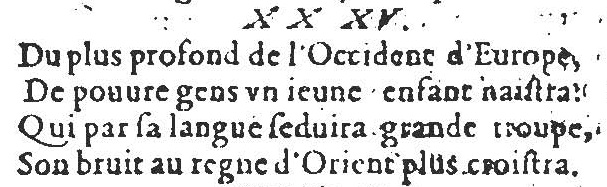
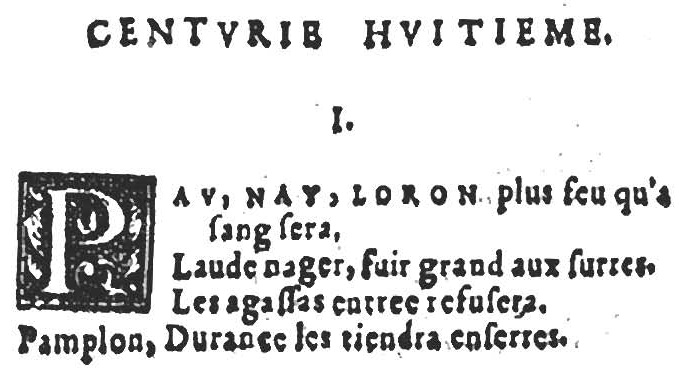
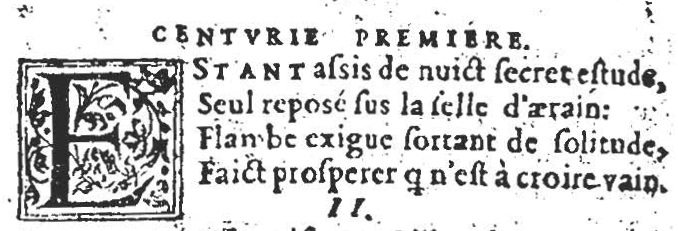
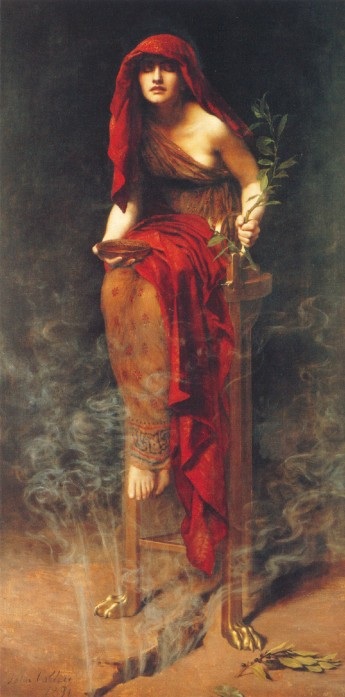
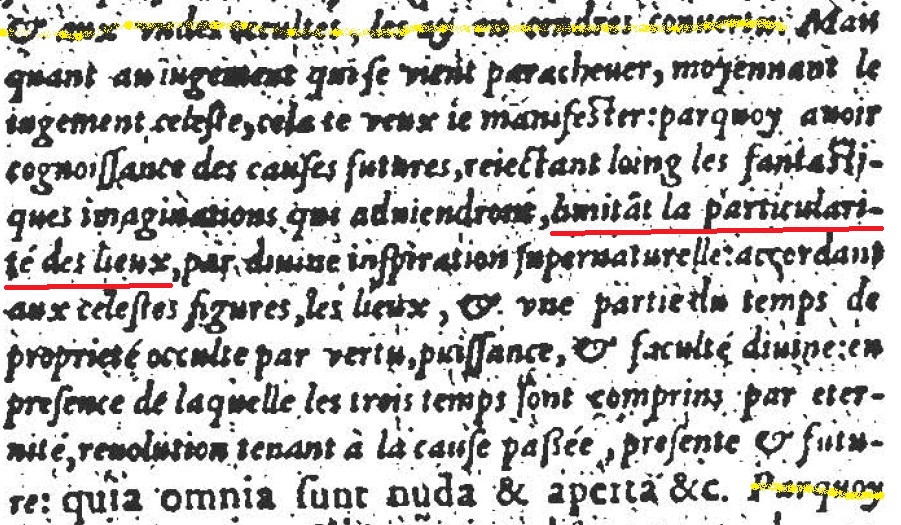
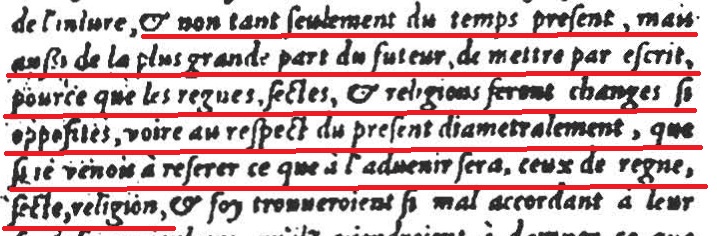


 Nostradamus Blog