The Preface to The Prophecies (also called the “Letter to Cesar,” Nostradamus’ newborn son) is 10 pages long (1568 Lyon edition, pages 3 through 12). It is relative easy to read, in the sense that the language made sense, even though what appears to be ‘sentences’ (determined by period marks) seem to go on, taking a long time to end. Comparatively, the Epistle to Henry II is 21 pages in length (1568 Lyon edition, pages 3 through 23 of final three Centuries). This uses much the same, relative to easy to read French and Latin, but because this letter is more deeply explaining what the quatrains reveal, he uses metaphor and symbolism that is difficult to grasp. Add to that confusion the appearance of ramblings (long ‘sentences’ again) that seem to be addressing one lucid point, before suddenly off that point and careening into some wildly new direction; and the Epistle to Henry II sounds like a senile old man writing a letter with no ability to stay focused on why he was writing a letter.
All of this is solved by reorganizing the Epislte to Henry II into a meaningful order. That reconstruction has to follow rules (rather than guesswork); and I have been led to realize the division rules are relative to the use of punctuation marks, such as period marks, colons, ampersands, and the combination of two marks of punctuation together, most commonly being a comma mark followed by an ampersand. According to the syntax of English (as my English teach taught me), both a comma mark and an ampersand are used instead of the written word “and.” To then place the marks “, &” together symbolically stated “and and,” which is bad writing grammar. I see this as where one line segment ends with a comma mark, so it can be joined to another line segment that has verbiage in agreement. The ampersand then breaks off that line segment, to be connected to another line segment that agrees with it.
This is simply how to divide the Epistle to Henry into puzzle pieces (like the quatrains are all puzzle pieces), which needs to be rearranged in an agreeable manner. That then means the words written can be discerned; but those also have rules to follow, in order for them to make sense, as intended. My work (over years) with The Prophecies led me write the book The Systems of Nostradamus: Instructions For Making Sense of The Prophecies, which teaches a divine syntax that must be learned, so fluency can come with understanding The Prophecies. I wrote this book focus on understanding Nostradamus, but the same systems of reading can be applied to Biblical Scripture, so a deeper truth arises from those Holy Scriptures. It is then the first true textbook for understanding Nostradamus and all divine and holy writings.
Relative to understanding those rules of divine syntax, questions about the meaning of The Prophecies can be answered, coming from the explanations given in the Letter to Henry II.
From the bottom of page 3, in the 1568 Lyon edition, for the letter to Henry is found.
The text to focus on now is placed within a gray outline. That says: Or voyant que par effectz le declairer ne m’estoit possible , joint avec mon singulier desir de ma tant longue obtenebration & obscurité estre subitement esclarcie & transportee au devant
As there is no punctuation ending that page (after devant) this continues onto the top of page 4.
This continues to a focus that ends with the word milade“. The text in this gray outline continues to state: en la face du souverain œil & du premier monarque de l’univers , tellement que j’ay esté en doubte longuement a qui je viendroys consacrer ces trois Centuries du restant de mes propheties , parachevant la miliade ,
By realizing punctuation marks are signals to separate the text into segments of word statements, those segments are not difficult to understand, based on the rules of grammar that apply to French (which can be modified to follow rules that translate into English). This is an example of how line segments are important to read separately from one another, such that lucidity comes when agreeable segments create a flow of intelligible thought. Thus, the above translates into English saying:
Now seeing that through works him to declare not myself been possible ,
joining with my singular desire from my in such manner continual act of obscuring
& hidden meaning in words to be suddenly cleared up
& transported with him in front of upon there face of it sovereign eye
& from the premier monarch to the universe ,
in that fashion that I have been in suspect at length in which I may approach to consecrate unto these three Centuries from the remainder of my prophecies ,
finishing the thousand of ,
—–
Take note that an ampersand introduces three line segments. This seems to be repeating the word “and” excessively, like when one is poorly educated and feels a need to interrupt his train of thoughts with needless words like “you know what I mean?” In the verse of the books of the New Testament (the Greek texts of the Holy Bible) there are a plethora of uses of kai (9039, according to Strong’s). Some are so frequently used in the same chapter that it sounds like Stuttering John of the Howard Stern show trying to spit something out. So many “ands” make you want to scream, “Just say it!” However, kai is like an ampersand in The Prophecies, where there is no word attached to that symbol. It is a statement that says, “Importance to follow this mark. Pay close attention to what is written.” That is a hardfast rule of divine syntax; and it intensifies the meaning one sees, simply from that recognition.
With an ampersand introducing “hidden meaning in words to be suddenly cleared up,” that becomes an important line segment to understand. So, what does it mean where Nostradamus wrote?
“hidden meaning in words”? (obscurité)
“transported with him in front of upon into there face of it sovereign eye”?
(transportee audevant en la face du souverain oeil)
“the premier monarch of him universe”? (du premier monarque de l’univers)
According to Randal Cotgrave and his 1611 dictionary, the French word obscurité translated into English as “obscurity, darkness, dimness, cloudiness, duskiness, an overcasting; closeness, covertness, diffusedness;” and what can be seen as deeply applying here (following an ampersand) “a mystical sense, or hidden meaning in words.” For Nostradamus to explain his writings as “mystical” and “hidden meanings” that are “to be suddenly cleared up” (estre subitement esclarcie), this says understanding was always there, just beyond one’s ability to see that clarity.
This is the importantly stated “to be sudden cleared up” when one’s soul has come (ampersand use) “before” or “transported” or “carried over, removed fom one place to another” spiritually, so one’s soul is “with him “before” or “in front of” the divine presence of Yahweh, as His Son reborn, “with it” Christ Mind then leading one’s intellect. This is a presence “upon” or “into” one’s soul, so one’s soul is “with him” (du = de + le, reading le as a pronoun, rather than a meaningless article) that is Jesus, “removed from a state of physicality to one of spirituality.” This takes one to a union within one’s flesh, as “there” Jesus is king or High Priest of one’s bodily tabernacle. so one’s “face” is then the “representation” of one born again fom above as Jesus returned to human flesh. This is the gift “of he” that is Yahweh, to a committed servant in divine marriage, where Yahweh is the One God with “none superior” and the soul of Jesus is the “prince” of peace, whose kingdom is not of the material world, but the spiritual. This means Jesus becomes one’s “high” connection to the all-seeing “eye” of Yahweh. To discern the truth of The Prophecies, one must be led by Jesus. Nostradamus was so led to write that work; and to understand what he wrote, the same divine presence must leads one’s mind.
This then says that Jesus, like the Father as the Son, is the “first” and only Son, whose soul was created to be joined with all souls that seek Salvation. Jesus is then the “monarch” or “absolute prince” of one’s soul, acting as the Spiritual Lord that commands a soul in its body of flesh to act divinely. This presence makes on a Saint; and, according to the talents listed by the Saint Paul, a Prophet is the product of this divine presence, just as understanding a Prophecy is also. This means a Saint is motivated to act as commanded by the divine Jesus, so one does not put one’s light under a barrel to keep it from others, because Yahweh sends His Son’s soul to be “with” servants that minister in Jesus name, going into “the universal world” with a message of Salvation that is “he universal” to all souls.
Those three important line segments (all introduced by ampersands) tell that understanding The Prophecies demands full and total commitment to Yahweh, so one can be reborn as His Son Jesus “into” one’s soul, with the “face” of Jesus being the halo around Sants depicted in medieval artwork. This helps support that The Prophecies are not predictions, but the “divine utterances of Prophets.”
Continuing on in this from the top of page 5 is Nostradamus then explaining this final edition that was published in 1566. For a letter dated June 27, 1558, that says it was written eight years before it was first printed publicly. That means the Epistle to Henry II (King of France) was meant to be included, like a preface to Centuries 8, 9, and 10. That is stated when he then wrote:
“I may approach to consecrate unto these three Centuries from the remainder of my prophecies”?
(“je viendroys consacrer ces trois Centuries du restant de mes propheties“)
The word consacrer means “to consecrate, hallow, dedicate, or devote unto” (Cotgrave, 1611). That speaks in the voice of Jesus within Nostradamus, where je is not the man Michel de Nostredame but the presence of the soul of Jesus. Only a divine presence, such as the Son of Yahweh, can speak in the first-person, as “I” who is “to consecrate” that contained in this additional imprint. The word viendroys should be read as an Old French variation of viendrais, which is the first-person conditional form of the verb venir, meaing “would come, arrive, approach, draw near unto; proceed, issue, be drived from; spring, prove, grow; and to happen, chance, or fall out” (Cotgrave, 1611). To then state this “dedication” is placed upon “these three Centuries,” the number “three must be read as a statement about a “trinity,” which means the “three Centuries” or “three groups of a Hundred” quatrains all have been infused with the divine presence of Jesus within Nostradamus. When Centuries is read separately, as an important word (due to capitalization) the plural number applies to all of the “Centuries” of The Prophecies, as all are a work of the Trinity. These “three Hundred quatrains” are those “from” the whole that was written before the first edition was published in 1555, such that “these” represent the “remainder of” all produced through the Prophet Nostradamus, where “my” is the possessive pronoun relative to “I” (je), as the “prophecies” of Jesus, written by the hand of Nostradamus.
Nostradamus then ended this set of cohesive line segments with this statement:
“finishing here thousands of” (“parachevant la miliade“)
Here, this makes the statement of completion, as “finishing, consummating, accomplishing, achieving, and making an absolute end of” this work that is The Prophecies. It can equally be a statement that the life of Nostradamus on earth will soon be over, with his work for Yahweh, through Jesus “accomplishing” his ministry in the name of Jesus. The word la cannot ever be read as a meaninglsee feminine article, as “the.” It must always be read as the adverb là, meaning “there” or “here.” As “there was used earlier, “here” becomes supportive that Nostradamus “here” alive in the flesh is in his “finishing” days. The word milade is not a known word, as spelled. It then acts to show how words also must be divided so they make sense, where miliade divides into milia de, where milia is Latin for multiple “thousands” (plural) and de is a preposition meaning “of, to, with,” or “from.” This implies a “thousand” quatrains in ten Centuries, but the word can mean there are “countless” (as metaphor for a large number) examples “of” other divine Prophecies (the books of the Holy Bible certainly includes, but those apocryphal as well) these now “finishing” can be added to.
This letter is enigmatic and difficult to grasp, but it is that way as an explanation of the ordering of the quatrains. Everything Nostradamus was divinely shown, he wrote down in the logical order that allowed him to understand this future he was shown. Thus, when Nostradamus first published a part of that which he had been divinely inspired to write (nearly a thousand poems), he did so by rearranging the logical order, so the quatrains he published in 1555 gave the appearance of individual predictions, similar to his prior publications of Almanachs.
In 1557, Nostradamus then added more of the verses he had originally written in logical order (perhaps in 1553 or earlier), again selecting random quatrains that did nothing to lead readers to believe he had written an epic poem (similar to The Iliad and The Odyssey by Homer, The Aeneid by Virgil, The Epic of Gilgamesh, and Beowulf; to be followed later by The Divine Comedy by Dante, Paradise Lost by Milton, and Faust by Goethe). It was this random presentation that kept The Prophecies of Nostradamus from being seen in that way. Therefore, before the King of France would give his approval for any new publications of Nostradamus poetry, he demanded Nostradamus appear before him in Paris and explain the meaning of the 353 poems published in 1555, along with the additions in 1557, which ran the total to 642.
Rather than appear before Herny II and be held prisoner, as Jesus would not allow him to expose the truth of his work at that time, Nostradamus was led to write a logical letter of explanation, which he then divided into pieces, tossed in the air, and reassembled into a letter that sounds like it was written by a madman. It was the presentation of the Epistle to Henry II that explained the ordering of the quatrains – everything is out of order, for a reason.
Nostradamus had published Almanachs for several years (1550-1566, including years when The Prophecies were published), which contained far less than hundreds and were understandable (with some usage of metahpor and innuendo) and seen to come true. This accuracy led people to call Nostradamus a prophet, while knowing he utilized his knowledge of celestial alignments (astrology) to calculate his future predictions, one year at a time.
To have 342 quatrains burst into publication in 1555, not called Almanach, but The Prophecies, had people scratching their heads. Then the total ran to 642 in 1557, with none of the first figured out. It must be noted that those who say Old French is not easy to translate, the people of 1550 to 1566 all spoke Old French fluently and the royal family of France was afforded higher education. Because the Old French had figured out metaphor, symbolism, satire, and innuendo, they were not ignorant beasts. They struggled not because of the languages written (French and Latin), but because their ingrained abilities to comprehend writings by learned rules (syntax) of French and Latin did not produce meaning.
Nostradamus would write his Epistle to Henry II, King of France, in 1558. Presumably he mailed it to the king (sent by carrier), from his home in Salon-de-Provence, in southern France. One could then assume that Henry and his most educated advisors read that letter explaining The Prophecies, coming away with doubts about Nostradamus’ sanity. That doubt put a hold on further publications relative to The Prophecies, until Henry died after a jousting accident in 1559.
With his death, having several male heirs but none of whom was old enough to take over the throne of France, his wife, Catherine de Medici, became Queen Regent in Henry’s place. Catherine de Medici was very fond of Nostradamus as an astrologer and sought his readings for the princes. It was with her support that a final edition of The Prophecies would be published in 1566, the year Nostradamus died. There would be no change in anyone being able to understand the meaning of the poems (although Catherine saw one that she said predicted Henry’s death); but Nostradamus’ assistant, Jean de Chavigny, obviously was told of printing errors that needed to be corrected. So, a 1568 reprint was approved.
Simply because a reprint of unintelligible poems was done two years after Nostradamus’ death says it was important those corrections be made, for a future time, when understanding would be possible. The final editions then added a full 300 verses, bringing the total (in ten Centuries or groups of one hundred) to 942, with Centurie Septiesme (“Century Seventh”) still containing only 42 quatrains. The Epistle to Henry II was then published in both the 1566 and 1568 editions (and all subsequent ones), acting as a foreword to those added 300 verses.
The word “foreword” is defined as “a short introduction to a book, typically by a person other than the author” Oxford Languages). This epistle was in addition to the Preface that was published in all editions, placed prior to Centurie Premiere (“Century First”); and a “preface” is defined as “an introduction to a book, typically stating its subject, scope, or aims.” This means the Preface was as it is defined, while the Epistle to Henry was an in-depth explanation (not an introduction) of the “subject, scope, and aims” of The Prophecies. This makes the two letters (Preface and Epistle to Henry) be extremely important to discern, in order to make sense of what the bulk of the work says. They must be understood first, before one can begin attempting to make sense of the verses.
This makes realizing the Epistle to Henry II most important. It must be seen as a mini-puzzle that must be placed together in a logical order, where understanding in-depth explanation of the subject, scope, and aims of The Prophecies is possible. Simply by seeing how to divide the epistle into parts (logically) and reorder into a lucidly clear writing is vital. One must be able to read for instructions in how to discern the poems; but the simple realization that the epistle is like the quatrains and jumbled up on purpose, becomes an unstated in-depth explanation about how to make sense of the quatrains.
Then, between the introductions by the author become the logical way to defend interpretations of everything. The author must state the subject, scope, and aim of those quatrains nobody could grasp in 1555-1558, or it becomes an exercise in illogical (flawed and invalid conclusions) guesswork that is wrong (like Catherine de Medici’s belief that Nostradamus predicted Henry’s death was wrong). Logic says, an interpretation my be fully supported by what Nostradamus said would be found within.
All the articles for katrinapearls.wordpress.com have been linked to blog@jean-de-chavigny.com, an ionos web page. I have reverted the primary wordpress link to katrinapearls.wordpress.com for now. Subscribers can bookmark jean-de-chavigny.com and go there, click the “read the blog” link and return to the Word Press Nostradamus Blog website.
This was originally written in 2011, as it was relevant to the news at that time. It is about the death prophesied of Osama bin Laden. I welcome readers to ponder what I wrote then and see if the current news (2023 to 2025) is a reflection of the Western world not knowing all it thinks it knows. Send the children away. Let them sink what is left of their puny brains into the addictive electronic gadgets you poison them with. They are beyond understanding or caring what the future holds.
Our parents were worried about marajuana and quaaludes putting us in the grave. Now it is land of the walking dead. Zombies who hold their brains in their hands.
All Material Copyright of Katrina Pearls apart from the obviously stolen stuff Reproduction by Permission Only
I want to discuss the Nostradamus quatrain recognized as I-94, or the 94th listed in the initial “chapter” of The Prophecies, called Centurie Premiere (Century First). As a quatrain from the first chapter, it has been public since 1555. That was 456 years ago [2011]. However, only recently did historic events take place that shed light on the true meaning of this quatrain.
The quatrain states in Old French:
Au port Selin le tyran mis à mort, La liberté non pourtant recouvree: Le nouveau Mars par vindicte & remort, Dame par force de frayeur honoree.
Erika Cheetham wrote (1975) that she guessed this quatrain was about the Battle of Lepanto, which took place in 1571. That was only 16 years after Nostradamus published this quatrain, but five years after his death. So, Nostradamus could not publicly take credit for seeing that battle. But then, John Hogue assured us this was not about that battle, pointing out other possibilities, stating that Edgar Leoni called it a “failed quatrain.” The reality is none of the above is true, because the event of this quatrain took place well after everyone jumped the gun on matching it to an historic event (they all interpreted before 1996). The event that matches this quatrain took place on May 1, 2011.
To help one see this develop, look at this quatrain translated in this way:
With he * bringing * Arabian * him * A ruler who exercises power in a cruel manner * reduced * at * departure out of this life There * freedom * not * yet for all that * reobtained: Him * recent * War * by reason of * revenge * & again dying, Lady * through * violence * of * terror * honored.
Certainly, other words can be substituted for the ones used above. They too can make sense of the event that recently happened. However, the point of presenting this quatrain in a translation format where asterisks are inserted is to show where pause for reflection needs to be observed. One needs to read these words without attempting to form them into one sentence.
Feel the full meaning of each word.
The event is about the killing of Osama bin Laden. Look at how that is stated in the main theme line (line one). See how the words match the way we learned about that news in the days (and now weeks) that followed.
The capitalized preposition-article contraction, Au, shows how “one” (the individual focus from the article “the,”) [versus a plural focus from les, as Aux] was the important (capitalization) connection “With him” bin Laden. Some messenger he trusted was allowed “In it,” the network related to a compound in Abbottabad, Pakistan, whereby “To him” Osama bin Laden gave updates and messages, letting his whereabouts be known in the outside world. Some Muslim traitor then received new assigned tasks, which the traitor sought to make millions of dollars in reward money (after nearly a decade in hiding) and contacted the American authorities. It was “From him” (someone with bin Laden) “To he”(the traitor Muslim) via a cell phone call he received, from a cell phone known to be related to a bin Laden aide, which signaled American intelligence to follow the courier “To it” the place where bin Laden was hiding. The capitalized first word is thus showing the importance of movements that would importantly be necessary, to take “he To” the one being sought.
The second word is “port,” which can represent a “harbor.” While this word identifies the use of Selin as a body of water on which a “port” can be found, the word “port” is a verb of “carriage, bearing, and bringing.” The aspect of bin Laden’s body being “buried at sea” is a secondary reading that can come from this word, but its primary meaning is to confirm the meaning of movement found in Au. Thus, one can see how the “he With” bin Laden will be “bringing” those watching him to bin Laden, while he will be “carrying” out his duty, “bringing” information to his boss. As such, the one leading the way would become a “portal” to the hideout (with the Latin word porta meaning “gate.”)
The third word, Selin, is a capitalized word. As such, it is important to understand. All capitalized words are important, but “Selin” is a major theme word, making it vital to understand. It is a major theme word because Nostradamus wrote this “name” in variations twelve times. He wrote Silene (1), Seline (2), SELIN (all-caps -1), Selin (capitalized – 5), selin (lowercase – 1), selyn (lowercase, with y = I, – 1), and celin (phonetic c = s, 1). All these references are presented in several Centuries (7), along with common connective words, which act to assure the observant reader that the variations refer to the same intent and focus.
Let me make it clear that twelve times is making a statement of importance through that number of repeating appearances. As a repeated term, all twelve quatrains with those variations in them can be placed together to tell a story about Selin. The variations disappear when a common translation is found that represents an understanding of Selin. All spelling then represent that translation. In attempting to determine this translation, it does not take long to recognize that Selin is not a cleanly spelled word from any known language. In such cases, rules for determining “misspelled” words apply.
In a phonetic sense, Nostradamus often spelled words that he applied a “French” ending to, such that a dialectical form of a word ending with a (such as the Catalan word Nissa) would be written with an e ending (such as Nisse). Of the twelve repeating forms, Silene and Seline give the indication that the pronunciation is as one would pronounce Celine, or Selene. If you look up the name Celine, it references a root in Selena, or Selina. In those variations, all state the etymology to be rooted in the mythological goddess Selene (which is spelled Selen in French). This goddess was known in Roman mythology as Luna. Thus, Selin represents the Moon in its meaning.
Since it is impractical to interpret line one in the physical sense, where the theme begins, “With the Moon,” one must look at the symbolism of the Moon. Symbolically, the Moon is closely related to Islam. This is evident by the Crescent Moon being present in the flags of many Islamic nations. Because the goddess Selene represented one figure symbolizing all the Moon, Selin is one icon that represents all of Islam. Because Mecca holds that symbolism for Islam, and because Mecca is in Saudi Arabia, those places can be seen as important symbols reflected by Selin. As an individual representing Islam, as Osama bin Laden was, Selin can be seen as recognizing him as an “Arabian,” which is the name of the sea his body was “set at death” into, after being “carried” beyond the “port” of Pakistan, to where an aircraft “carrier” awaited.
Now, as solid as the phonetic meaning is, one cannot overlook how being one letter off allows Selin to yield other information. This information would do nothing to cancel the meaning just discussed, as it would add to the information “Selene” produced. That new meaning comes from seeing Selin as a combined form word, just as Au combined two words. In that sense, Selin can turn into S’elin and Se-lin.
In both forms, one word attached to the another is “Se,” which is contracted as “S’.” This is a pronoun, which means, “oneself, himself, itself, or themselves (pl.).” It thus often acts as a possessive pronoun, in particular an indication of one possessing the word it attaches to. In the case of elin, this is ancient French, used between the ninth and fourteenth centuries. It means, “of noble birth; illustrious; or illuminate.” In this sense, it does identify Osama bin Laden as being from a Saudi family that made “Oneself illustrious,” from birth into great wealth and fortune. It also acts to show how the courier would “Himself illuminate” the way to bin Laden.
This brings one to find the word lin is French for “linen, or flaxen,” but in Old French it meant, “line” or “flax, yarn,” from which “linen” was made. In other words, lin means a “thread” or a “line.” In that vein of thought, the downfall of Osama bin Laden was the need to have “One’s line” to the outside world of al-Qaeda. To maintain that “line,” he kept a thin “thread to Himself,” via a trusted courier. All these meaning apply to the story we have been told, as everyone involved in this link was “Muslim” (the general meaning of “Selin”).
Now look at the fourth word, which is the simple French “article,” le. This typically translates as “a, an, or the,” depending on the following “masculine” noun. However, in reading Nostradamus for understanding of true meaning, such articles only appear at the secondary level of interpretation. When the word le is read alone, it becomes the pronoun usage, such that it means, “him.” This reflects on the masculine singular contraction of the first word (capitalized), Au, which is the combination of À + le. The purpose of this pronoun is to point to a male that is relative to Selin, portage, and “With him.” This, by itself, is not limited to one “him,” which is important to keep in mind.
The fifth word in line one is another important word, which is tyran. This word is important even though it is written in the lower case. Just as was stated prior, about the twelve times some form of “Selin” appears in The Prophecies, meaning the number of repeated uses makes it important, with some of those twelve being presented in the lower case (selyn, selin, and celin). Some form of the word tyran appears in the quatrains seven times, written as tyran (5), Tyran (capitalized – 1), and tiran (1). These also link the quatrains containing those repeated terms together to tell a story of a “tyrant,” with common key terms associating all the uses of that central word. Therefore, that knowledge allows me to make it known to you that tyran is indeed a significant word to understand. Please, check me on this information.
The French word tyran translates as “A tyrant,” but that can be further described as, “A cruel king, lord, or ruler; a violent governor.” In the translation I produced originally in this interpretation, I quoted one of the definitions of the word “tyrant,” as being, “A ruler who exercises power in a harsh, cruel manner.” Other definitions are: “An absolute ruler who governs without restrictions,” and “An oppressive, harsh, arbitrary person.” (All definitions are pulled from the Free Dictionary by Farlex, which uses The American Heritage Dictionary of the English Language, Fourth Edition.)
The point of using a definition for “tyrant” is to show precisely what the word means, before wandering into the realm of careless language, where an overstatement could be read, mistakenly seeing some superfluous meaning. While it is true that the word can be thrown about to identify individuals who act in ways that can be deemed as characteristic of a “tyrant” (“tyrannical”), the primary use is to denote one who holds true power over many others. When one understand this distinction, one can then see how a quatrain referencing Nero (Neron) is one truly pointing to a “tyrant” (He is said to have used the burning bodies of Christians, hung from poles, to light his garden path at night), making Neron a personification of a “tyrant,” indirectly stating “tyrant” as one who will act like Nero.
The presentation of tyran in the lowercase does not diminish the level of power that one holds as a tyran. One gains this understanding from recognizing how Nostradamus wrote the two forms of the word roy (modern French roi). He wrote in the lowercase (roy) and in the uppercase (Roy), and he did so to show two different kinds of “kings.” The lowercase represents one that is not truly a “king,” but has all the power of a “King.” This is seen in presidents of nations, and prime ministers of nations. They rule as “Kings,” but without any royal blood making them gain this title by birthright. They must be elected. A capitalized “King” is then a distinction of true royalty, either as a “King” of a sovereign nation, or as “Pope” to the Roman Catholic Church. Thus, a tyran is as powerful as a “king,” but not limited to being elected by a physical vote.
The use of tyran is then a stand-alone statement of one who abuses “his” (masculine use of le) powers, as one who acts in “a harsh, cruel manner.” This is then relative to “him Selin,” which is describing Osama bin Laden, but it is also the “him With” a “port” (where the word means, the behavior of a man, or the way one carries himself) that “Himself threads” to bin Laden. In other words, the one tracking down bin Laden is also identified as “him” also being a significant “tyrant.” It becomes important to see this duality coming from these words.
The word tyran is then followed by the sixth word in line one, which is the preposition à. This is the second use of that preposition in this line, as the quatrain began with the important (capitalized) Au (À + le). When one reads the quatrains, it is not uncommon to find some instances of repeated words, within the four poetic lines, as well as in one individual line. The most frequently repeated words are prepositions (most commonly de and à). Since these words have multiple contextual uses, it becomes a rule to seek different contexts as the primary intent each new time presented, such that one repeated French word results in multiple different English translations.
For instance, the preposition à means, “at, in, with, to, and from,” depending on the context. When a little one-letter word is read as a stand-alone statement for meaning, all contexts are open for analysis and possibility as representing the primary use. When one then sees a second use in one quatrain, the first use will have previously been established as primarily best read as “fill in the blank.” Then, the second use would complement that first use, as its primary intent. Thus, it à were to be seen first as primarily meaning “to,” a second use of à would compliment “to” by primarily meaning “from” (a to-from relationship). In this quatrain, the capitalization of Au was seen best presented as “With he,” such that this second use would eliminate “with” as a repeated primary context, causing one to look for another translation possibility, bearing more weight. In the translation I originally presented, I chose “at” as the primary choice.
The English word “at” is primarily defined as meaning, “In or near the area occupied by; in or near the location of” (Same Free Dictionary by Farlex source.) While that choice is my personal decision, and all choices will find merit, in the storyline of Osama bin Laden’s death, we find the important context leading to that death as being relative to “location.” He had to be located, before he could be killed. To focus on that location, intelligence had to first make a connection to a significant “one With” information of that location. Therefore, the word à makes sense as a connection of one “him tyrant” to another “him tyrant,” “at” the place where an operation would be planned to intercept “him Muslim tyrant.”
The final word of line one is “mort,” which means, “death; bane; a decease or departure out of this life,” but also bearing the meaning, “dead, deceased, departed; and also killed, murdered, slain, and/or made away.” (all translations based on an Old English perspective of meaning) This word is confirming what the plan would be (a kill mission), as well as where “him tyrant” would be found, to be “killed.” However, when one recalls how the word “tyrant” can also be representative of “him” who will “govern without restrictions,” and “exercise power in a harsh, cruel manner,” one can see how the plan drawn up for the location “at” Abbottabad, Pakistan, “in” a private, “lavish” compound, was completely designed “to murder” (“à mort”).
With all of the building blocks individually understood, one has been taken through the meaning of this main theme, which governs how one is to read the whole quatrain, so that it matches all that has been made public about the death of Osama bin Laden. It also brings out the questions about the mission having committed “murder,” rather than being a “capture and bring to justice” operational plan. Still, line one can be seen as still telling further of that event, on a secondary level of wholeness (as a sentence), becoming the later released facts of that mission.
In this sense, the same words of line one can be read to collective say, “With him (meaning With Osama bin Laden in the hands of U.S. SEALs) carried (the reports of his body being dragged to an awaiting helicopter, which then went beyond the ports of Pakistan, hundreds of miles away) Arabian (meaning the proper name of the sea to which Pakistan has ports, as well as the nationality of bin Laden, as well as Selin representing his Islamic religion, the customs of which were said to have been followed once on an aircraft carrier) him tyrant (Osama bin Laden) thrust into (or laid, pitched, reduced, or sent [from the French word mis]) at (another location of place, or in, to the water of the Arabian Sea) death (optimally meaning buried at sea, but also meaning the destroying of evidence relating to a murder). This whole view fully complies with the known history of the killing of Osama bin Laden, while also supporting the concept of a planned act of ridicule, where the body of a powerful Islamic leader (Selin tyran) was simply thrown away, after being murdered.
This exposes what has not been made public, although it has been voiced in theory. Such voices that question the actions of leaders, to prevent one from ever becoming a tyrannical ruler, have been suppressed, through public ridicule in the media. The event of Osama bin Laden’s death followed soon after the final submission by Barack Obama, to answer the question of his legal right to be president of the United States of America. On April 27, 2011 (4 days prior to the Osama bin Laden news), Obama made public his long-form birth certificate. That act eased questions about his authority, which had been ridiculed by Obama supporters as the rantings of “birther idiots.” Immediately after people began to question why Osama bin Laden could not have been captured alive, the questions of murder began being ridiculed as the rantings of “deather idiots.” It helps us to realize that the purpose of The Prophecies is to expose the hidden agendas of all tyrants, as they (and their secrets) are why the world would be put in grave danger. Keeping this “conspiracy theory” exposure theme in mind will help one to understand the remainder of the quatrain.
I will complete this interpretation in a separate posting. It is important that one be able to see this meaning, just from the main theme, for him or herself. Look at the Old French words written. Double check the translation possibilities. See how the translation possibilities are defined. Make the meanings rise before your own eyes, so it is not me telling you what to believe. Seeing is believing. I see and I believe. I want you to believe by seeing through your own eyes. There is no magic involved here. No suggestive language is used, designed to have one fall for my biased, illogical opinion. Still, you must “receive the spirit” intended by a higher source.
Once you have looked at this main theme statement, realize that the main theme covers everything else that is to come in a quatrain. The whole of each quatrain relates to the main theme that is stated in line one. It is that way for every quatrain. There is order with purpose by design. Look at the remaining lines of quatrain I-94 and see what they mean to you, before I present an interpretation that states what they mean to me.
With the main theme statement (line one) of quatrain I-94 understood to be presenting a multifaceted view of the events that have recently been announced – the killing of Osama bin Laden, one is now ready to look at how the next parts of the quatrain read. Before jumping immediately into line two, one must check to see what punctuation signs (if any) are present at the end of all first lines. These mark direct one in how to approach line two, which is a secondary theme to the main theme. A secondary theme will always be related to the main theme, but some are free to take an approach that focuses on another relative element, one less directly connected to the main theme event. However, some secondary themes are directly stemming from the main theme event.
I quatrain I-94, line one ends with a comma. That punctuation mark is defined as having the purpose of being “used to indicate a separation of ideas or of elements within the structure of a sentence;” and “A pause or separation.” Simply because Nostradamus did not write in “sentences,” his use of punctuation still follows the intent and purpose of those marks. In that way punctuation acts as signs instructing the reader to do as the mark instructs. In the case of a comma, it instructs the reader to see a “separation” from the main theme. It also instructs the reader to expect the separation to allow for a new “idea or element” that is “within the structure” of the main theme, and the order system present in all quatrains. Thus, line two is related to the death of Osama bin Laden, but a separate (and probably subsequent) event, directly stemming from the last idea presented, which was “death” and/or “killed, murdered.”
From that expectation, one sees line two stating, “La * liberté * non * pourtant * recouvrée”. As originally translated, one English string of words to follow could be, “There * freedom * not * yet for all that * re-obtained”. This theme should be understood to be a confirmation of the concepts derived from the main theme, such that the information contained in those five words will establish another theme that is equally important to follow, by itself, while being reflective of the main theme of killing those enemies sought after.
The first word following the comma is the capitalized first word, La. This appears to be a simple article of the feminine gender, simply meaning, “A, An, and The.” This brings out a rule that is required to know for understanding the whole truth, which is, “If Nostradamus accented the word, you cannot change it; but if Nostradamus did not accent the word, it can be read as accented.” In the case of La, it must be read primarily as if it were accented, as Là. This gives much more meaning to what appears to stand alone in need for the following word to open its purpose. The word là means, “there, here, and/or then,” depending on the context. A capitalized version shows the importance of “There,” connecting to the place “at death,” while also separately becoming a statement of “Here,” where the order was given to “put to death,” and “Then,” the consequences of that act of “killing.”
With all of those meanings of Là being directly focusing on the aspect of “death,” and in particular the “death” of Osama bin Laden, the way his “death” was detailed by presidential announcement, and then amended by subsequent White House briefings and news reports, line two appears to be primarily focusing on “There,” the United States. While forces of the U.S. Navy had to go “There,” to make the “kill,” one must look at the capitalization and ask, “Which “There” is more important, and thus worthy of capitalization?” That is best describing America, and the use of a comma allows for such a separation from the place of the main theme event (“at”), to focus on another place related to that event, with more importance (“There”). However, keep in mind the word “There” is always free to turn its spotlight wherever need be, although the other directions would seem to be on more secondary levels of interpretation.
Seeing “There” as a primary focus on the United States, which had to use forces in a foreign land (“There”) to defeat an enemy it had sought for nine-plus years, the second word confirms that choice of primary meaning. The second word is liberté, which can easily be seen as representing, “liberty,” as well as “freedom.” If there was any word that best representing the ideal of the United States of America, both “Here” and all around the globe (“There”), it would be how America represents “freedom” to the world’s huddled masses. One has the “liberty” to climb out from the depths of human despair and rise to the heights that a “free” capitalistic society offers, to everyone. Again, that is the IDEAL that has become the American dream, but it is undeniable that America and “liberty” (and liberty and justice for all, amen) are connected as synonymous.
To ensure that the concept of “liberté” was similarly seen in 1555, when this quatrain was first published, it is important to get the full scope of meaning that comes from a 1611 Old French – Old English dictionary. The word “liberté” is translated as representing, “liberty, freedom; full scope, good leave, ample or free choice; an uncontrollable condition; also openness, plainness, boldness in speech or action.” These possibilities of meaning not only show how the United States is identified as “There” where the “freedom” bell rings, but it shows that “There” held all the cards in the matter relative to the “death” of Osama bin Laden.
In this sense, the word liberté states that the operation to take place in Abbottabad, Pakistan had the “freedom” to move at will, with “liberty” to act in any manner the troops on the ground saw fit. It also shows how everyone in President Obama’s cabinet sat in the “Situation Room,” with a “full scope” of what was about to go down, with Obama having the “free choice” to stand down the troops, or the ability to stop the mission, should it become an “uncontrollable condition.” Obama also had the ability to order “good leave” to spare the life of Osama bin Laden, should he be found unarmed and defenseless. All these meanings are known to have happened, as there have been reports and pictures released making these elements of liberté publicly known.
When one sees “There” as representative of the place that is “at” the site of “death,” one sees the importance of capitalization fall upon the nation of Pakistan. As a bought and paid for ally of the United States, who allows U.S. Troops access to the landlocked Afghanistan, it has been Pakistan that has given the United States the “liberty” to perform military actions in Pakistan. These actions have been primarily drone bombings in mountainous regions bordering Afghanistan, where the Taliban is said to have been finding refuge. Still, Pakistan is accused (after the main theme event) of having been complicit in allowing Osama bin Laden the “freedom” to live in that “lavish compound,” where Navy SEAL soldiers “killed” him and his son (among others).
The other aspects of the meaning associated with liberté, as far as it applies to Pakistan, is best read into liberté being attached to the next word, the negative non, meaning, “no or not.” Pakistan has made it public (after the main theme event) that they did “not” allow the United States the “liberty” to fly into a city where the largest Pakistani military base is located, and endanger the lives of innocent Pakistanis, in America’s quest “to murder” Osama bin Laden. They have steadfastly stated they did “not” know Osama bin Laden was “There.” Thus, the government of Pakistan did “not” grand Osama bin Laden the “freedom” to live comfortably. As such, they did “not” give the United States a “full scope” to go anywhere, and do anything, without (“not”) the joint knowledge of the Pakistani government and its military. In essence, the word “not” represents the denial of the Pakistani government of knowledge about bin Laden’s whereabouts, as well as the disapproval of the actions of the United States.
When the primary focus of line two is seen as reflecting on “There” as the United States, where “liberty” reigns supreme, the presence of “not” is making a statement about “liberty” ceasing, as what was will “not” be. This is a statement about the illusion of “freedom,” when the reality is (and has always been in a philosophical sense that everyone trapped in an earthbound existence is never truly free) Americans were “not” allowed the “liberty” to vote on what President Obama would decide about the fate of Osama bin Laden. That realization reflects back on the main theme line’s use of the word “tyrant.” When one man has complete control (“freedom”) over what will take place (by force) at home and abroad, that term shows just how little “freedom” exists. The people have “no liberty” to control the “uncontrollable conditions” placed upon them by higher ups. Beyond the “free choice” they voice their choice for supreme leader (“tyrant“) on election day, most of the people are “not free” to do as they wish or prefer. They are slaves to a leader and a system subservient to that leader.
The fourth word in the secondary theme is pourtant, which means, “notwithstanding, yet for all that, and however.” It can also state, “still, though, and nevertheless.” In the cases of “nevertheless” and “notwithstanding,” they are both defined as meaning “in spite of that,” which matches the translation “yet for all that.” With this meaning realized, the word is reflecting on the negative condition of “not.” It is a statement that a lack of true “freedom” will produce a willingness to proceed into the future (definition parameter of “yet”) thinking actions that “murder” bad guys are all for ensuring “freedom,” which is “not” real, and certainly “not yet for all that.” Americans sold on the idea of the “killing” signifies secured “freedom” will find the opposite true in the future (“yet for all that“). It means, “still” to come, “nevertheless” after “not” having mean ole Osama bin Laden leading bad guys against America’s “freedom” anymore, will be some form of retribution that will mean “no liberty” for the weary, especially the troops on the front lines (defenders of freedom?).
When one sees the phonetic closeness of pourtant to “portend,” such that the Old French word pourveoir referred the reader to look up prouvoir (a word meaning, “to foresee, forecast, beware”, as does “portend”), one can get the feel for what is “yet for all that.” When one sees how the Old French word pourtoir (with a u) referred the reader to look up portoir (without a u and a word meaning, “to carry,” just as portant means “carrying”) one can see how pourtant represents a reflection of “bearing” responsibilities for past acts. This makes it be a subsequent reflection of “port,” found in line one. In this way, dragging the dead body of Osama bin Laden to an aircraft carrier (“port“) to be dumped into the sea will “yet bear” a vision of pay back to be expected. The “liberties” taken in the past allow for “liberties” to be taken in response, in the future.
This brings one to the last word of line two, which is recouvrée. This word means, “recovered, re-obtained, rescued; also gotten and procured.” As the past tense form of the regular verb recouvrer, it states a repeating of something, where “again” is seen in the prefix ‘re-.” This means something that had previously been “covered, obtained, cowered over, sat on, cherished, bred, hatched, or brought to perfection” (all translations of couver) will “again” be “hatched.” This can work two ways.
In the vein of retribution, where pourtant recouvrée says the acts of the past will be countered, in some attack of retribution (as a repeat of something on the level of 9-1-1), forewarned minimally in this quatrain, but historically proven to be a natural response to all attacks (in one way or another). The suggestion here is one will be “bearing” the revenge of the “rescued,” in response again to another death in the name of freedom. However, when line two is viewed as a theme about the United States, this predicts a plan to take “liberties’ that will further the actions of the past, “still” to come, which will be attempts to “re-obtain” control of the War on Terror. Just as the plan “to decease” Osama bin Laden acted to raise Barack Obama’s popularity in the polls, there will be no letting up in “recovering” those voters who had lost faith in his promise of “hope.” This can say more violence is planned, to “hatch” support for a “tyrant.” This, of course, remains to be seen.
In order to get a better feel for this last proposition, one needs to look at the punctuation at the end of the secondary theme. The primary theme was about the event of Osama bin Laden’s “death,” while the secondary theme was focused on the argument over one’s right to invade a foreign nation and the issues of “liberties” to operate “There” “not” being maintained, or “still recovered.” The question of this act being a political ploy to get reelected needs to be examined, such that the sign of a colon indicates line three will help explain line two. By definition, a “colon” acts, “after a word introducing a quotation, an explanation, (or) an example.”
At this point, it is necessary to pause this interpretation once again, so one can reflect on what has just been presented. It is important to understand the duality of themes, where line one’s “A” rhyme controls the whole, while allowing line two’s “B” rhyme to offer another important aspect relative to one main event. One must follow the word flow carefully, leaving nothing to the side, without consideration. One must see how this style of language is not within the scope of human creation, as it would have taken Nostradamus all his adult life just to “manufacture” this depth of meaning in so few words (948 times). One must realize the divinity of these words. One must pray for guidance in understanding. After one has placed some effort into this level of understanding, one will receive the spirit of guidance and have one’s eyes opened to understanding, with the full awareness of just how little we do know without God’s helping hand.
When one realizes that Nostradamus explained The Prophecies was a work written so that the words have double meanings, it becomes a simple matter of relinquishing all personal desires to translate in solute oratione solely as “in plain prose”. Doing so rejects the use of the word amphibologique in explanation, or recognizing it as a word indicating such multiplicity of meaning. To see translations that are “not amphibological” is to find only ambiguity.
This means that a review of the complete context surrounding this Latin phrase has to also be checked for amphibological wording. As such, we find that Nostradamus wrote, in his preface, “comme plus a plain j’ay redige par escript aux miennes autres propheties qui sont composes tout au long, in solute oratione, limitant les lieux, temps“. This literally translates to read, “like more to smooth (or plain) I have reduced by writing (or set down in writing) with (or of, to, in) them my other ones prophecies which are composed (or done in verse, or written) ones all in the long (or length, or tedious, or out-stretched), in unrestricted style [of language or speech] (or in free prose), limiting the places, times”.
Notice the font changes from French to Latin (3 in this cutting). Latin has to be read as having a divine or elevated meaning that must be grasped.
Just from reading through these words, we can see Nostradamus referring to multiple prophecies. This is based on the plural ending on mienne and autre, which shows another set of multiple prophecies are known to be from the pen of Nostradamus. This multiplicity is then the source of the multiple possibilities, as far as in solute oratione is concerned. As a separated grouping of Latin words, they can be read as a recognized idiom, and they can be read with the flexibility of each word being free to follow the extent allowed for the meaning of the individual word. The standard translation would then be a reference to the other prophecies, like in his Almanacs. They were written in standard understandable language, much like prose. However, the words of The Prophecies were not designed to be read in such a standard manner, which causes them to be unintelligible. This means, as a reference to The Prophecies, and not the Almanacs, Nostradamus is making the statement that they are written in unrestricted style (of language).
In this series of words, another such idiom is placed, which also follows the same amphibological way to find whole meaning to the words. This is where Nostradamus penned the word redige. In modern French, this word is plain and simple, accepted to mean, “written, or drawn up,” as a written contract. In modern French, the word “reduire” is the verb meaning, “to reduce,” with the past participle being “reduit.” It is obvious that Nostradamus did not write “reduit,” which leads one to believe, “j’ay redige par escript” means, “I have drawn up,” or “I have written,” rather than, “I have reduced.”
Well, in 1611, when a preserved Old French to Old English dictionary was written, the past participle “redige” was stated to translated as, “reduced, brought back or into; digested, ordered; urged, or compelled unto.” The same basic translations were also listed for “reduire,” “reduict,” and “reduit.” In fact, the author of that dictionary, Randal Cotgrave, made note that the idiom, “redige par escript” (the exact phrase written by Nostradamus) can translate to mean, “set down in writing”. This would lead one to believe the evolution from two words having the same multiple meanings, to two words with separate meanings was beginning, but not yet complete. Therefore, Nostradamus is making the statement, “like more to smooth I have set down in writing (or drawn up in writing) in my other prophecies [the Almanacs, etc.] which are composed ones all in the length.” But, he is also stating, “like [adding] more to [the words] plain [without other words in combination with each] I have reduced [cut out what standard speech adds in] by writing [The Prophecies] with my other prophecies [the Almanacs, etc.] which are understandable ones [because] all [of those quatrains are worded] in the [standard form of prose in] long [form]”.
What this was conveying was nothing new. It was the philosophy made public by William of Ockham, who was a master of the philosophy of logic, while also being a Franciscan friar, in the 14th Century (he died 206 years before The Prophecies was first published). William is perhaps best known for his philosophical argument called Occam’s Razor. A simple description of this philosophy is, “less is more.” According to Wikipedia’s definition, “The principle states that the explanation of any phenomenon should make as few assumptions as possible, eliminating those that make no difference in the observable predictions of the explanatory hypothesis or theory.” However, the paradox is that the essence of Occam’s Razor is, “Plurality ought never be posited without necessity.”
For The Prophecies the necessity becomes plurality due to the bare presence of individual words, which cannot be joined (for conversation understanding) until that plurality is understood. This means a language without the singular restriction of syntax (not amphibological) is the only way to the true meaning of The Prophecies, with all ambiguity removed.
In Nostradamus’ 19th quatrain in the chapter named “Centurie Tierce” (in one sense having the meaning, “Group of One Hundred the Third Part”), he wrote (in Old French):
En Luques sang & laict viendra plouvoir, Un peu devant changement de preteur: Grand peste & guerre, faim & soif fera voir Loing ou mourra leur prince recteur.
Now, it is most important to understand that this quatrain cannot be understood by reading it syntactically, meaning one cannot race through these four lines as if it were one sentence, even though there is only one period mark showing. In fact, one cannot run through one line (MUCH LESS combine two lines as one), as if that were one standard sentence. Each word has the potential to translate (into English) as multiple words, such that in French a French fluent person may use the same word in multiple expressions, all with different impact of meaning.
Everything I am about to present, relative to the meaning of this quatrain, is explained in the book I published: The Systems of Nostradamus: Instructions for Making Sense of The Prophecies. This offers guidance to learning and applying special rules that apply to divine texts, as I was led to understand in my work with the works of Nostradamus, relative to that publication. I later realized that becoming fluent in these syntactical systems allowed me to understand divine Scripture found in the books of the Holy Bible. All come from the same source (Yahweh), where a Prophet produces Prophecies, by obeying the inner voice of Jesus, the Son resurrected within a Prophet. As such, every book of the Holy Bible was written by the voice of Jesus, the Son of Yahweh, as his soul resurrected within a soul in a body of flesh. This makes The Prophecies of Nostradmaus be from the same source as guided Genesis, Samuel (1 and II), the Psalms, (of David and Solomon), Daniel, and all the Epistles of the New Testament to be written. Everything comes from Yahweh, through Jesus the Son, by a Prophet.
Returning to the interpretation of Quatrain III-19, see how practicing these systems leads to fluency.
For instance, the common irregular verb, “venir,” as appearing in this quatrain in the third person future tense (“viendra“), would simply be translated as, “will come”; but, based on practical usage, “viendra” can also translate as, “will arrive, will approach, will draw near unto; will proceed from, will issue from, will be derived from; will spring, will prove, will grow; will happen, will chance, and will fall out.” These possibilities of translation come from a 1611 French-English dictionary, making these possibilities most relative to the times of Nostradamus. Therefore, when reading, “laict viendra pluvoir“, one has to be open-minded, and consider ALL of these possibilities of translation, since no one after the fact (i.e., not Nostradamus) knows for certain which use is correct. This is what makes interpreting Nostradamus much more complex than simple syntactical reading can allow, and is why the French have never understood the meaning of Nostradamus’ words, even though they fully understood (for the most part) the words.
Due to constraints in this forum, I will simply present a translation in English, based on the totality of translation possibilities, where although there are other words that could be substituted, these make it clearer how one can begin to interpret this quatrain. That translation, although not the only translation, is as follows:
In the ones of Luke parentage & milk will issue from to pour down wet, One small owing converting to judge: Great disease & warfare, hunger & thirst will cause to see Far off where will decay their potentate cleric in charge.
What one has to do at this point is understand that Nostradamus, as a Prophet of Yahweh, through an encounter with the Holy Spirit and the apparition of Jesus, produced The Prophecies as a holy document, from a holy source. With The Prophecies indeed from a divine source of inspiration, it then the equivalent of another book of the Holy Bible. Included in its verses are then predictive quatrains related to this holiness, explaining how the future is allowed to be seen by Yahweh. Knowing that, one can see the following begin to appear in the words of this quatrain:
Luke – an author of one of the books known as the Gospels (Good News), although not one of the known disciples of Jesus. Some state he was born Greek, and became a disciple of Paul. Some believe that Luke, as a Greek physician and historian, wrote the story of Jesus from his mother’s (Mary) perspective, as he was not a first-hand witness to that of which he wrote. This would make line one hint of those who know of Jesus from his mother, the blessed Virgin. The point is not to debate who Luke was, but to see that “the ones of Luke” (Luques, pronounced Lucas*) means Christians, in general, and thus followers of Jesus as those Anointed by his presence, by Yahweh [the word Christos means “Anointed one”].
blood – is a word of huge metaphoric meaning, although it still retains the physical element of the flowing of blood through the veins, assisting life. As such a liquid flow, the ones of Luke share in the belief of Jesus, whose blood was shed for many. Still, Into the ones of Luke means the bloodline of Christians.
& milk – where the ampersand signifies a level of greater importance to what follows, meaning that the simple nourishment of milk is not the only meaning. The production of milk, in all mammals, begins after the delivery of a child, who is the important recipient of important milk. When joined as parentage & milk, one sees a connection of the mother & child.
will issue from – is then the act of childbirth, which makes a mother’s milk drop, in the form of lactation.
to pour down wet – is not only the flow of nourishment to the child, but the rain of blood, as the genetic flow of lineage, which will issue from one mother.
That is the first line, which is the main theme that controls all focus of the remaining lines in this quatrain. It can be summed up as, “In the lineage of the ones found in the book of Luke & milk will nourish a line of offspring.” This, my friends, is a statement confirming a bloodline of Jesus. Line two, the secondary theme, which supports the main theme, but is allowed the freedom to separate and direct the focus to a new line of thought, based on the main theme, then states (looking at each word individually):
One – which, as a capitalized word mean an important One, focuses on the first offspring that relates to the main theme. This is then identifying the secondary theme as relative to the first offspring, which would beget a line of offspring.
small – or perhaps a better choice would be, “slender company”, which indicates the size of a child, or infant, while also indicating the group of the ones of Luke. The size is intimate, rather than a large group of people bring recognition to themselves. This mirrors the nativity of Jesus, as born in meager surroundings, to a small group of persons recognizing the greatness of the affair.
owing – where the present participle of the possessive verb, “devoir” (in Old French debvoir), meaning, “to owe, to have to”, states an obligation born to one so small. It indicates a duty possessed by the bloodline, and the responsibility of those surrounding the one to ensure its protection.
converting – which is a form of “changing,” as the word “changement” initially indicates, but with a quatrain bearing a religious theme, a statement of conversion as being what is owed from the “One”, it shows the entirety of Jewish history, since Jesus, where Jews were faced with the acceptance that Jesus was indeed the promised Messiah. They had to convert to belief in the New Testament. Along with the Jews, Gentiles were also given the opportunity to convert their beliefs (pagan views of polytheism) to those of the One God. This is highly supportive of the main theme the lineage of Jesus all being Anointed with his soul (all Christs), as it indicates the advent of Christianity, as a changing from Judaism (theocracy of priesthood to teach of the One God) to Christianity (theocracy of all being priests, through the Holy Spirit, to teach of the One Christ), for the conversion of all humanity. The same One Son’s soul must be poured out by Yahweh [Divine Baptism by Spirit], so it become eternally One with a Saved soul.
to judge – where the preposition, de, can mean, “to, from, with, or of”, covering all aspects relative to judgment. The element of judgment cannot be overlooked, particularly as the theme of The Prophecies is the proverbial Judgment Day, but each individual has to understand that we all have our own judgment, regardless of when Judgment Day comes. This secondary theme concludes with the statement that it is up to every one of humanity to judge for themselves how to live. Judgment Day comes when the majority of humanity has turned its back on Yahweh. To avoid that judgment, Yahweh sent Jesus, as His Anointed One (the Christ), to be the One small slither of humanity owing its whole living soul in service to Yahweh, for the purpose of changing the views of the world, so the world can judge correctly, and avoid “Doomsday”. This secondary theme then explains the need for a bloodline to Jesus, and those who followed His lead.
: – the second line ends with a colon, which means the third line will clarify the secondary theme’s statement of One small owing conversion to judge. Still, as the third line, it additionally adds supporting details to the main theme of holy blood.
Great – is one of the most repeated words (non-preposition, article) in the quatrains. The capitalization indicates it is more significant than just a simple statement of superlative. In fact, all uses of the word “great”, particularly in the masculine gender (“grand“), is indicative of a nation, including the people within that nation, who have achieved greatness. With the focus of the quatrains being the times of the United States of America’s rise to power, and greatness, the United States is referenced by the one word, great. They are not exclusive in this title, although the USA is undoubtedly the recognized world’s greatest, since the (feigned) collapse of the Soviet Union. The colon is clarifying the need of these Great nations of the world to uphold the values of Christ, in order to save the world from its predicted fate; or else the Great will cause the predicted end, due to their inability to judge how to live in peace.
disease – where the word “peste” can equally also mean, “pestilence, infection, plague, contagion, and death”, states that there is a huge flaw that comes with being Great, regardless of how much good the leading nations can do for the world. The flaw comes from what causes humanity to thrive to achieve greatness, which is far less than altruistic. Man has a strong tendency to strive for personal gain, and for each Great man of this world, hundreds will try to mimic the actions that led to that stature. The disease that humanity suffers is its inherent inability to easily shun the trappings of a material world, for the truly higher rewards of a spiritual home. This disease not only leads to greatness, but it also leads to ruin. Thus, every historic Great nation has risen and fallen, with no exceptions made.
& warfare, – is stating an important aspect of the disease of the Great. What makes nations the most powerful in the world, what makes empires out of nations, what makes one nation rise above all others is a nation’s abilities, and willingness to use those abilities, to fight to the death, until only one sits atop them all. The Soviet Union was a Great from war. The British Empire was Great Britain from war. The United States became Great at the end of World War II. It is the most important obstacle one must face to be Great, but it is a disease to believe that war keeps one Great forever.
Following the word “guerre” is a comma, which means the following words are separate from, while still related to warfare.
hunger – states that the taste for war and the rewards of being Great create a stomach for what it takes to reach ever higher goals. Significantly, nations that are Great finds ways to feed the people of those nations, which increases their satiation point, making them increasingly hungry. Meanwhile, a sign of a nation that is far from a world leader is its inability to feed its people properly. A state of hunger leads to death, or to war.
& thirst – states the need for the most valuable element of life, which is water. Still, the word “soif” can also translate as drought. This means that the same can be said, as for a hunger for greatness, having been Great once before (the Ottoman Empire, the Roman Empire, the Egyptian Empire, etc.), but long since in a “power” drought, gives one a thirst to become Great again.
will cause to see – means that these two desires in the world’s nations, hunger & thirst for power, is enough to allow all who study history to see the repeatability of this course to greatness. Still, seeing is not believing. The word “voir” can equally translate to mean, “to heed,” which takes one’s focus back to the main theme statement of divine prophecy, and the secondary theme of Christianity being due to Yahweh’s owing mankind a chance for survival on earth, and redemption in Heaven (the Spiritual realm). In this sense, Jesus was sent to feed the hunger pangs (“take this bread, it is my body” – the body of the Anointed one – the nourishment of the soul, in how to live, knowing truly what is Great), and to quench the thirst (“drink this wine, it is the blood of the New Covenant” – with Yahweh, where Jesus is the spirit that flows through one, elevating one to being in touch with Yahweh, through the Holy Spirit that is Jesus). The purpose of Jesus being sent in the flesh was to open all eyes; and in the future we will see the true meaning of these words, hopefully enough to heed the advice.
Far off where will decay their potentate cleric in charge – is a statement of the Roman Catholic Church, which will take the idea of the Anointed and, rather than nurture a true bloodline, will make its own quest to become Great. While Nostradamus did not condemn the Church of his day, the schisms of the original Church of Jesus and Mary point to some flaws in the methodology of turning the Great Roman Empire into the Great Church of Rome. The Prophecies were written in an unintelligible style to protect that Church, because, for all its imperfections, symbolic of all humanity having sins, that Church would do work for Yahweh, despite its disease. However, in the future of which Nostradamus wrote, divinely inspired by Yahweh to write, with no knowledge of the future beforehand, that Church will decay, particularly when their potentate (or their prince) cleric in charge (or pope), not Yahweh’s Son Jesus in flesh, will perish. This means both the death of the last pope, having already led the Church to depart this life.
All in all, this quatrain is a general one, one which paints a broad-stroke picture that spans over two thousand years, while still being predictive of things around the corner to come. As all quatrains, it stands solidly alone as one prediction, or prophecy. It bears meaning by itself. Still, like all quatrains, it links to other quatrains that expand on what is said here, specifically the general storyline of the whole of The Prophecies, as far as this quatrain is concerned.
There are other ways to view this quatrain, so that it tells of a specific future event, one involving someone, or someplace named Lucas, and the advent of milky white rain. Certainly, the stories of the quatrains focus deeply on the elements represented by the “Four Horsemen” of The Revelation: Famine, Disease, War, and Death; and all is represented in this quatrain. In such a case, both interpretations would be true; and such is the power of a Divine Prophecy. Yahweh cannot be limited to one explanation.
I hope this gives you an idea how to read Nostradamus. Every quatrain comes alive with deep meaning, by following the same format. You simply have to know what was truly written, and then you must read slowly. ——— * The Italian city Lucca (in the Tuscany region, near the Tyrrhenian coast) is spelled in French, Lucques (notice an extra “c”). The name Luke, as in the Gospel of Luke, is spelled Luc in French. The family name Luques showes it as a variation of Luke and Lucas.
According to the Wikipedia article entitled “Iron Dome,” this “is an Israeli mobile all-weather air defense system” that “is designed to intercept and destroy short-range rockets and artillery shells fired from distances of 4 to 70 kilometres (2–43 mi) away and whose trajectory would take them to an Israeli populated area.”
This is what Donald Trump says the United States of America will develop to protect that homeland. Of course, years of Communist festering in American politics, with the corrupt twelve years of Barack ‘Kenyan-Betawi[1] Muslim’ Obama and his senile protégé Joe ‘Oil Cancer’ Biden, the defense systems of the United States of America have been reduced to a band of ‘Corporal Klingers’ asleep at the wheel at whatever strategic location they have been assigned.
After autopen approving orders to withdraw from Afghanistan, giving away billions of dollars of U.S. military equipment[2], the Communist Party of America (misnomered as Democrats) is now fighting tooth and nail to keep the Trump Administration from doing anything that would protect the American people from external dangers. They riot in the streets of Los Angeles (and all the ‘sanctuary cities’ of the blue regions) because millions of potential paramilitary soldiers are being rounded up and deported. Can’t have that. No siree.
Well, now Israel has tested the waters of World War (it is not III, as that numbering applied to the Twentieth Century, and we are in the Twenty-first Century now, so the World War next will be the End Times War), the reports on the cable news says the Israeli Iron Dome is not working as well as it was planned to work. Why? More missiles fired at them than they planned. This has led Donald Trump to send American military assistance to Israel, dipping our big toe into that hot water, which (if you think about it) leaves the United States with less of a baby “iron dome” than it needs.
When this is added to the Communist government under brain-dead Joe (Doctor Jill probably was running the show) sending U.S. debt money to Ukraine, where an actor playing the role of president was buying all his buds yachts, and one realizes we have had out name called by the coach, telling us to “Get in the game,” when our own ‘teammates’ have tied our shoelaces together (in a tight knot).
This leads me to tie all this to what Nostradamus wrote. He wrote very little about Israel, although he made it clear that the taking of Palestine and support for that theft will be the cause of the End Times war. This means all the bad history that goes way back to when Iran was ruled by a shah, when it was a stronger ally to the United States than Israel, the reason the shah fell was the Ayatollah Khomeini returned from exile and began a revolution. What was that revolution about? It was about the United States being the “Great Satan” that meddles in Muslim nations and places dictators wherever it can, while arming Israel so the Muslim nations cannot defeat them in war.
Jiminy ‘Cricket’ Carter refused to help the shah out, because Carter wanted to get rich (like the shah) on Iranian oil (at a fixed price of $25 per barrel, in 1978). The shah told him to go where his soul is now; so, when the Iranian hit men were chasing the shah around the world, Carter told the shah to go to Cairo, where poison could give him a fast form of cancer. With the ‘Cricket’ thinking the Ayatollah would like him (Carter never met a dictator he did not like), the Ayatollah allowed ‘students’ to take everyone at the U. S. Embassy in Tehran as political hostages. They were held captive until Ronnie Reagan (another actor playing president) was elected.
The strongest deterrent to Iran was Saddam Hussein. He waged war against Iran for eight years, eventually winning concessions from Iran in a negotiated ceasefire. Iran would not be the monster it was today, if Baby Bush had not revenged Daddy Bush’s loss to Billiam Clinton (1994). Because Daddy Bush could not take out Saddam, Daddy was seen as weak (“I am not a wimp!”) and lost to a womanizer. Baby Bush going to war with Iraq, using the false pretenses of “weapons of mass destruction” being in Iraq, did the dirty work the Iranians wanted.
The point that Nostradamus made is what can be termed (because he wrote the word) a “stratagem.” That word (to all you students of the American educational system) means, “a plan or scheme, especially one used to outwit an opponent or achieve an end.” In the times of Nostradamus (the archaic times), he would have defined the word as “skill in devising plans or schemes; cunning” (all Oxford Languages). This means the one who is charged with planning this “stratagem” is none other than Osama bin Laden (who our Muslim leader from Kenya and Jakarta, Indonesia would like you to believe is dead).
This makes it important to realize that Nostradamus wrote many quatrains about the events of September 11, 2001, which Osama bin Laden claimed to have organized and ordered. He publicly said those attacks must be understood as a declaration of war, by Islam, upon the “Great Satan.” He added that he liked the American people. It was their government he hated. So, since it is the American people that elect their political representatives, who immediately stop working for votes and begin doing as told by their political gods above, to not vote every scum out of office and change styles of government means the hatred of the government is now going to land in the laps of the people.
Now, here is where logic must be used. For the uneducated, logic is a branch of philosophy, derived from the truths of mathematics. Logic says Osama bin Laden is an idiot, for challenging the “Great Satan,” or he is a military mastermind that has a “stratagem” that depends on pulling the strings of the American puppet, to make sure it acts as anticipated. A military mastermind then acts and speaks from strength, not just hatred in his heart. To logically assume that level of strength, that means the Islamists (of which Iran is the pocketbook and purse) have secured weapons just as strong as those of the United States; so, all they must do is weaking their enemy and wait until a time when the guard is low …
Iran purchased everything Osama bin Laden said they needed BEFORE September 11, 2001. The lying Soviets (led by K.G.B. Vlad ‘The Impaler’ Pootin) sold them the hidden nukes that supposedly were dismantled and made harmless in the S.A.L.T. agreements (1972 & 1979). Lying Soviets do not sign peace agreements. Iran used oil money to by the death of the “Great Satan” (and all its ‘Christian’ pals) from the other hated enemy of free economies. Nostradamus wrote of this ‘enemy of my enemy is my friend’ scenario (in great depth); so everything going on now is just distraction.
Everything going on between Hamas and Israel and Iran and Israel is pulling the strings. Waste weapons here and waste weapons there. Then, maybe, sign some false peace agreement will be signed. That will make it seem like the West won and Islam is on its knees praying for forgiveness.
THEN WHAM!
The Seattle Kingdome … like all domes … last a while, then they fall down.
This is just the beginning. It is a story I have read, written by the divinely led pen of Nostradamus. He wrote (translated into English) The Prophecies. For all you majors in gender-affirming, political science, or community organizing majors in college, who never cracked a textbook teaching such basics as English, a “prophecy” is “an inspired utterance of a prophet” (Merriam-Webster). The capitalization makes it be the most important set of “inspired utterances” the world must pay attention to today. It is God speaking to each one of us, through the “prophet” Nostradamus.
[1] A term meaning “people of Jakarta.” – Google AI Overview
[2] The Department of Defense confirmed that over $7 billion worth of military equipment remained in the Taliban’s possession after the botched and tumultuous withdrawal was completed. (Aug. 2023) – Google AI Overview)
I wrote this lengthy article back in 2011. That was when it was announced by a professional politician that so desired to be re-elected to a second term, he was willing to throw foul-smelling goo against the faces of Americans and see how much would stick. Americans wallowed in it, they loved it so much. So, where this quatrain says “will soon die,” think of that in terms of a bad dude here today, then – ‘poof’ – gone in an instant.
Knowing how the bottom-feeders of Internet trolling have the attention span of Joe “Labotomy” Biden, I doubt anyone will read very far into this that I spent some time (obviously) writing. I am counting on that general state of stupidity to keep this as secret as possible. I purposefully have not made this public because it can anger many factions of people. Let the United States world be angry with Israel and I.C.E, like they are these days and this post will drift slowly down to the muck and be lost.
Americans are like Calvin of Calvin & Hobbes, but modern parents have raised their children to never grow up. So, like Calvin, they struggle with being educated.
Mrs. Wormwood. I refer to that word later in this article, but that is just coincidence. Teacheers now would rather teach Calvin is going to grow up and be a Republican, because he is male.
The quatrain numbered as II-62 (the 62nd 4-line verse in Centurie Second) is said to translate to read:
“Mabus will soon die, then will come,
A horrible undoing of people and animals.
At once one will see vengeance,
One hundred powers, thirst, famine, when the comet will pass.”
Another translation found translates this quatrain to read:
“Mabus will soon die, then will come.
A horrible slaughter of people and animals.
At once vengeance is revealed coming from a hundred lands.
Thirst, and famine when the comet will pass.”
Another states:
“Mabus then quickly at this time will commit (mass) murder, there will come
Upon men & beasts, one horrible fate;
Then one shall see a coup of vengeance upon all,
There is a great taking (of lives), thirst, anger, when the comet shall pass.”
In reality, Nostradamus wrote this:
Mabus puis tost alors mourra, viendra,
De gens & bestes une horrible defaite:
Puis tout à coup la vengeance on verra,
Cent, main, soif, faim, quand courra la comete.
Now, this is obviously not English. It is Old French, and Nostradamus lived in southern France during the 16th century, meaning he wrote in a tongue native to him. This means one cannot just run around saying that Nostradamus wrote anything in English.
Second, without any need to translate anything, look at the punctuation and symbols written by Nostradamus. In line two, Nostradamus used an ampersand, which has been translated to be the word “and”, which is a liberty that requires a certificate of approval to do so. Since there are no such animals in existence (certificates of approval to change anything Nostradamus wrote to suit one’s needs), the use of “and” is a mistake. Next, there is a colon at the end of line two, which is absent in the English translation. A colon is accompanied by a different set of language directions than a comma, which means the use of a comma is incorrect. One version has taken some words from line four and placed them in line three. That has just become the fantasy of that writer, not Nostradamus. Finally, there are four internal commas in line four, but less than that in the English translations. This means the English translations have combined words to make one phrase, or series of connected words. This is incorrect.
Third, the capitalized first word of the quatrain has not been translated in the English translation. This is an indication that one does not know “Mabus” as a recognizable word in French. However, by simply rewriting “Mabus” as if it were a proper name, it implies it is a proper name. There is no proof of anyone in history (up till the times of Nostradamus) who bore that surname or Christian name. It certainly is not an indication that Nostradamus could see the names of people in the future, and name them without question. If he did this, people would not speculate about his writing “Hister” as meaning “Hitler.” Nostradamus did not specifically name anyone that would be found in the future. He only named historical characters from history or classical literature (ex.: Lycurgus, Plancus, Castor and Pollux, etc.). These names were used to reflect upon times and people of the future. Nostradamus certainly did not write so specifically that he would name the former governor of Mississippi (Ray Mabus), and anyone who makes such claims needs to produce the logically required document of authorization to make things up for Nostradamus (i.e.: a letter Nostradamus wrote explaining The Prophecies).
This means Mabus must be read as M. abus, where the capitalized M is a recognized French abbreviation for Monsieur, which means “Mister, Sir,” and refers to a Frenchman of high rank or station (Merriam-Webster). The French etymology literally means “My lord.” Randal Cotgrave listed Monsieur in his 1611 dictionary and added “Master” (Maister), which then allows for a “Teacher, a Religious leader, an Artist capable of teaching, Model of an ideal, Governor, Ruler, Victor, Superior, Chief authority, and Skilled” (to name a few presented by Merriam-Webster). When that is seen as attached to the French word abus, this means “abuse, excessive use of something, disorder, pernicious use, abused, stunned, waste, and complete use” (thanks to Wiktionnaire English translations).
This means Mabus is not a proper name, but the important description of a male that is a “Master abuser” or a “Chief authority deadly.” With that basic logical deduction done, we can carefully attempt to translate what was written, so that it CAN read like this (not limited to only this):
Commander deadly after soon at that time will decease, will arrive,
To inhabitants of a country & animals without reason a hideous overthrow:
Moreover everything in blow there revenge one will note,
Hundred, public authority, desire to drink, hunger, when will make speed the blazing star.
Before one can begin to attempt to make sense of this quatrain, one has to understand that one is dealing with poetry, even though the rhyming words of Old French have disappeared. The A words, viendra and on verra, and the B words, defaite and la comete have changed to “will arrive” and “will note”, along with “overthrow” and “blazing star.” The missing rhyme can have no effect in realizing the lines cannot be bled into one another. This will always be a poem, and therefore the granting of poetic license makes each line a purposeful statement that connects to the other purposeful statements, in a purposeful manner of order.
In the order that controls a Nostradamus quatrain (an individual prophecy of God, which connects to the whole, as The Prophecies of God, through Nostradamus), is the same order that controls anything written. Any work of logical significance states a topic or theme first, from which all the supporting details become the body of the work. A quatrain is no different, but because it is only four lines, it must state the topic or theme in the first line. Everything else in the quatrain (lines two, three, and four) is the body, which supports that theme. However, with the poetic element needing to be considered, especially as order that is purposeful, there is one other caveat.
The caveat is related to the ABAB rhyme scheme. In that rhythm, the first A (line one) is where the theme that controls the flow of the whole quatrain is found. Instead of the first B being wholly supportive of the theme of the first line, it plays a role of balancing that A theme with a B theme. The B theme is based off the information stated in the first line (the first A), but it states a secondary theme, which acts to isolate the main theme, as one specific event in history (past, present, or future), as opposed to one event that has several similar events that make choosing one difficult. The use of a secondary theme becomes an important limiting element to the overall theme; and as such, the second A and B lines (lines three and four) become supportive to two themes.
This means the main theme (the first line, rhyme A) is supported by all subsequent lines. The secondary theme (the second line, rhyme B) is supported by the other B line (line four), while leading to the second A line, which is directly supportive to the main theme, while being relative to the secondary theme. The third line (the second A rhyme line) then leads one to the final line, along the main theme of thought addressing one prophesied event (as a series of identifying markers, which can be subsequent relative events). The last line (the second B rhyme) then directly supports the secondary theme, while being relative to the third line, and the overall main theme. Each line has a very specific role to play; and just as a poem has reason for lines, rather than a paragraph of prose, one does not have permission to restate Nostradamus as prose and still call it something “Nostradamus said.”
With that basic training in how to read a quatrain of Nostradamus’, one can readily see that the first word of the first line is “Mabus”. This word is not a proper name, and it is not a clean word in French. Simply because the rules of language commonly agree that a new line begin with a capitalized first letter, as one would do in English to begin a new sentence, the first word of a new line is not a signal that a proper name has been introduced. As such, no one reading this has interpreted the last sentence as being about someone or some place named “Simply”. However, because line one introduces the main theme statement for this quatrain (II-62), one must determine an educated guess for how the letters, “M-a-b-u-s”, can become a word of meaning, which will unlock the meaning to the whole prophecy.
When one looks at the translation I have presented, one sees that I have removed the word “Mabus” and replaced it. I have, in fact, replaced it with two words, “Commander deadly”. I chose to combine “Commander deadly”, but any combinations can be viable, with all combinations possibly being correct.
Still, because “Mabus” is not a recognizable word in French (nor Latin), it could be an anagram. I prefer to use anagrams as a last resort, having found maintaining the order of the letters written, to become a combined form word from either French or Latin to be the first option; but in some cases, an anagram cannot be avoided. In the case of “Mabus”, it easily becomes “Musab”, which is a proper name, one from Islamic history, which has become a common name for Muslim males. The use of this option depends on the information that comes from the rest of the words in the quatrain; and that would require a setting where a Muslim (the only one that could be identifiable through some relationship to the name Musab) is the focus of the main theme.
While a word that begins a statement cannot be assumed to be a proper name, it can be seen as an important word. This importance is denoted through capitalization. Every word that Nostradamus capitalized is important, such that only important words begin the lines of the quatrains. This rule is steadfast, always in place, even when an article, preposition, adverb, or adjective is the capitalized first word. With this rule understood, one can see how the translation possibilities of “Maistre” are indications of an important person. The title is important, but “Mabus” identifies one who “abuses” that position, to such a degree that the acts of the person become identified with the title.
With this in mind, look at the translation that I first posted, “Commander deadly”. Next, fit the combination “Chief ruler waste” into the important first position. Then try “President misspending”, or “Overseer abuse”. All these combinations paint a picture of an important leader, one who has used the talent of a “Master imposter” to become a “Governor” “of inhabitants of a country” (from the secondary theme important first part, “De gens”), who becomes known as a “President misspending”. Think about that for a while; and realize that Nostradamus is not capturing opinion, but rather truth (prophecy only deals with truths). However, the truth is always known, even though it may not be readily provable, because God always uncovers sins through thoughts to expose them, which in turn becomes the opinions “of people” who talk loudly.
When one takes the words of Nostradamus and runs them across the lips like one does normal words processed by a reading-friendly mind, one is missing the story being told. This is evident in the fact that one cannot generate a clean sentence from the translation that I have given. It breaks down in the process, such that the words cease to be able to make a fluid stream of thoughts as words. The reason it does not read like a sentence is it is not a sentence as our minds normally process the written word. Each word of Nostradamus must be looked at individually, just as if it is a one-word statement, as we can see “Mabus” turned out to be.
The next word, “puis”, can translate to mean, “then, after, moreover, or furthermore,” but in some cases it means, “draw well, or pit”. With these translations, one can see that a title already earned comes before something else, while also being an indication that one would not be seen as having the capability of creating that title until “after” gaining the position of leadership.
The word that follows, “tost”, means, “quickly, presently, swiftly, suddenly, or soon”. This is relative to the change that is to occur “then”, following the “deceit” or “misspending” of the “Master imposter.” This word also guides one to see that “after” the “abuse”, which will occur “swiftly”, something else occur in the near future, or “soon”.
The next word, “alors”, can be another form of the word “puis”, as both can translate to state, “then”. This is another word that is directive of time into the future, such that “tost” can mean “presently”, leading to a moment “then”, as next beyond “presently”. As such, the word “alors” is best translated to state, “at that time”. When things are seen to be moving “swiftly” and “quickly”, “then” will be the “time”, “at that time”.
We then come to the first of two future tense verbs coming one after the other to end the main theme line, with a comma between them, indicating that one future action will occur before a subsequent and related second action. The first verb is “mourra”, which is the future tense of the verb “mourrir,” meaning “to die, to decease, to depart this life, to perish, or to decay.” This word is most reflective of the action of death, where life ceases to be, in the physical sense, of one human body. This singularity misses the metaphoric usage, where something that existed before “then” transitions through a state of degeneration, to the point it can no longer exist as it had before, such that “at that time” of greatest change it “will die” and be transformed. What once was will be no more.
The second future tense verb, which is stated after a comma’s mark of separation and pause, is “viendra”, which is the future tense of the verb “venir”, which means, “to come, to arrive, to approach, to happen, or to chance.” Obviously, if some physical body was “to die”, that body would not be able “to come” anywhere, or “arrive” any place on its own. As such, the entity that “will decay” will change to a new state that “will happen”. The body will beincapable of keeping that future change from “approaching”. The “decayed’ state will open the door of opportunity, where there “will be a chance” to take advantage of the death, by the “arrival” of someone else to lead.
Now, with all the words of the main theme analyzed individually, and somewhat tied together, so a fluid stream of thoughts can create the image of an event unfolding, we are left with the nebulosity of “Mabus” “will die, will come”. This means that the form of “death, or decay” (the action verb) needs to be relative to “President misspending” (the subject). When the words “President misspending” are used, the “death” “will be economic”. When the words “Chief ruler abuse” is used, the “death” “will be political”. When the words “Governor disappointment” are used, the “death” “will be governmental”. When the words “Teacher deceit” are used, the “death” “will be educational”. If all the above are allowed to be read into the context and meaning of the main theme statement, the “death” “will be societal”. All the parts of a working system of rule, will be led to ruinous change by one important “Master” of “deadly”.
This is the main theme of this quatrain, from which all other lines are supportive. Simply by knowing this meaning, which is rather limiting, in that it tells of a time when one leader will destroy a country through gross mismanagement. The acts of this person will not be accidental, but instead by design. From this knowledge, one can flip through the history books to see how often this has occurred since the days of Nostradamus. All those possibilities need to then pass the test of the supporting information that comes from the next three lines. By the timeline four is analyzed, only one time in history will be clearly evident. If there are no times of history when such a leader led a country to ruin, then this quatrain can be believed to be a prophecy of God that such a time “will come”.
Now, the secondary theme must be seen as a separate theme, which does not need to directly relate to the main theme. As long as it supports the main theme, as a relevant separate event that is a direct result of the actions of the first line, it is free to focus on an entirely different point of view or perspective. Still, it does connect to the main theme, in particular to the last word written in the main theme. Thus, in quatrain II-62, there is a direct correlation to line one’s “will come” and line two’s first two words, “To people”. However, the words “De gens” can also translate as, “From folk, With inhabitants of a country, Of nations, or From followers of a man”. Any of those combinations are viable translations, and all can play a role in assisting one to understand what “will come, will arrive, will approach, will happen, and/or will chance”.
When the main theme is identifying a “Mabus”, which is a “Chief ruler” known for “abuse”, those being so “abused” are then identified in the secondary theme. This supports the theme of a “President, Commander, Governor, or Overseer” as being the head “Of people”, and as having “come From” the masses, as would be the process in a form of government where the “people” elect one leader for all the “people”. This is then identifying the overall body that “will decay, will perish, will die”, in a figurative sense, due to the leader’s “deceit” and “misspending” the powers allowed by the “people”.
With this connection understood, where the secondary theme has supported the main theme statement, so the main theme is further clarified, “De gens” then becomes the primary focus of the secondary theme. This could translate independently as “Of inhabitants of a country”. This becomes the subject of the secondary theme, but this leads to an ampersand. An ampersand has special values in the writings of Nostradamus, such that using it to denote the word “and” is the least of those values, although that conjunctive word it part of the intention. Primarily, an ampersand is a signal to be prepared to encounter a separation from what has just been stated, with the following word(s) being significant. As such, the word that immediately follows an ampersand has the power of acting like a capitalized word, in the application of importance placed upon such a word.
The word that follows the ampersand is “bestes”. This word is in the plural case, which matches the plural of “gens”. The importance that this word carries is to identify the “people” or the “inhabitants of a country”, or the “followers of a man”, relative to “Mabus”. These “people” are now being identified as “beasts”, which must be seen as figurative language, matching the use of metaphor in line one, where “to die” was figurative. When the Latin root for the French word, “bestes” is seen as “bestias”, one can see how the figurative is defined through a translation such as, “animals without reason, brutes, or dull fellows”. As human beings are “animals”, from the Animal Kingdom, “people” are “beasts” in one sense. By seeing the power of reason (brain capacity) being what separates man from “beast”, one could translate “bestes” to figuratively to be stating, “people acting without thinking”. Again, this is relative to the breakdown of a society, where the “people” are forced to experience the “death’ of their known way of life.
This old way has been replaced by “one” that is “horrible, terrible, detestable, abominable, and/or hideous”, in comparison. This new way is so “horrible” that it has turned “one” nation into “one” where the “people” have lowered into a state where they act like “animals without reason”. The “brutes” act together as “one”, acting out against those who are weak. Those who are led by morals and reason (the old ways) see the change as “detestable” and “abominable”.
To see these changes in the “people” signals their “defeat”. The “nation” has “come” to the state of “overthrow”, with its social order “ruined”. The ways of before have been “undone” and “destroyed”, all translations of the French word “defaite”.
Now, as I mentioned earlier, the ampersand can now be seen as an abbreviated way to write the conjunction “and”, although the two phrases of the secondary theme line are primarily important as identifying the subject (To inhabitants of a country), followed by the conditions the subject find themselves having to deal with. After this understanding has been reached, the secondary theme then combines to make one statement. That statement involves both “people AND beasts”. With the country in turmoil and weakened by the “abuse’ of a leader, there “will come” some form of “destruction” that will not discriminated between what living creatures it “destroys, or ruins”. Something of this indiscriminate level could be poison released, bombs dropped, or diseases that affect both humans and animals. If the “people” are fearful of attempting to help those in need, due to the “chance” of “brutes” attacking them, the “ruin” will grow.
When one sees line two as a combination subject, as “people AND beasts”, this is then the result of what “will come”, which ended line one. This is then prophesied to “happen” “at that time” “then” “swiftly” “after” “Commander deceit”. Every creature of “one”, “From nations AND brutes”will experience “a hideous overthrow”. A world that sees “one” country as either the leader of “nations AND animals (nations) without reason” will see their greatest ally, or their greatest foe, “one” that will be greatly changed. All will be able to see how “horrible” this change will be, as all are connected as “one”, in an ecology of the “one” earth, such that is something has “ruined” “one”, all will be equally “undone”. To bring about the “defeat” of “one” giant, where elements will be used to see that “one” “destroyed”, all being “one” will end up “defeated”.
It is at this point that one must place focus on the punctuation that ends the two theme statements. The secondary theme statement ends with a colon, which is a symbol that leads one to expect to find following an example or clarification of what has just been stated. That which has immediately been stated is a great “defeat” that will affect “one”, on a level that can only be seen as “brute”-like, from figurative “animals without reason”, directed “To inhabitants of a country”. This “defeat” is one that has been predicted by men of anger, who have said it “will come”. This “coming” has been dependent on making “one” of great power weakened from within, so it is unable to defend itself from being “ruined”. The “defeat” will not be through a war of attrition, with a slow loss of power, but instead “will come” “quickly” and “suddenly”, through the surprise elements of war. That “one” “will happen” “at that time” of weakness to “come” into a trap, “after” having been significantly weakened by a “President misspending” the assets of that “one”, a “Chief ruler” who had been elected to protect and serve. As such, line three can be expected to give information that clarifies, or lists as an example this scenario.
The capitalized first word of line three is the second use of the word “puis”, which was the second word of line one (the main theme statement), following “Mabus”. The word “puis” is most frequently translated to mean, “then”, but can also be used to denote, “moreover, furthermore, and after”, while having a secondary noun use, as denoting a “draw well, or pit”. In the systems that are consistently applied for one’s understanding of Nostradamus, multiple uses of the same word, no matter how small (such as the prepositions “de” and “à”, or the articles “le” and “la”), have multiple translations, such that if one use of “puis’ is read as “then”, then the second use would be reading differently.
Since this second use of “puis” is capitalized, it has a meaning that indicates importance. Following a colon, it states an important element that acts to transition to an important clarification of “defeat”. In the respect that the secondary theme line used the word “one”, a translation of “Puis” as “Moreover” means, “beyond what is stated”, or “in addition to what has already been said.” In this sense, it clarifies the colon as additional important information, while also being a way of importantly stating, “Furthermore”. As line three is a continuation of events that naturally follow line two, and also add supporting details to the main theme, as the second A rhyme, line three is beginning by making an important statement of an “After” event, which helps clarify the meaning of “defeat” and “destroyed”, while also stating importantly what “will come” to be.
This important transition leads to the word “tout”, which translates to mean, “all, whole sum, and/or everything”. This is a clarification that “one” is indeed “Moreover” than simply “one” “inhabitants of a country”, but “all” “nations AND animals” of the “one” earth. While the “overthrow” will be directed towards “one”, the “one” led by “Mabus”, the “Master (of) abuse”, it will influence “everything”. The effect will not be so much immediate, as it will be to the “one”, “Of people” who will be misled to weakness, who “suddenly” “will come” incapable of defending their greatness. The effect on “everything” will come significantly “After” the initial “defeat” of “one”. It will be as if “everything” will have been thrown into a deep “pit” of despair. A capitalized “Pit” would then be of a Biblical nature, as the “Great Abyss”.
This brings one to the French directional preposition “à”, which can translate to state, “in, with, at, to, from and/or (in telling time) till”. This is directing one to see how “everything” is “in” both the “Pit” and the “After” effect of “one” being “ruined”. It means “all” are in the same boat “with” the “one”, both facing the “defeat” that war brings to “all” who are peaceful, and to the “whole sum” of societal order. It means that “everything” “will decay” to the point of anarchy. Everyone is caught up “in” this breakdown.
The next word written is one that is used commonly in English, from its French root, which is “coup”. This use is a shortened form of the French “coup d’etat”, which is defined as meaning, “stroke of State”. When one uses the word “coup” in an English statement, it usually is meant to express a governmental “overthrow”. In that sense, the use of “coup” in line three is repeating the translation value the French word ‘defaite” can have, which ended line two’s secondary theme statement, and was followed by a colon. In actuality, the word “coup’ can also be used to mean, “blow, knock, thump, hit, and touch”, in addition to “stroke”. In the flow of words found in line three, “all” will be found to be “in” the “Pit” created by the “stroke”, or “blow”, or “hit” made against the “one” “inhabitants of a country”, foretold to “come”, “After” “Mabus” has caused the “sudden” “death” of a mighty “nation”, by “Master deceit” keeping it from an ability to defend itself from attack. This then becomes a mighty “blow” that has global impact, or a residual nature.
At this point, Nostradamus wrote the word “la”, which is typically seen as the feminine article, “the”, which is placed before a feminine gender noun, as is the case with the word that follows it, “vengeance”. To see this as simply meaning “the”, nothing can be gained on an interpretative level, other than be forced to look at the next word. This is not the way “la” should ever be read in The Prophecies, when it stands alone, as a separate word. When Nostradamus intended the use of the article meaning “the”, either “la” or “le”, he would join it with the word it indicated, such that one could read “the vengeance” from “l’vengeance”. As such, whenever one encounters the word “la” in The Prophecies, it must be interpreted alone as “là”.
One must remember that the lack of an accent mark allows for one to place an accent mark, if an accent mark enhances one’s ability to make a logical interpretation. The lack of an accent mark means that “la” can still mean “the”, only not in the primary interpretative sense. Only when Nostradamus would accent a word, such as finding “là” appearing in print, is one limited to how those letters can be read. If published with an accent mark, “là” can only bear the meaning of “là”. As such, the French word “là” is not an article, but instead an adverb of place. In the 1611 Old French to Old English dictionary mentioned, it translates as, “there, thither, yonder, and/or in that place.”
This translation adds to the flow of meaning all of the words have maintained, such that the “blow” effecting “everything” is relative to “one” “hit” that too place “in that place”, or “there”, where the “one” was initially “hit”.
This awareness then leads one to find the word “vengeance”, which is then explaining why the “blow” against “one” took place, which in turn, “After”, would effect “all”. This word is very important, coming in line three, as it is key to supporting the main theme of “President misspending”, which would cause a society to “perish” and “decay” “swiftly”. This leader “will come” because of “vengeance”. The word is a form of the French word “venger”, which means, “to avenge, or to revenge”, such that “vengeance” is a state where “revenge” exists as the motive. The English definition of “vengeance” includes the meaning of “inflicting punishment in return for wrong committed, as well as retribution.” The word implies “great violence or force, and to an extreme degree.” This means that the acts predicted (by the anger of men) to “come”, which would be purposeful “hideous” acts, designed to bring about the “ruin” and “overthrow” of an enemy seen to have caused wrong, will be because of “revenge”. These acts will spread to have an effect on the “whole sum” of the world’s “people AND animals”.
The following word is “on”, which only has one meaning, “one”. This is a repeating of the word found in line two, “une”, which also means, “one”. The difference between the use of “on” is it is typically used in general terms, identifying “one” group of human beings. Thus, the example of its use, as shown in the 1611 dictionary, shows, “on dit’ to translate to mean, “men say”. The use of “une” (the feminine form of “un”) is numeric, as an indication of “a” person, place, or thing, as being “one” of such. This means the use of “on” is relative to “one” “people”, found written in the secondary theme, who are the “they” of “all” “people”. In effect, the use of “on” can mean “you”, which is then “all” who will read these words, as “they” will be the “people” of this future prophesied (by God, through Nostradamus) that “will come”. As such, “you” will know of this “blow” of “vengeance”, and “all” of its global impact.
The last word in the third line is “verra” which is the future form of the verb “voir,” (also “veoir”) meaning, “to see, to behold, to view, to look, to perceive, to oversee, to mark, to note, to heed, to observe, to regard, to examine, to search into, to consider of, to devise, to survey, and/or to find some means for.” As such, this means there will be physical characteristics of this “blow”, and its “whole sum” effect on “everything” “in” its path. It will be so visible that “one” “will examine” these effects on many levels. However, as a prophesied level of destruction that will be known “to come”, one will also be able “to regard” these effects as those warned by God, through “all” the prophets, as the result of not regarding the teachings of Jesus Christ. It will be possible for “you”, as “one” of “all’, “to see” how “everything” brought upon the world out of “vengeance” is because wrongs were allowed to go unpunished, so that the wronged will have reacted so violently the end of “all” will be at hand. In that sense, the “one” “defeat” that “one” “willwitness” will be the “one” event preached about since Jesus appeared to John and had him write The Revelation, also known as The Apocalypse of John.
This leads one to the final line in quatrain II-62. Since line three ends with a comma, one is able to discern that the information in line four is a natural flow of information, subsequent to that found in line three’s final word, “will see”. It then is telling what “one”, or “you”, “will observe”. Line four is also a continuation of line three, in the sense that line three followed a colon at the end of line two. This means that line four is further clarification of what will constitute a “horrible defeat”. Still, line four, as a line of quatrain II-62, will be true to the main theme of a “Chief ruler” bringing “disappointment” “To inhabitants of a country”, such that their way of life “will perish”, as line four will assist in telling what “will come” to be.
In that line of thought, where “one” “will see” what is “to come” before it happens, which is another facet of God ensuring that his “people” will have prior warning, this will not only be through the understanding of prophecy. This in-depth breakdown of how to understand The Prophecies, such that being able to “see” how the future end of the world “will come”, will not come in a vacuum. It only “will come” “After” “people” will have developed the capacity to “destroy” the “whole sum” of the world, and “everything” “in” it. Those times arrived when the atomic bomb was invented and since has proliferated through efforts to become the strongest nation of the world. Further, this future will not come without those who have been wronged having made known their threats of “vengeance”. Those times have already arrived, “Moreover” when the twin towers were “destroyed” by a strategic plan of “one”, who planned such an “overthrow” of the “one” causing wrong. There have been public statements for “all” to know, which have stated the planned punishment of “all” the “inhabitants of a country”, who have failed to step up and control their “Governor fallacy”. In short, Nostradamus simply confirms what is already known to be coming, but from an “all” “seeing” perspective.
This brings one to the capitalized first word of line four, which is “Cent”. In French, “Cent” only has one meaning, which is “Hundred”. The word “Hundred” is usually read as “one hundred” or “a hundred”, meaning a singular count that is a “hundred” in total. A comma then follows this number, such that it stands alone between the comma that ended in line three, and before the comma that separates it from the second word of line four. As such, “Hundred” is making a statement all by itself, in reference to be after what one “will see”, supportive of a “abominable overthrow”, and relative to the theme of what “will come” “quickly”“after” those led by “Mabus” “will die”.
When one word makes a complete statement by itself, all aspects of that word must be considered. In the case where one word only has one translation, it is very important that its translation is examined to the full scope of definition, in all contexts of usage. In the case of that one word being an important (capitalization indicates this) “Hundred”, one has to see this as more than a specific cardinal number, telling the reader how many of something one should look for. While cardinal, ordinal, and nominal versions of “Hundred” can be seen in some form as adding to the depth of this quatrain, seeing it as a percentage adds a new important light.
When one speaks of percentages, the greatest (most important) percentage is a “Hundred” percent (100%). While it can be said that an infinite number of higher percentages can be stated, the reality is that one “Hundred” percent means “all”, or the “whole sum”, or “everything”. Once that threshold has been achieved, no other number percentage matters. In the case of “death” “To inhabitants of a country”, once one “Hundred” percent has been killed there are no others left to change the percentage. That is unless one then changes the total to include “people AND beasts”. It would be so important as to announce a state of “All out” war, with nothing held back. Still, once “everything” living is “destroyed” there is nothing left to add to that one “Hundred” percent number. In this sense, the capitalization of one word fits the flow of thought in this quatrain and is supportive of the other verbiage.
Still, there is another option that can be looked into, when one is looking for more than one translation. When reading Nostradamus, including his quatrains and letters concerning The Prophecies, he wrote in two languages that are commonly known to be languages. Those languages are French and Latin. Nostradamus’ use of Latin is primarily connected to words that elevate to a religious level of meaning, he used Latin quotes from the Bible, often those related to Jesus. Latin thus adds higher importance to the translation. The word “Cent” is capitalized, indicating a level of importance, which makes it a good idea to check Latin and see if there is a viable word, from which “Cent” is a root. We can look for such a root because “Cent” is derived from the Latin word “Centum”. In the case of “Centum”, it is used to state, “any indefinitely large number”, according to the Notre Dame Latin Dictionary and Grammar Aid online. However, another Latin word could also be considered.
The Latin word to consider is “Cento”. This word can also be written as “centonis”, and in a way is related to an “indefinitely large number”, as it translates to mean, “patchwork, a blanket or curtain made of old rags sewn together, or rags in general.” These are examples of a large quantity of small pieces tied together to make a whole; and it is a way to get full use out of something, before it becomes completely useless. In other words, a “Cento” means getting a “Hundred” percent out of what is left. Such a translation would add to the understanding gained from “Hundred” percent, because this would indicate a “whole” area is covered, with “all” effected, but with “patches” of “people” still surviving, finding each other for safety in numbers.
While those traditional translations of “Cento” are universally accepted, such that the word “cento” is commonly used to denote a collection of poems or other writings, by various authors, while also denoting a conglomeration, where mismatched parts are thrown together, there is a more modern usage, again provided by Notre Dame. That translation of “Cento” is said to be a usage relative to war, where they state the word means, “coverings to ward off missiles or extinguish fires.” This adds to the understanding, while also helping to explain why there would be “patchwork” groups that could be quilted together. These groups will have been protected from attack, and more able to recover due to being prepared to react to attacks.
This capitalized stand-alone word then leads to the first of three more stand-alone words, each separated from the others by commas. The word following “Cent” is “main”, which in French typically translates to mean, “hand”. This translation, as a stand-alone statement, makes no sense. This is why most translators of Nostradamus have pretended the comma did not exist and combined it with “Cent” (which also made no sense alone, to them), so it could be read as “One hundred hands”. That too is meaningless, when one sees how one has been led to see the Apocalypse unfolding before one’s eyes, because such “destruction” would have to come from a greater number (cardinal) of “people” with “hands”. Just as one found with the word “Cent”, there are alternative translations.
While the modern use of “main” has dwindled down to it only having meaning as “hand”, there were other possibilities in the 16th-17th centuries. The 1611 Old French to Old English dictionary shows that “main” can translate to mean, “the grapple of a ship, the iron hook that holds the bucket of a well, a three-fold hook used by wine pressers, a quire of paper [less than a ream], and [in Law] public authority or public power.” These options make the one word “main” be able to stand alone and make several statements, one which makes a clear connection to line three’s “Puis”, where when seen as a “Draw well”, “main” becomes the connection that allows one to dip for water. When widespread “ruin” is the topic, covering “everything”, “Hundred” percent, finding ground water would be a challenge for survivors, particularly is surface water had become poisoned in any way. However, I see that as secondary, although certainly a viable side effect of “Total” War.
When one sees “Cent” as an abbreviation of “Cento”, and representing a “Patchwork” of survivors, beyond simple survival (food, water, shelter, rest, defense, etc.), some order of hierarchy is required to ensure that all groups are working together, rather than against one another. In this sense, “main” is telling that there has to be those who will step forward and “publicly” bring those who are lost and scattered into a rag-tag group of organized human beings. If one has ever watched a survivor show on television, such leaders are absolutely necessary to maintain the focus of the group, for the common good.
The next stand-alone word is then supportive of “main” and “Puis” being related to drawing water out of the ground, because “soif’ translates to mean, “thirst, drought, and desire to drink.” What becomes important to realize at this point is the order of the words being laid out as stand-alone statements. The first words occur in time before the following words. As such, while “main” can be an “iron hook that holds the bucket of a well”, that would require a leader being chosen, who would make sure such instruments for wells were devised. The word “soif” is more likely making a statement about a growing issue, related to rain. Since rain is what sources ground water, poisoned rain can contaminate those existing clean water sources, making it more difficult to find good drinking water. This would drive an increased “desire to drink”. If the rain ceased to fall naturally, meaning a “drought” made rainwater scarce, or dwindled ground water wells, “thirst” would be an immediate problem with severe consequences. One can survive without food longer than one can survive without water.
Food become the next subsequent stand-alone issue, as Nostradamus wrote, “faim”. That word translates as, “hunger, dearth, famine, and an extreme want of victuals [foods fit to eat].” At this point, one finds that the food chain will be significantly disturbed, which becomes a logical degenerative state from “drought”. Without water for plants, there is not enough food for “animals”, which in turn are raised to become food for “people”. Without meats, or plants as food for humans, regardless of the cause of one’s “thirst”, being able to stay alive by finding well water leads one to find the pains associated without food. The result is “famine”, and like the “thirst”, both of which will affect the “public powers”, this domino-effect will be covering one “Hundred” percent of the world and its peoples. This makes “famine” stand out as one of the prophesied plagues that will befall mankind, in The Revelation of John, brought by the “Black horse rider”. Nostradamus wrote the word “faim” in many quatrains, usually accompanying the words, “war, plague, and death”, the other horsemen from The Revelation.
Following the comma after “faim”, the remainder of line four has four words that lead to the final period mark. The first of those words is “quand”, which is a word of timing, translating to mean, “when, at what time, when as, although, notwithstanding, and until.” Since the comma marks a break in time, such that “quand” follows “faim”, one is learning what will come after “famine” has taken firm hold. One is about to learn “when” another step in the process will be identifiable, “at what time” “desire for victuals” has dwindled the population of the earth down to the bare minimum.
The next word is the future tense verb, “courra”, which stems from “courir”, meaning, “to run, to gallop, to make speed, to go very hastily, to pass very swiftly. To ride a running horse, to hunt, to follow hard, to pursue hastily, to overrun, to ravage, to ransack, to make hostile incursions upon, to be current, to be in date, and/or to be in fashion.” Any or all of these translations can fit into the timing factor, for what “will run” “at that time” following (a comma) “famine”. Most translations give a sense of urgency and speed, such that there will be a change that “will overrun” those left fighting for life.
This verb leads to the second appearance of the letters “la”, which is the feminine article “the”. Whenever Nostradamus repeated a word in one quatrain, the same translation or meaning is not read into both, unless a word has only one meaning, and cannot be found to have an alternate translation. In line three, where “la” first appears, it had more value adding to the flow of thought up to that point, when it was seen as accented, as “là”. This presentation of “la” can also be read as accented, such that it does not translate as “there”, or “in that place”. The modern French English dictionary shows “là” to be an adverb of place, as “here”, and oftime, as “then”. All possibilities can be read, in either use of “la”, if the same translation does not appear in both at the same time.
When one sees this second “la” as meaning “then”, it is making the statement flow that “when” “famine” has followed “drought”, withering those who will have survived by working together to find the bare essentials of life, time “will pass very swiftly”. This is a statement that “here” will be the end of the line, as life “will make speed” to death “then”.
This then leads to the final word, which is “comete”. This word translates to be “comet”, or “blazing star”. The Latin equivalent is “cometes”, meaning “comet”, which comes from the Greek word “kometes”. The Greeks used this word to describe a “comet” as a “long-haired star”. This word links to the previous word, “la”, such that it can then be read as “the comet”. Whenever the article “the” is used, and even the articles “a” and “an”, a singularity is being expressed that indicates “one”, meaning not just anyone. When one is looking at “the comet”, a specific “comet” that will come “then”, “when” “thirst” and “famine” has taken their toll, one is looking at something like an asteroid strike on earth.
It would be natural for one to look to a known “comet” as the focus of this word being written. In our modern world one might lean towards seeing Halley’s “Comet” as a likely possibility. Such a guess would be giving a specific date, as it is only visible in the skies of earth roughly every 75 years. The next appearance is predicted to be in July 2061. However, there is nothing that makes this “comet” stand out any more than any other, as it was not know by that title until the 18th century, 150 years after The Prophecies was written.
The answer could be more of an asteroid, than of an actual “comet”, as space science has classified such things. Science has made an asteroid impact a greater danger to beware of simply because they are not as predictable as “comets”. There are said to be countless asteroids, many of quite sizeable dimensions, which science has been unable to log and track, much less name. To identify one specific asteroid is certainly difficult, but there is one known entity, which would appear as “the blazing star”, to which this line is referring. To identify it, one can return to the Bible and find in The Revelation of John the announcement of the coming “of a great star from heaven”. It is said to come, “burning as it were a lamp … And the name of this star is called Wormwood”. (Rev. 8:10, 11, King James Version). This happening says that “many people died”, because of “bitter waters” caused by Wormwood. (verse 11)
With “blazing star” being the last word of this quatrain, one can assume that the word is not associated with the Sun, the only true “star” of the solar system that includes earth. Although a pronounced solar flare could lead to the end of all life on earth as we know it, one should see such a meaning as secondary. This is because the word “comete” certainly was coined to differentiate a “moving star” from a fixed star, like the Sun or a more distant light. This allows for one to see an asteroid as meeting the description of a “blazing star”, or a “long-haired star”, once it has entered the earth’s atmosphere, and its mass would burst into flames and be seen in the sky as a meteor. Such an event would have a very short duration, but a very powerful impact, should the size of the “comet” or asteroid be significant. However, the use of “comet” should be seen as meaning precisely what its common use intends, which leads one to look at past events that would mirror a “comet” impacting earth.
In July 1994 the “Comet”Shoemaker-Levy 9 struck Jupiter as a widely publicized event. The “comet” had been captured by the large planet’s gravitational pull 20 years prior, attracting it to eventually strike Jupiter. As scientists were projecting the impact, well before the time it occurred, the “comet” separated into fragments as it came closest to Jupiter, before its final orbit. All of these fragments (at least 24) slammed into the atmosphere of Jupiter, one after the other, between July 16 and July 22. The events captured the attention of the entire world, because for the first time in our history mankind has a space satellite telescope that could record everything in minute detail. While all of this would seem completely separate from earth’s future demise, it has to be seen as a sign to be aware of.
On July 4, 2005, NASA fired a rocket into the “comet” Tempel 1, as part of its Deep Impact program. This program is designed to determine the viability of a defense program that would protect the earth from stray “comets” and asteroids. The impact was recorded by the spacecraft that fired the rocket, and NASA celebrated the event as highly successful, although follow-up information about the status of the effect on the “comet” was not made readily available. This event was the first successful scheduled blasting of a “comet”, as a prior attempt in November 2003, on the “comet” Encke, when the Contour spacecraft ceased to make data transmissions back to earth. It was guessed the spacecraft was destroyed, but there was no information as to whether it fired its rocket, or if the rocket hit the target. There was no way to record the success of that mission.
The point is mankind has grown brave enough to tamper with space, and the results of its tampering may be the point of line four ending with “comet”. The purpose of prophecy is not to show God’s power to destroy his creation, but rather to show God’s love of his creation, such that God will send prophets with messages designed to stop mankind from destroying God’s creation. God is willing to help mankind avoid the errors of its ways, but one has to believe God first, to take advantage of God’s help. In line four of quatrain II-62, one is finding out the result of a world “destroyed” from its own doings.
Look, up in the sky, is it a bird, a plane, a comet? No. It’s super death coming!
The unleashing of “death” and “ruin” will have led to only “Patchwork” groups struggling to survive, through “drought” and “famine” caused by the actions of men, with the creations of Man. Would it not be poetic justice if the final days of life on earth were “when will hunt here” “the comet” mankind had hunted and shot, just to see what would happen, to have it in return to “hunt” the source of such violence? In this way, one can see how the total End of Days will be brought about by the “hand” of Man, who sought to be its own god, a “Hundred” percent all-inquisitive, while being a “Hundred” percent fool.
Wach of the ‘chapters’ of quatrains in Les Propheties is headed as CENTURIE, with a Roman numeral to denote a sequential number of groups, from one (I) to ten (X). The word centurie is French for a “hundred,” referring to a group of soldiers (thus the name of their leader as a centurion) or a sort of a “hundred” things. Here, the heading leads one to see each group of Nostradamus’ quatrains as “one hundred.”
The first publication of Les Propheties was in 1555, at which time only four such divisions, with the 1555 Bonhomme edition showing a heading as CENTVRIE QVATRE, where there were only 53 quatrains printed, with the words FIN immediately following that verse.
This is important, because to have a heading that says importantly (use of all-caps) a “HUNDRED” and only present fifty-three says Nostradamus had completed EVERYTHING relative to Les Propheties but was divinely instructed to publish parts at a time. By having EVERYTHING already written, that says it would have all been written in a logical order, where stories were told that were detailed by one verse leading to the next, as an epic poem. To print that work in parts allowed time to take the WHOLE and scramble it into impossible to understand individual quatrains, hiding the true order from those then, when those Prophecies had nothing to do with those alive then.
This is then an obvious clue that is completely overlooked. Nostradamus explained in his letters that this presentation was to keep from doing harm to those who the future of his work did not apply. That harm would be through needless persecution of the innocent, if certain elements were made clear. To ensure that cloudiness, all the quatrains had to be separated, tossed into the air, and then rearranged into a meaningless order.
When Nostradamus published the second version of Les Propheties, he ended that with seven ‘chapters,” the last one headed CENTURIE VII. Once again, that last division did not contain a “HUNDRED” quatrains. That ‘chapter’ only presented forty-two quatrains, again with the last one immediately followed by the word FIN.
This confirms that prior clue, as he had not added a complete 300 verses to the 353 published in 1555. What is another important clue in this publication is the last verse presented in Centurie VI. While it appears that a “HUNDRED” verses are present, the last presented is not a quatrain. In fact, it is not in the same font as all the quatrain prior or after; and, instead of four lines of poetry, there are five. That would seem to make it a cinquain, but the first line has a large font than the following four lines, making the first line appear to be a heading, rather than part of the poem that follows. In addition to that, this set of lines is not numbers, meaning the last numbered quatrain is XCIX (99), but there is no C (100) attached to it AND it is written entirely in Latin.
This says this set of lines is another silent clue that says this one set of lines acts like a preface in quatrain form, to mimic the Preface to all the quatrains. When the Latin is translated to understandable English (or whatever language one speaks), it clearly is a warning for fools or inept idiots (blockheads) to stay clear of trying to make sense of what is written.
As such a warning MUST come first, before anyone makes a fool of himself or herself, it must be removed from that position at the end of a sixth ‘chapter’ and placed at the beginning. This is then an important statement that EVERYTHING is out of order and MUST be placed in a proper order.
Now, Nostradamus died in 1566, after his last publication was released. That added an even three hundred quatrains, in Centuries VIII, IX, and X. There were no additional quatrains added to Centurie VII, like had been done to CENTURIE QUATRE when the 1557 Lyon edition was published (1557 changed that heading to CENTURIE IV, which remained the style). CENTURIE VI still contained ninety-nine quatrains and the introductory cinquain.
This makes another silent statement that there are not a complete “THOUSAND” quatrains in the WHOLE of Les Propheties. Because Centurie VII stand out as a ‘chapter’ with less than a “HUNDRED,” this also says rearrangement MUST be made, so the last “CENTURY” is the only one with less than a “HUNDRED.”
The 1566 Lyon edition had many misprints or printer liberties made, where they changed words because they thought it was misspelled. Before Nostradamus died, he made notes on his handwritten manuscript, which his assistant (Jean de Chavigny) took to Lyon and made sure those corrections were made. This created a 1568 Lyon edition, where there would be no reason for that reprint, other than (another secret clue) to make a final document that becomes the guide all serious students of Les Propheties must use.
Still, there were much later reprints, one of which I see as worthy of placing with the 1568 Lyon edition, which makes Les Propheties had 950 quatrains (including the warning quatrain with a heading). The 1630 Lyon edition presents in CENTURIE VI a quatrain numbered C (100), which is not a quatrain found elsewhere in those published in 1568 (or prior).
The 1630 edition also has a page that lists “Additional Verses Found,” which I have found to have relevance. That comes from seeing what those new quatrains say (using divine syntax) and seeing how they link into other quatrains of the same themes. That (as I see it) would be impossible to fake.
In my initial awareness (divinely inspired) of the meaning of The Prophecies of Nostradamus, I was driven to see the truth, while making mistake after mistake about how that truth was presented. At first, I was trying to see astrological meaning coming from the words written by Nostradamus, from my having studied that art and been certified (and licensed) as a qualified astrologer (1991). I came to realize that was not the way to read astrological terms. Astrology is a language that most people cannot speak. Even those who are well-trained astrologers (those who sell their knowledge to clients and write books on the topic) are locked into an astrological syntax that is missing divine guidance.
Astrology is a tool; and, like any tool, it is only as good as the tool user’s ability use a tool. In my association with a group that called itself an “astrological society,” there was one woman who rose to prominence by proclaiming she was a “psychic astrologer.” This (to me) meant she was less concerned with reading all the colorful lines a computer printed natal chart produced (from an astrological computer program) and more concerned with what impressions came into her mind, as she looked at a chart. If anyone remembers the psychic who had a television show syndicated (John Edwards), she was like that, only she was prompted by looking at an astrological chart. I have met with psychics that ask to hold something of the one they are reading (like a watch, ring, or favorite item), which they claim allows them to pick up images.
One of the men who have made a dollar from doing soundbites for History Channel productions about Nostradamus (Peter Lemesurier) has written that Nostradamus was not a very good astrologer, as he produced charts that had two suns. Perhaps, Nostradamus was more like a “psychic astrologer” and two suns was something Mr. Lemesurier misunderstood? I was privileged to request membership into a Peter Lemesurier online ‘club,’ and be accepted. It seems he and his closest buddies (one named Mario) liked to welcome new ‘fans’ of Nostradamus, so they could berate them as ignorant idiots. I was divinely led to join that group, as it became a valuable step in my advancement in understanding Nostradamus, which Mr. Lemeseurier would never understand.
I present this ‘ancient’ history because I came to separate Nostradamus from astrology, as I clearly saw the astrological words in the quatrains and letters were language, not the art of calculation, for prophecy. Astrology became (to me) a second language that I no longer attempted to speak to others (either as a teacher or astrologer). Because I did not have a need to speak it regularly, it simply blended into my background, like a dusty book on a shelf. It was always ready to be reused, if anything requiring that language be spoken came up, but otherwise it was dormant in my being.
When I met my wife (another story of divine intentions, for another time), we were drawn together by the hand of Yahweh. While we were drawn together physically, both of us realized our meeting was far beyond the ordinary, as clearly extraordinary. When we became officially engaged, we were living together due to the ravaging of Hurricane Katrina, rather than ‘just shacking up’ or ‘hanging out.’ By then, we knew Yahweh had placed us in each other’s care; and, because my wife was born and raised as an Episcopalian, I began to go to church with her each Sunday, at a local (relocated after the storm) Episcopalian church. It was then that I began to see how being divinely led to understanding the language of Nostradamus also applied to the divine language of Holy Scripture. I was amazed at what Scripture was saying, and I told my wife what I was seeing, based on the divine syntax of The Prophecies, and my wife could see what I was seeing.
That led me to begin (slowly at first) to write articles explaining the verses that would be read aloud each Sunday in an Episcopalian church (as well as other Catholic churches, like the Roman Catholics and Methodists). It was possible to get a jump on what would be read by looking ahead at the lectionary website for the Episcopal Church. I began to delve into Holy Scripture and write my insights (based on this divine syntax of Godly language), while discussing everything with my wife. She loved to hear what I had to say, and she had her own ability to be a “psychic lector.”
The point of the Episcopal lectionary (and all the ones with the same schedule) was this schedule of readings was divinely influenced, to those souls who truly served Yahweh, as saints reborn in the name of Jesus. It is the only reason to go to a Catholic service (in my mind). When a priest is likewise a Saint and led to understand the divine reasoning behind the grouping of certain readings (one from each the Old Testament, a Psalm, an Epistle, and a Gospel reading) is they all link to one another, where the grouping is to show a central theme. This means the purpose of a priest – one divinely inspired – is to teach the congregation how to see that theme. Most times this ‘thread” is very thin and needs to be explained deeply, but sometimes (like Good Shepherd Sunday) the theme is like a thick cable, impossible to miss.
The problem with the Episcopal Church, which my wife and I realized, is there are no priests (at least where we went to experience) that are Saints. None of them know anything about the truth of Holy Scripture. The priests then go stand at a podium and relate childhood stories that do nothing to get the pewples to rise up Spiritually and become priests themselves. A Church that does not move the people to become priests in the name of Jesus is dead. Thus, this realization was what Yahweh was leading my wife to realize – part of the reason she and I were put together as a pair of Saints in the name of Jesus – was she must become a priest that was divinely inspired to move people to act towards Salvation. So, she was discerned as worthy, sent off to seminary (me in tow), and the ordained (deacon at first then) a priest of the Episcopal Church.
I tell this story because, like my separation of my knowledge of the language of astrology was dormant, when I was in a church environment, especially after my wife became a priest, I set aside all my Nostradamus knowledge. It was my knowledge of the divine syntax that I was led to realized that made it possible for me to discern The Prophecies, which in turn led me to understand the deeper meaning of Holy Scripture. Both my wife and I had lived into our fifties without having read much of anything relative to Scripture from the Holy Bible. Both of us had been raised in Christian churches (of two very different sects) and had head Scripture read and quoted, but (especially for me) only those times when we most paid attention in church (Easter and Christmas) was about the limit of our knowledge of verses (plus Psalm 3:16).
This means as I entered my sixties, I had heard the Christmas stories many times over, especially with the production of A Charlie Brown Christmas being watched every year for decades, with Linus quoting the Holy Bible. I had been raised to know them in church and the television programing began in 1965, so I had all that down to memory before I first began to understand who Nostradamus was or study astrology (began in 1975). All of that had become separated in my brain, so I knew not to cross one into the other, without risking making someone upset. Add to that, when my wife was first ordained as a deacon, the voice within my head told me to begin a three-year task, which was write analyses of every possible reading for each Sunday in the Episcopal lectionary AND then write a short sermon that connected ALL of those reading possibilities (not just the four selected, if there were multiple options) with what my wife and I affectionately called that “silver thread.” I was told to do this to assist my wife in writing her sermons, so she would have my insights to ponder before letting her divine inspiration lead her to write. In this process, I was speeding well ahead of the lectionary calendar AND I was writing deeply detailed explanations about Nostradamus. I was writing so much and so fast that I ended up getting one of the worst cases of carpal tunnel modern medicine (where I was living) had seen (another story for another time).
With all of this going happily along in my life, I sat alone in the nave before my wife would begin the Sunday service (in mid-November 2016) and began reading the handout for that Sunday’s readings. For some reason, my mind projected ahead to the Christmas stories (which I had written about and published on my website at that time) and the Epiphany story of the “Three Wise Men.”
It then divinely dawned on me. The voice within my head asked me, “Can you see it!” My response was a silent, “Yes!” The language of astrology was seeped in those Christmas stories, but I had kept my knowledge of astrology so separate from the Bible verses I did know, I could not see the obvious. The star of Bethlehem was the Sun! The Wise Men were astrologers, who had cast a chart well in advance of the birth of Jesus, which was so obvious to them that an amazing birth was coming, they would have planned a trip to Jerusalem up to a year in advance (without traveling by night).
In my past attempts to see if I could see Jesus as a Pisces (born in February-March), I had been guessing (not divinely led) and the guesses led to nothing more than confusing mess; so I knew to leave that alone. With this new revelation, I was divinely led to find a scholar who had posted a timeline of the history of Herod and other events stated in the New Testament, with his assessment of when Herod ruled being the foundation for determining a birth year for Jesus. Once I was led to come up with the birth year, I was led to realize Jesus (as the Son of Yahweh) would be born on a Shabbat (Sabbath), with that being relative to Passover (a springtime event). With my being led to see the logic and reason that matched the Biblical text, I entered an ‘educated guess’ into my astrological chart software and low and behold a miraculous chart appeared before my eyes. I had been led to know the actual birthdate of Jesus, while led to assume he would be born when the Sun was high in the sky (not night), as Jesus was the light of the world, like the Sun.
I quickly threw together a presentation for those in my wife’s church who signed up to be told this revelation. Soon after Christmas and New Year (2017), that church (which was struggling financially) could not continue to pay my wife to be their priest, without dipping into their savings. Instead of having that church do that, my wife communicated with the Canon to the Ordinary of our Diocese, and he recommended out of state positions that were available. My wife applied to a few and was interviewed and offered a position at one church. She took that and we moved to that state in March 2017.
Because I was disappointed in the attendance for my program (4-weeks) in the church we had left, I retooled and presented a new program to my wife to approve, which could be presented to those signing up in her new parish. She advertised it and only a few more were attracted to the topic. For that reason, I was more concerned with alleviating the fears of Christians about astrology, so this new 6-week program dealt with quoting Scripture that seemed to warn about such things, when it really warns about evil users of divine tools. It was in preparing for this new program that the six weeks fit in perfectly with the Easter season, which is Easter Sunday, followed by six additional Sundays, leading to Pentecost. I had been led to realize (and calculate a chart for) Jesus born on the day before Pentecost (the Jews call this Shavuot). This is also the day he was Ascended, meaning Yahweh had His Son be born and rise Spiritually to Him on the same day of the Hebrew calendar (5 Sivan).
2025 is the age, not the year.
Not long after that program was completed, with those who did attend thanking me for making things clear that they did not understand, my wife had medical issues, which eventually was diagnosed as a stage four (terminal) cancer. She was forced to retire from active ministry. Because her daughter has her only grandchild (at that time) and was pregnant with a second, my wife wanted to spend the remaining time alive close to her daughter and grandchildren. So, we moved back to where we had been, only closer to her daughter. All the while, my wife was receiving chemo treatments, which would leave her weak for a week, then regain strength for a week, before going for another treatment.
Because I was not satisfied with the two prior presentations I had made, nor the limited number of people informed, when my wife’s condition became somewhat stabilized, I began writing a book that explained this which I felt needed to be known. As I wrote, my wife cross-stitched a picture for her oldest grandchild. I cared for her needs primarily, writing when she was sitting or resting. Because my wife was the ‘brains’ of this pairing of Apostles Yahweh had brought together, I asked her if she felt up to editing the drafts I was creating for a new book. She happily said she was and wanted to read what I had to write (having been to both presentations at her churches); so, as I would finish a chapter, I would email it to her and she would read and make necessary changes in grammar, before emailing me those edits. She, therefore, became the editor of our book.
As I wrote, I was led to steer clear of the attempts to soothe people’s fears about astrology. The tool of astrology is as a measurement of time. Because I knew the birth date of Jesus, I could also establish when the events of his life, reported in the four Gospels and Acts, took place. As I was led to write what would become a timing of Jesus’ life, with nothing about Biblical warnings against divination, my wife told me, “This is not the same as your presentations.” I told her I knew that and that I was led to go in this direction. I asked what she thought of it; and, she said, “I love it. It needs to be told.”
My wife’s condition would deteriorate, such that my caring for her needs took me away from finishing that book. She would pass physically; but her soul has remained with me. I am her and she is me and together we live with the soul of Jesus in my body of flesh. After doing the rituals of burial, the year following brought the scare of COVID19. I placed the ashes of my wife (the majority of them, the ones that were cancer-free) into the sea that she loved. Her soul and the captain of the sailboat we traveled on were the only participants in that funeral. My wife was loved by everyone she met. There were other Episcopal priests (women) who claimed they loved my wife and wanted to attend her funeral. Alas, I buried my wife during Holy Week, on the Saturday (Sabbath) before Easter; so, all her priestly girlfriends were unable to attend a once-in-a-lifetime event. As it would be, due to COVID19, the Episcopalian Church slammed its doors shut during that Holy Week. No one was allowed to attend an Easter Sunday service, due to fears of catching the common cold.
Oh well. I believe that speaks loudly about how many true Saints there are in that Church.
Anyway, I wanted to show the cover of the book that I produced after I had plenty of free time to write the last chapter. I list my wife as the editor, which she was. Amazon shows her scholastic achievements as mine, when I clearly made those awards be of the editor, not the author. Please note the QR code next to the front cover. This is generated by the printer, Ingram Sparks, and (if scanned) it will take one to their website, where the cover (maybe also the back cover) is shown, along with a blurb and details about the physical book. A discounted price is also made available through going directly through them. I am not promoting sales; but if one is interested, this is a secure and safe way to make a purchase, dealing directly with the printer.
The front cover shows the astrological chart of Jesus. Look and see how the many red lines appear to form a triangle. That is signaling a T-cross, which is a powerful astrological configuration. This chart is one that would draw immediate attention of Magi (divinely led astrologers) and let them know a special birth would be associated with this chart configuration. Also, the ancient astrologers only had seven celestial orbs to consider; and the red lines connect five of those seven (along with the points call the Ascendant-Descendant and the Midheaven). When the modern discoveries of three additional planets are factored into this chart, two of those three ADD red lines to this configuration. It is an amazing image that needs to be seen.

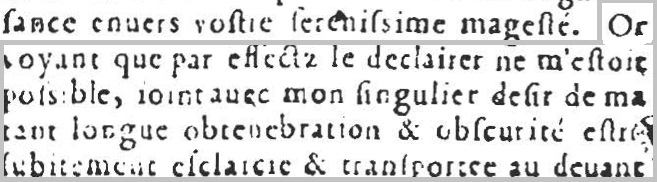
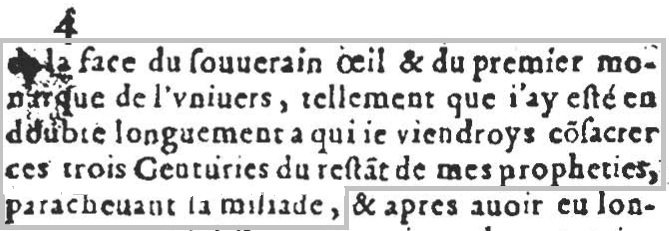
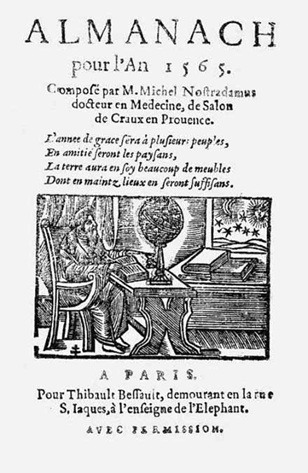
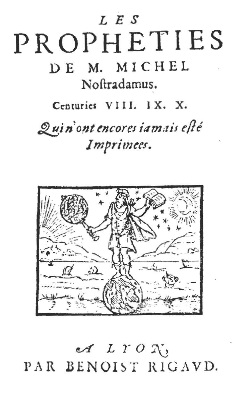
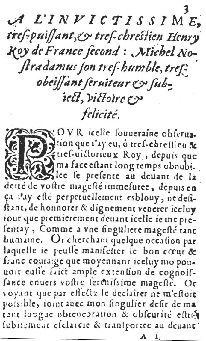

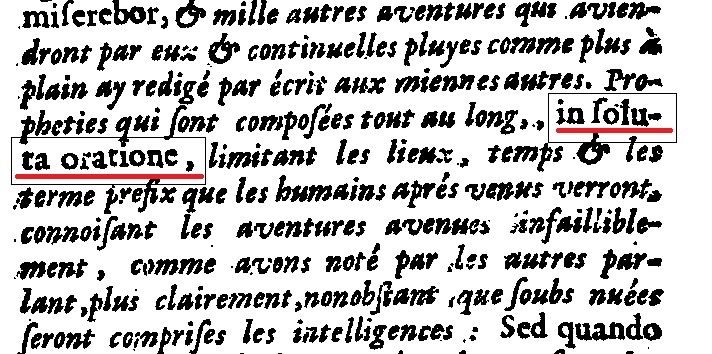



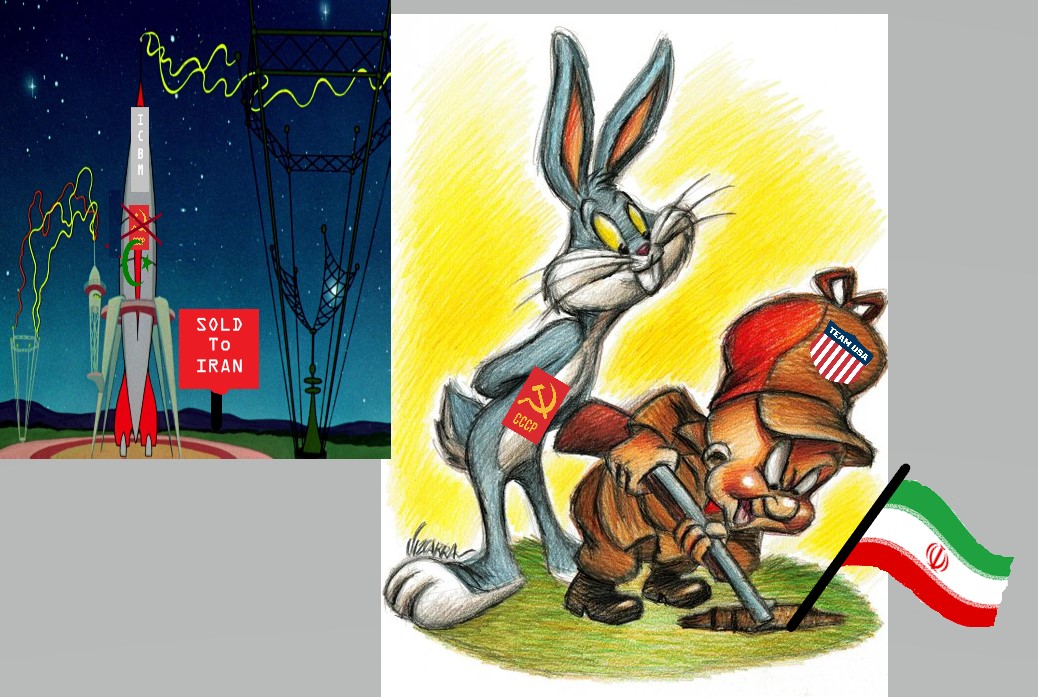
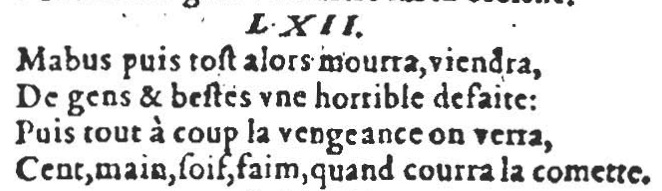
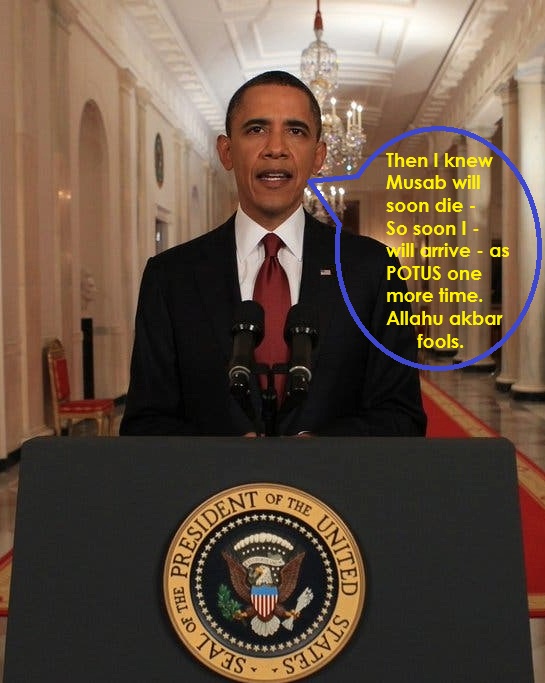
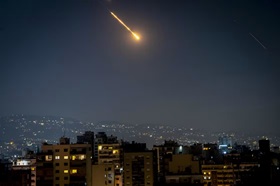
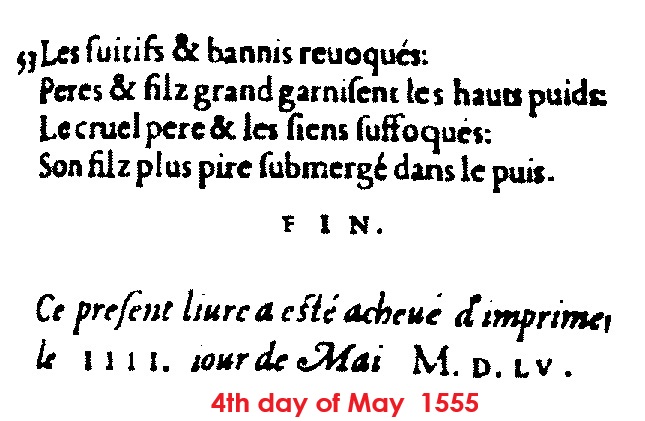
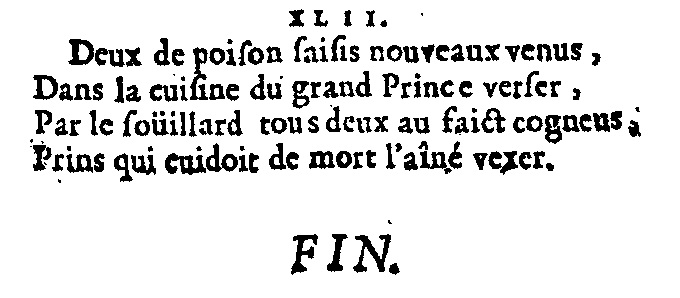
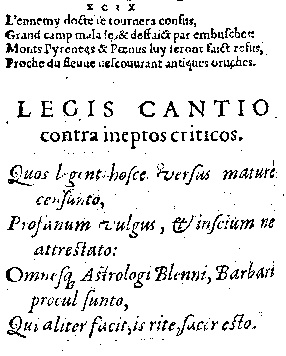
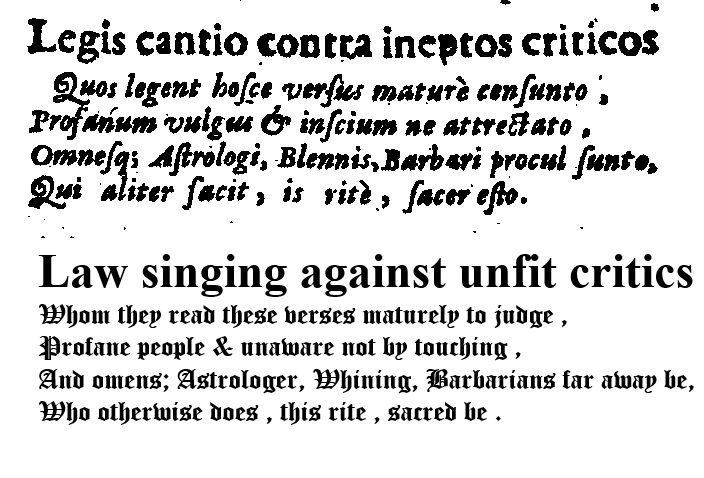
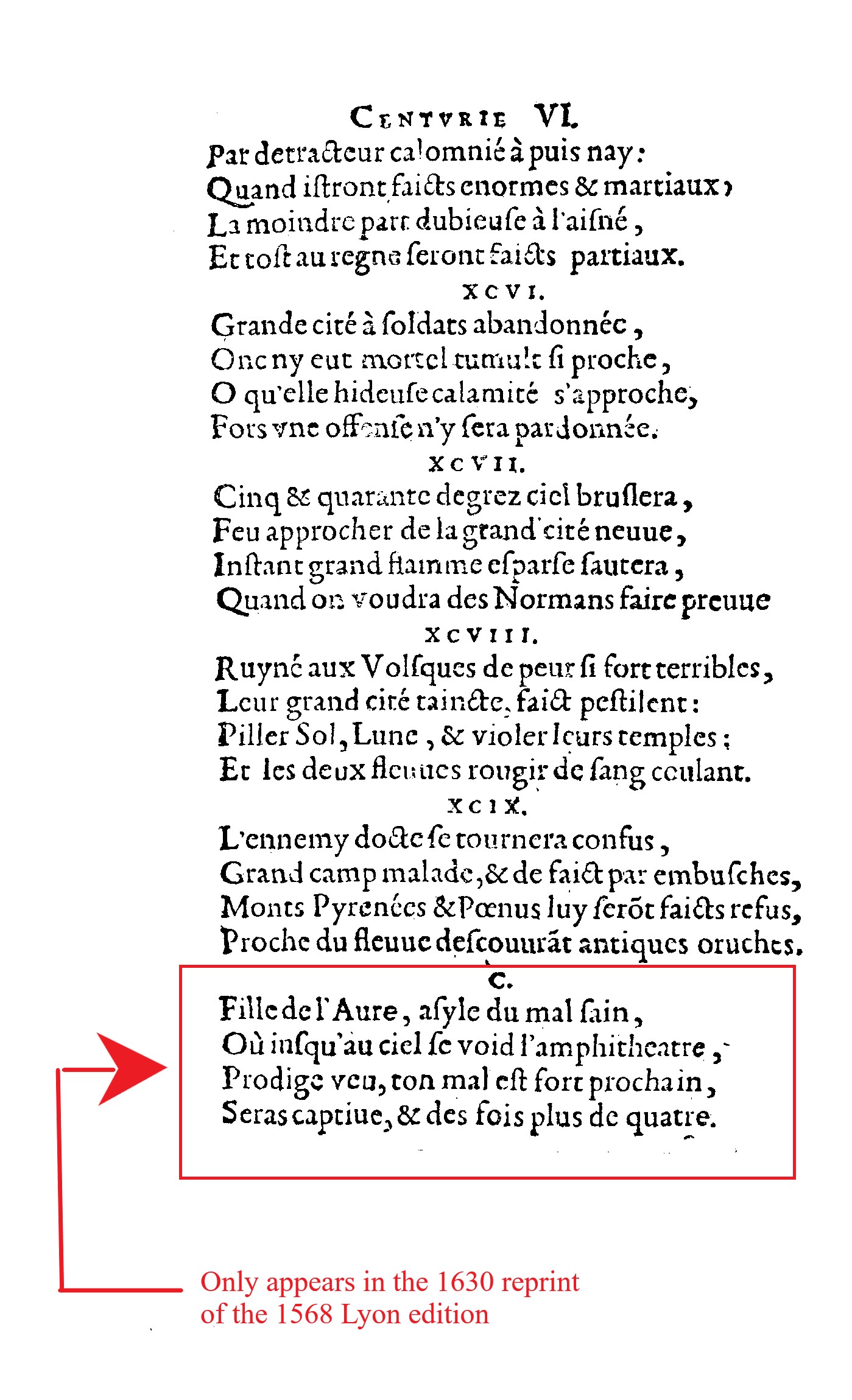
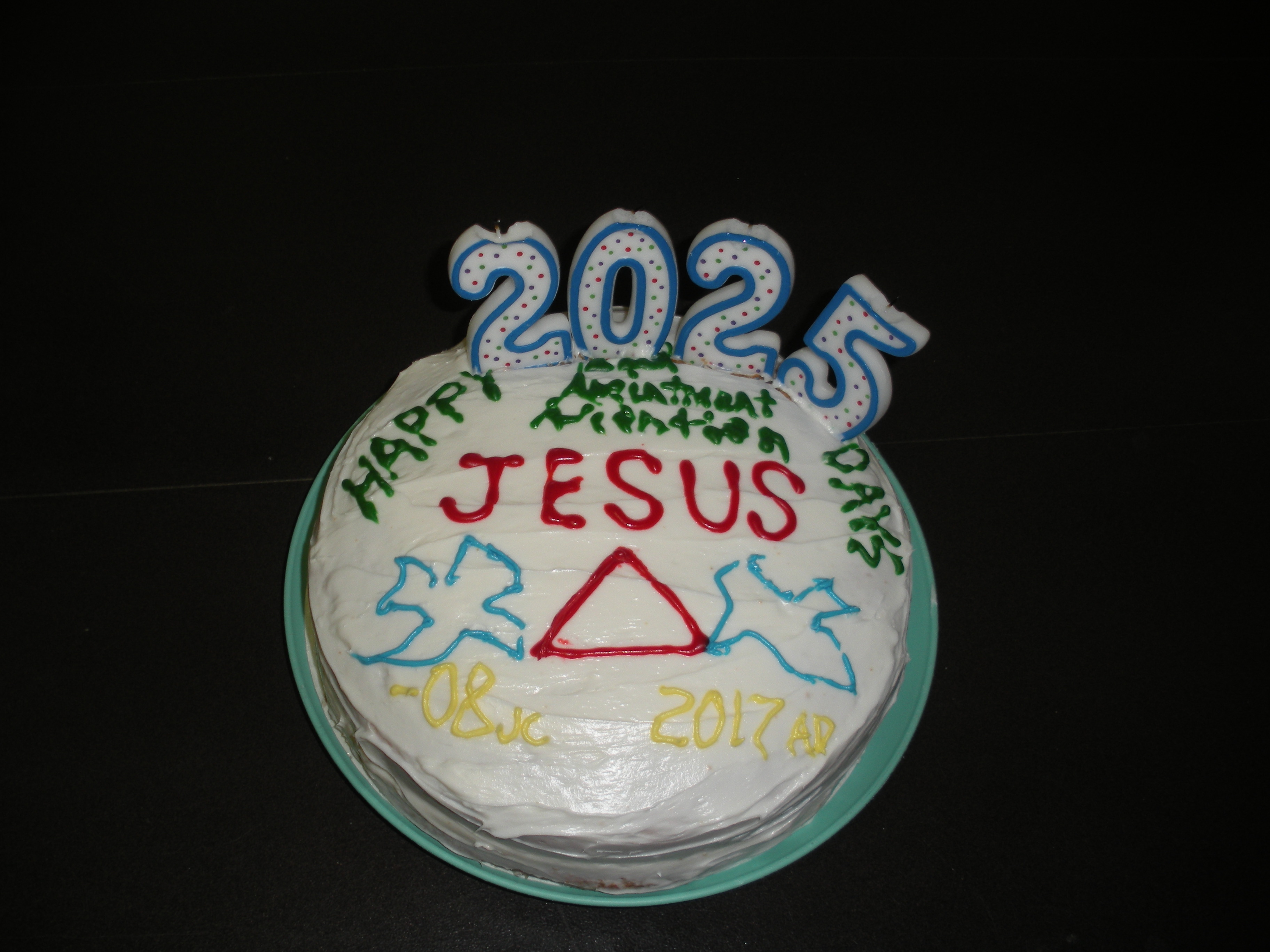


 Nostradamus Blog