
I see this quatrain as part III in the Israel Trilogy.
The following is an article I posted on a now defunct website – Pearls of Wisdom about Nostradamus – which was probably written around 2008 or 2009.
——————–
Hello again. A while back I promised to explain a trilogy of quatrains, all of which link to help understand the importance that the recreation of the State of Israel will play, in the story of the end of the world. In that regard, I have previously explained quatrain III-97 and VI-81. I hope everyone has had a chance to scout out what has been written about quatrain IX-34, because that is the topic of this writing. I had warned that VI-81 and IX-34 were “head-scratchers,” because neither appears (at first glance) to have anything to do with Israel. Now I will point out how to see that aspect.
Having done my own research into what the popular interpretations are about quatrain IX-34, I can safely say that some have made a big deal about it being an example of Nostradamus’ truly prophetic powers. The only problem with that summation is it is based on people seeing something absolutely not written as being what was written. Let me explain.
My personal copies of books about Nostradamus (the ones I have now, after Hurricane Katrina ruined the books I once had), primarily one written by John Hogue and another written by Erika Cheetham, both state that quatrain IX-34 is solidly about Louis XVI, and (generally) about some minor events that occurred during the French Revolution. However, a couple of glaring errors need to be addressed, which by themselves destroy their visions.
To begin this part of the discussion, it becomes necessary to provide a student with the evidence in question, which is the quatrain. Following will be presented the Old French, then the translation of an online version of quatrain IX-34 (in English). My translation will come after I have torn apart this French Revolution nonsense, because the 1948 version of Israel has absolutely nothing to do with Louis XVI.
The Old French states (according to the 1568 Lyon edition, the one perfect edition to go by):
Le part soluz mary sera mittré,
Retour conflict passera sur le thuille:
Par cinq cens un trahyr sera tiltré
Narbon & Saulce par coutaux avons dhuille.
Some random site I found on the Internet states this translates:
The single part afflicted will be mitered,
Return conflict to pass over the tile:
For five hundred one to betray will be titled
Narbonne and Salces we have oil for knives.
This translation makes it extremely difficult to stretch to fit the interpretation of Louis XVI, but then the site I found it on offers no interpretation. However, Ms. Cheetham and Mr. Hogue (and others) agree with a translation that looks like this:
The husband, solitary, afflicted, will be mitred,
The return, conflict will cross over the Tuileries:
By five hundred one betrayer will be ennobled,
Narbonne & Saulce, we will have oil for knives.
The most important part of the Louis advocate’s argument comes from transforming “thuille” into “Tuileries.” The place known as Tuileries is a palace that stood on the banks of the Seine River, until it was destroyed in 1871. Its construction and completion was ordered by Louis XIV, and it was the residence of Louis XIV, XV, and XVI, at one time or another. It was called the (in French) Palais des Tuileries, which means, “Palace of the Tile Kilns.” That name came due to the fact that kilns had existed on that site, which were used to make tile. As interesting as that history is to know, it has absolutely nothing to do with the spelled word written by Nostradamus, “thuille.” I will get into the true meaning of “thuille” a little later, but for now, one has to realize something quite obvious.
Such a leap, from “thuille” to “Tuileries” requires some logical explanation, such as, “This is a documented pet name by local French people, who speak a rare dialect.” No one has gone into any level of explanation as to how they deduced, or imagined “thuille” turned itself into “Tuileries.” For one (very important one) thing, lower case letters do not become capitalized letters, particularly if the spelling is changed. For another thing, while the possibility of an unknown word can find it necessary to be examined as an anagram in order to be solved, only the letters used by Nostradamus can be rearranged. There has to be evidence if missing letters are added, such as a dictionary instruction to, “see a differently spelled version.”
Nostradamus wrote “thuille,” and the meaning that comes from those letters, and only those letters, can tell what the meaning is. This is a rule that is plain and simple. This is a rule that works in this quatrain, for this word, and it is a rule that works for every quatrain, for every word. Certainly, there are some allowable exceptions (due to common abbreviations, differences in dialects yielding differences in spelling, et al), but all exceptions have rational explanations. There can be no rational explanation for the name Tuileries appearing from out of nowhere in quatrain IX-34, and that was the most specific detail that allowed one to see Louis XVI.
The other obvious flaw comes from the second capitalized word in line four, “Saulce.” This word actually appears as spelled in the 1611 dictionary, referring one to look up “Sauce.” The word’s meaning then is still how we all know “Sauce.” It is defined as, “A sauce, condiment, seasoning for meat.” Today, we pour “sauce” over spaghetti and many other foods that taste better was a “sauce.” However, because some have thought they saw Tuileries, when only “thuille” existed, some have begun to see the name of some Frenchman surnamed Saulce appearing.
In the history of Louis XVI, after he was caught trying to escape to safety, he spent the night at the house of a man named Saulce (a chandelier maker). Other than that night in a commoner’s home, the man named Saulce is unimportant. It only seems important when one sees an imaginary Tuileries.
Nostradamus only used specific names when he listed planets (Mars, Saturn, etc.), astrological signs (Aries, Leo, etc.), mythological figures (Selene, Bellerophon, etc.), important historical figures (Hannibal, Nero, etc.), historical places (France, Italy, etc.), historical peoples of Europe (Celts, Allobroges, etc.), and cities (Rome, London, etc.). Whether I missed a few proper names that are found in The Prophecies does not matter. All that needs be known is that every name Nostradamus did list was a name from the past, not the future. This means that Nostradamus did not name someone named Saulce. When one takes out the fantastic likelihood that “thuille” can turn into Tuileries, then it becomes easy to see how ridiculous it is to think Nostradamus would name some MINOR character, who played no important role at all in history (keep in mind, a capitalized word is ALWAYS stating importance).
Take away those two errors, and just like a math problem that requires the only correct answer be at the end, after having shown the work getting to that correct answer, the conclusion that Nostradamus wrote quatrain IX-34 about Louis XVI being captured at Varennes and placed under house arrest in the Palace of Tuileries is WRONG. Now, it is time to show how to read this quatrain. Get your notepads and pencils.
EVERY quatrain has a main theme, which is stated in the first line. Without knowing what the main theme is about, one cannot solve the quatrain. The main theme line of quatrain IX-34 is difficult to solve, but it can be realized through higher assistance (which I have been graced with, for your benefit). Still, the systems of Nostradamus show that each line inter-relates in a way that confirms themes, by adding details to those themes. This means one can start at which ever line seems the easiest to understand, and work backwards to the main theme. One can also start from the center and work out in either direction. In the case of this particular quatrain, it is best if I start opening your eyes from line one, and move in order to line four, so you can see how all this interrelationship plays out.
The main theme states (in French), “Le part soluz mary sera mittré,” where the word “mary” is to be read as “mari” (in Nostradamus’ Old French, a “y” = “i.” and often an “i” = “j.” They have to be seen as interchangeable.). What needs to also be realized is that Nostradamus frequently pluralized words that typically are not found with a plural ending. In many cases, the simple addition of an “s,” “z,” or “x” at the end of a verb became a way to turn that verb into a plural noun, as indicating the “ones” who acted in the way of the verb. As such, words with a plural ending need to be looked up with the pluralizing letter removed. This applies to the word, “soluz.” That word must be read as, “solu – z.”
Our aforementioned translators must have read this word as “solos,” since they translated it to make line one say, “The single part,” or “The husband, solitary.” There is nothing in the word “soluz” that says, “single.” The word “solu” is a noun that means, “loose, free, careless, of scope” (meaning, “loose of scope, etc.”). The addition of a “z” at the end makes this become “ones loose of scope, free of scope ones, or careless of scope ones.”
Next, one finds that there never was an accepted spelling of the word “mittré,” where there was an extra “t” in the middle. One finds that Nostradamus had a lot of words with an extra letter, like in the word “mittré,” where the extra letter slips out and attaches to the front of the word, as a contraction of two words. This means the word “mittré” has to be seen as a simple anagram (a simple word scramble, if you will), where it gets read as, “t–mitré.” This then becomes, “yourself mitered.”
With this read as the intention, one must then understand the meaning of “mitered,” which is detailed somewhat in the 1611 dictionary translation. There, Cotsgrave wrote, “hooded with a miter, wearing a miter.” In English, the word “miter” is then defined as, “The liturgical headdress, and part of the insignia of the Christian bishop. In the Western Church it is a tall, pointed hat.” Still, a second definition states, “a. A thong for binding the hair, worn by women in ancient Greece.” It then further states, “b. The ceremonial headdress worn by ancient Jewish high priests.” Hmmmmm, Jewish? Hmmmmmm.
But wait, there is more information found in the etymology, particularly when one looks up “mitre.” The Latin root, which stems from the Greek root, both being “mitra,” means, “turban.” Hmmmmm, like what the Turkish Sultan was known for wearing? Hmmmmmm.
Okay then, knowing that, the whole of line one now states, “The part free of scope ones husband will be wearing a turban,” where one has to read that very slowly, word-by word. Remember, it is imperative to understand the main theme statement to a quatrain correctly. The first word of a line is ALWAYS important, simply because it is always capitalized. This means that even a little old article, like “Le” is important. All by itself, this French article is not limited to stating only, “The.” Depending on the word it attaches to, it can be read as stating, “A,” or “An,” or even (since it a masculine article) “Him.” However, as important, whichever translation fits best, it makes the statement indicated that which is ONE of importance is about to be identified.
That importance of ONE of important significance is then transferred to the following word, like an introduction, “Ladies and gentlemen, here is THE (fill in the blank).” That next word then becomes an important “part,” which bears the same meanings in French or English, but can equate to, “share, portion, piece; joint, quarter; also, a party, side; also, a place, coast, or country.” In another usage altogether, Cotsgrave identified “part” as meaning, “birth, or bringing forth, as of children; the fruit of a woman’s womb; any brood, or litter.” This wide variety of choices means that this main theme operates on many levels of interpretation, such that it cannot be quickly “pencil-whipped.” However, because we have looked ahead to the next word, and found out it is a plural verb, where “ones” are involved (this implies human life forms, rather than inanimate objects), we can pick out a word that will best be an important “part” involving “loose of scope ones.”
Let’s try “The share,” where this becomes an important act of “Sharing,” which implies more than one, but where one of the “Sharing” parties, or sides, is free of scope, or careless of scope. That one party then becomes “The careless of scope ones.” If one had a clue this quatrain was in some way linked to the story of the recreation of the State of Israel (hint: a country), one could begin the main theme statement as, “The country free of scope ones.”
This then leads to the word “mari,” which only means, “husband.” When we look back to the second word, as “share,” one sees how the lead into “husband” is an indication of a marriage. Since Nostradamus was seeing this in 1555, we know it was not a marriage between two of the same, but between two of different persuasions. In this sense, “husband” does not have to mean a male individual, as much as it has to be seen (sorry ladies) as a word of dominance. In fact, when one looks up the definition of the word, “husband,” one finds one specific definition state, “Chiefly British: A manager or steward, as of a household.” Another definition states, “Archaic: A prudent, thrifty manager.” Further, looking into the etymology, as coming from the Norse word “husbondi,” that meaning was, “master of the house.” This means that we are being led to “A manager” in a relationship of “Sharing,” where “An important Share” of responsibility, like in a marriage, falls upon “ones free of scope,” perhaps even “loose of scope,” or “careless of scope.”
At this point, we see what “will be” of this relationship, at which point this turns out to “be wearing a turban.” The use of the future tense of the verb “estre” (now “etre,” meaning “to be”) means that the “husband” had not previously worn such headwear, but “will be” found “wearing a turban” after becoming a “husband,” or “manager.” On the other hand, it also means that at the time of the marriage, when one is declared wedded in “partnership,” the “free of scope ones will be wearing a Christian bishop’s tall hat.”
Take a moment to see how that same set of words says two things at the same time. That is called “amphibological,” which means (from the Greek root), “to throw on either side.” Nostradamus explained in his Letter to Henry II that his words must be read in this manner. That is why syntax has to be tossed out the window. Nothing only means one thing. There is ALWAYS an alternate view, where all views make sense.
Now, with me whispering softly, “This quatrain is in the story told by linking quatrains, about the recreations of the State of Israel,” allow yourself have an eye-opening moment. See that the main theme is talking about the British, in 1918-1920, being announced as the new manager of Palestine (and after a split of Palestine, Transjordan), as well as Mesopotamia, by the brand new League of Nations. Those lands had previously had to share rule with the Ottoman Empire, who acted the role of “husband,” or “manager,” or “steward.” But due to that Mandate as Protectorate, “A portion” of the Middle East was given to the British to manage as they felt best (“free of scope”), for the ultimate good of those countries. In addition, the French would also get “A share,” as they would be the Mandated Protectorate over Syria (and after a later split, Lebanon). That is the meaning of the main theme in this quatrain.
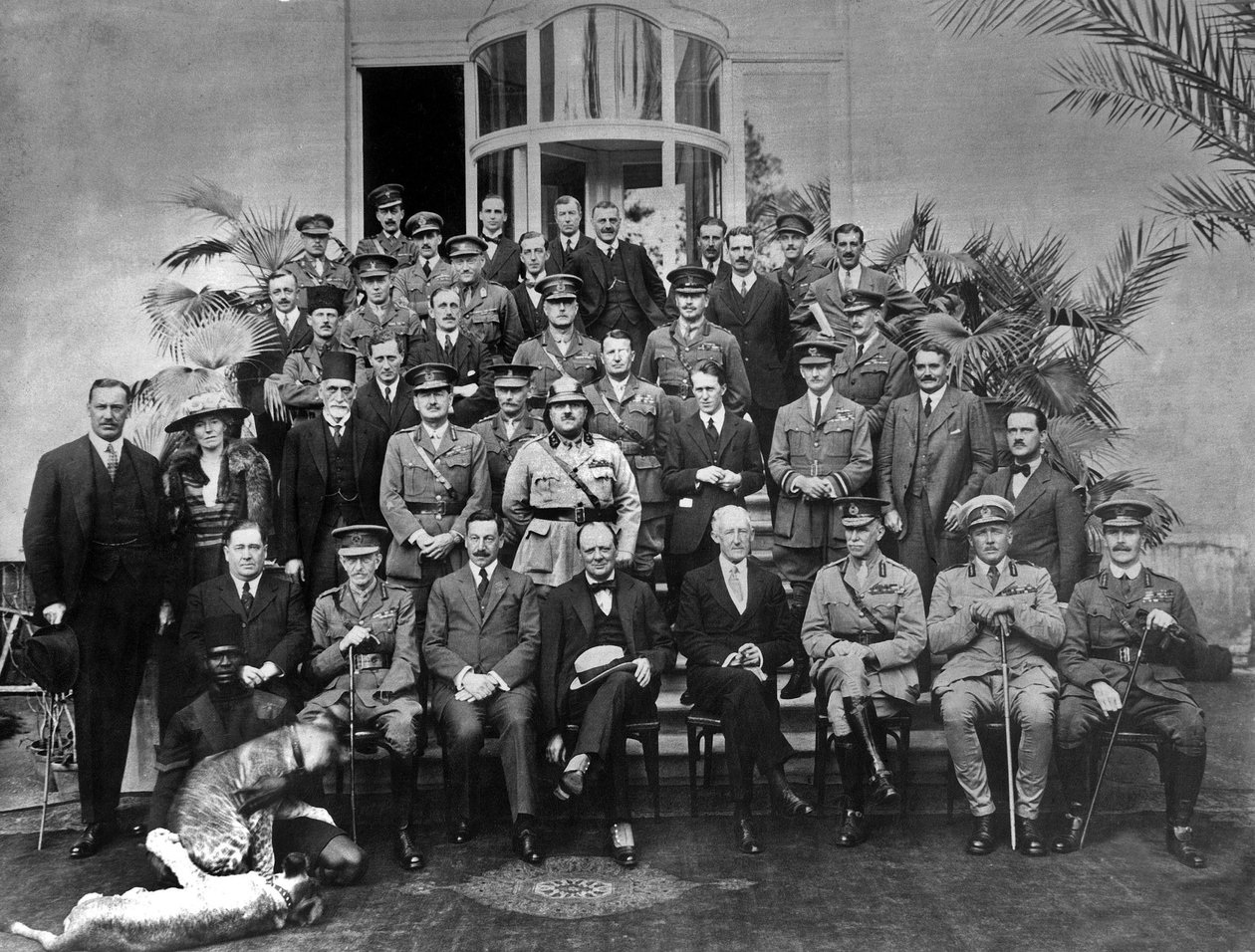
The Cairo Conference of 1921. Those guys had big plans for their new acquisitions in the Middle East. And, this was before oil was discovered and militaries depended on petrol.
Having that eye-opening experience in mind, it becomes time to look at line two. Line two of EVERY quatrain is where the secondary theme is found. A secondary theme is a theme that is related to the primary theme, but still free to take another slant on things, or to come from another perspective, relative to one overall historic event. The secondary theme of quatrain IX-34 states (in Old French), “Retour conflict passera sur le thuille,” where that word “thuille” is known to not mean, “Tuileries.”
If one recalls, back in line one there was that word “mittré,” where one of the “t’s” was removed, and placed at the front of the word “mitré,” as a common French contraction. To understand the word “thuille,” one has to see the “t” at the beginning as being another contraction. This means what one is seeing is really “t’huille,” which states, “you oil,” or “yourself oil.” To get an idea how this sort of contracted word is being present, without the presence of an apostrophe, and to make it all seem official, look at the last word of this quatrain. You will find that Nostradamus had the printer display “dhuile.” There is no word spelled “dhuile,” but that series of letters makes perfect sense as, “d’huile.” It is a standard practice in translating The Prophecies, and it falls under the guideline, “Lacking marks and punctuation can be freely added as needed, while no written marks or punctuation can be deleted.”
Now, if one is very attentive, one might have spotted how the rhyming word at the end of line two is very similar to the rhyming word in line four. Line two ends “t’huille,” and line four ends “d’huile.” The main word appears to be the same, which means they could also mean the same thing. In fact, “huille” meant “oil” in 1611, but while defining the word as such, Cotsgrave referred one to also look up “huile.” The “one-elled” version is defined as both “huile” and “huilé.” The “double-elled” version can also be accented, as “huillé.” All words are related to “oil,” but there are some subtle differences that justified the need for the same word being with one “l” and with two “l’s.” For now, just toss the word “oil” in the back of your mind, along with the whispers about this quatrain being about the Middle East.
When we go back now and look at line two as one statement, we can see it saying, “Return conflict will pass above them yourself oiled” (using the accented “t’huillé”). As some kind of syntactical “sentence,” it is easy to grasp how one has moved from the main theme statement, and the surrender of the World War I Axis, to a secondary theme focusing on World War II. From one war to another is a major (capitalization) “Return” to “conflict.” This can even be further supported by the words, “will pass above it,” where our little article friend, “le” can be read as the stand-alone word “it.” That recognizes the increased amount of aerial combat, including bombing raids, which was part of that “Return conflict.” In this sense, the main theme is one time period (the beginning of the marriage between England and France with the Middle East), while line two is stating a later timeframe, when that marriage would be soon ended. Still, the main theme is intact, about “The share” of rule there.
This is where one has to refocus the eyeballs, and look at line two from a different angle. This angle is relevant to the whispers about Israel being part of the mix, as a result, when there was no Israel during World War II. This means one has to go back to the capitalized first word, “Return,” and see it with a higher level of meaning. Upon further inspection, one can even realize that the French word “Retour” can also mean, “Returning” or “Coming back.” This is the word that links line two directly to line one. This is where “mitre,” when read as the “ceremonial headdress worn by ancient Jewish high priests,” has additional meaning.
This is where the element of Zionism comes into play. The “Jewish high priests” were only found at the Temple in Jerusalem. The city Jerusalem is called Zion in Hebrew. The Zionist movement began as a group of Jews desiring to “Return” Jews to Jerusalem, with that city being the focal point of a new Jewish homeland. Therefore, the first word of line two is showing an important movement towards that “Return” being realized, in the period between the two wars.
Before line one, there were very few Jews in Palestine, much less in Jerusalem. By the beginning of line two, Jews, under the “free scope ones,” or the “careless scope ones” British (for almost 20 years) there were many Jews in Palestine. At this point, one can take the words “conflict passera sur le” and turn out a translation that states, “battle will suffer before it.” This would be the suffering that the Jews of Europe faced, as part of Hitler’s Holocaust. The world would be made aware of this tragedy, before the new United Nations would recognize Israel as a new land (quatrain III-97).
This then returns focus to the last word, where “oil” became as valuable as gold. All of Europe would suffer at the hand of Hitler, largely due to his tank corps and his Luftwaffe air corps. All of these machines ran on fuel extracted from “oil.” The fact that “oil” was not discovered in Saudi Arabia until 1938, at the beginning of Hitler’s hostile expansions, is significant. Germany had become allied with most Middle Eastern nations, in part, if not largely because of similar anti-Semitic views. Since Hitler had no large deposits of “oil” in Germany, he needed to get that raw material from an ally which did have “oil.” While the Arabs owned the oil fields, it was British Petroleum that was processing it and selling it at a profit. In that regard, the Germans were buying Arab “oil” from the British, for use in German tanks and planes, which in turn were sent to do battle against the British. It meant, “battle will hold on course toward it,” allowing more civilians to suffer from Hitler’s plan to purify the racial genes of Europe.
From that level of atrocity that occurred during World War II, and due to the new important role that “oil” would play in the world’s power games, two birds could be struck with one stone. The British could allow the Zionists to create the homeland they desired, and that new homeland could secure British interests in the oil fields of the Middle East. As such, after the “Return conflict will pass” the British, their allied victors (mainly the USA) would place “on it” (both the Jews and the Palestinians) their good wishes. In that regard, “you (British) anointed with oil” the new owners of Middle Eastern property, while “yourself oiled” as the sole controllers of Saudi, Kuwaiti, and Iraqi oil fields, as well as having “yourself anointed with oil” the Shah of Iran (the daddy of the last Shah of Iran).
All of that anointing with oil is relative to who had their own freedom in the Middle East, following World War II. The story of Lawrence of Arabia took place in World War I, and largely took place in Mesopotamia, rather than what we know as Saudi Arabia today. Mesopotamia was where the Germans, who were allied with the Ottomans, had a strong presence. Along the Persian Gulf, small “sheikdoms,” like Kuwait, Qatar, and Bahrain, as well as the large Arabian Peninsula, were technically under Ottoman domination, but without a real presence. This was the land dominated by what would become the crown princes of Saudi Arabia, and a few others Bedouin-led tribal territories. It was these sheikdoms that assisted Lieutenant Colonel T. E. Lawrence in his “terrorist activities” against the building of a German financed and constructed railroad, which went through Kuwait, Mesopotamia, and Arabia. Due to the support of these fiefdoms during the “Arab Revolution,” who aided Lawrence against the Germans and Ottomans, the promised reward would be their freedom, as independent nations. Great Britain had promised them that they would help them in that endeavor.
When “oil” was discovered in Kuwait, Saudi Arabia, Iran, Iraq, and all others in the late 1930s, the British were glad they held dominion over the progress of those small nations towards independence. While the British were not officially mandated as Protectorates in some places, that did not keep them from exercising strong influence, even control over many Middle Eastern nations. Eventually, as reward for their dedication to British wealth, one-by-one all were eventually given status as independent countries. Kuwait, for instance, was officially allowed to run itself in 1961, almost 45 years after World War I.
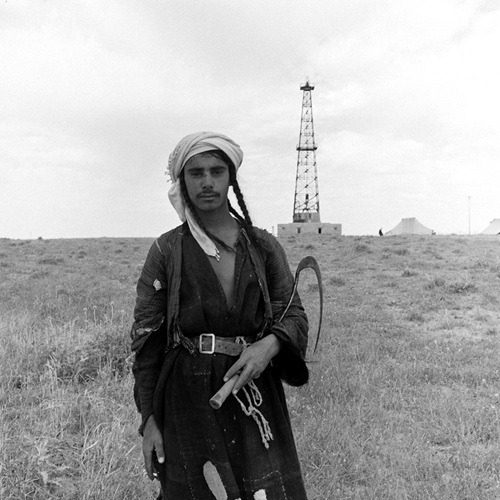
That history leads us to line three. On the whole, line three states (in Old French), “Parcinq cens un trahy sera tiltré.” That appears to state, “For five hundred one betrayed will be entitled,” but it does not. Numbers in The Prophecies are designed to throw people off. This is especially found when a string of numbers appears together. The immediate tendency is to get all excited and start thinking it means a multiple digit number, like “five hundred one” usually converts in our brains to be “501.” Unfortunately, EVERY word must be understood separately, so “five” has to be understood before anything else.
If you were keeping count during the history lesson, one might have noticed that I named “five” countries that were given over to the British and French to “manage,” by the League of Nations. Those “five” were Syria and Lebanon (to the French), with Palestine, Mesopotamia, and Transjordan (to the British). Take my word for it; you will need to remember those names and that number.
The word that follows “five,” “cens,” does not translate to state “a hundred,” even though it does, some places, at some times. The spelling, “cens,” is shortened by one “t,” where the word for “hundreds” is actually “cents.” That does not work with The Prophecies. While there is a rule making it okay to add a mark or punctuation, when such marks are absent, no such rule applies to letters. That means one must find if a word spelled “cens” actually exists first, in French or Latin, before we can go imagining letters that are not there.
Low and behold, there is an Old French word perfectly spelled as “cens.” That word translates to mean, “rent of assist, quick rent, old rent, or chief rent.” That means one has to understand what a “rent of assist” is. About this history, Randle Cotsgrave wrote, “The first pecuniary charges laid on conquered or unrented land, as a sign or acknowledgment of the direct [Sovereignty of lordship] of him that grants it [the rent of assist].” He then continued, “This charge had its origin from the first conquest of Gallia [ancient France] by the French. [From them] whose princes [gave] whole territories unto their captains, who made a division thereof unto their soldiers, and the natural inhabitants of the country. [This was done] on condition that those should assist, and attend them [the lands] in the wars (which condition, being a trust, they be a Fief). [Additionally stipulated was] that these should till their land, and pay unto them for it such yearly rents, or tributes, as they had formerly yielded to the Romans. Thus, this charge was imposed at first as a resemblance of former servitude. It continues to this day [1611] as a mark of a base, or servile, tenure.”
Let me sum that up for everyone, as a comparison to what happened at the end of World War I. The British and French were conquerors of the Ottoman Empire, which held the five territories I mentioned previously. The League of Nations acted like the Seignory, or the all-powerful Sovereignty, who doled out conquered lands. Its captains were France and Great Britain, who then allowed the poor folks of those five countries to stay where they were, but with the condition that they all had to pay their “Protectorates,” until such time that the Protectorates decided to give the people a cut of the conquered land.
Now, in line three we have to recognize that a directional preposition is capitalized, “Par.” That word either means, “By reason of, By, Through, For, Of, or On,” while having the right to mean all of those things, one at a time. That directional preposition is linking back to line two, which ended with a colon. That means line three is a clarification of the newfound importance of the Middle East, due to the discovery and need for “oil.” This makes the translation “By reason of” be an excellent place to begin, because a clarification requires a reason; and it would be good to have a reason that relates to the main theme of foreign governments managing while wearing “turbans.”
Because of the great importance of “oil,” the British had good reason to be in the region of the world’s greatest “oil” deposits. They were entrenched there “By reason of” three of the “five” nations given to them as conqueror spoils (“cens,” or “rent assist ones”). The French were also in a good position, “By reason of” two of those “five.” All of the “five” were “tenants” of the Almighty League of Nations, suddenly no longer in existence, although it was reforming to become the Almighty United Nations. Those were the new masters who owed the very air the “five” breathed, as they slaved for their captains of industry (British Petroleum, etc.). This means those “five” were “rent of assist nations,” under ancient ways of doing things, as far as the spoils of war are concerned.
This is where we come to the last of those three “numbers,” which is “one.” That one word can only be a number, representing a single entity, thus “one.” Since this number follows the prior “five,” it is “one” of those “five cens.” It is also one of those two captains (France and Great Britain), who governed over the “five.” Of who decided those two, it was the “one” entity (the U.N.) which ruled to determine the ruling who would rule over each of the “five:” Palestine, Syria, Lebanon, Transjordan, and Mesopotamia. Still, at this point, it could be any “one” of the “five.”
One begins to whittle down those “five” to the right “one” with the next word. That word is “betrayed,” or the other possibility of translation, the “one treacherously dealt with.” In the history of this “rent of assist” set up, the League of Nations had given “free reign” to the British and French, to rule with the expressed goal being eventual independence. All the “five” had to do was keep the land picked up nicely, while the British and French were out going to wars. When World War II was over, those nations had done their part, even though the Nazis were trying to recruit them to fight the British and French. However, when all was said and done, “one” would not see the bargain fulfilled by one of the captains, because that “one” would instead be “betrayed,” and “treacherously dealt with.”
That betrayal is then explained by what “will be” (from “sera”), which then says the word that means, “titled, entitled, and/or given the deed, or title to land” (from “tiltré”). In other words, “one would be treacherously dealt with,” in regard to being given ownership of its own land. The “one” betraying was Great Britain, and the “one treacherously dealt with” was Palestine. That is a clarification of how much of a role “oil” played in that decision, as the reason the Brits would cheat a nation out of what was rightfully theirs to begin with (a Palestinian deed to Palestine), for the sake of being close to (and thus able to better control of) lands containing “oil.”
Line four begins with what appears to be two proper names; but just like thinking three numbers equates to one big number was wrong, Nostradamus warned in his preface about thinking names of places always mean names of places. That is what the first word appears to be, because there is a city in France named Narbonne, which the Romans called Narbo Martius, and some of the regional dialects call Narbona. The problem is the word written is “Narbon,” which is not any of the above. That actually is a good thing, because Narbonne, France has nothing to do with the British cheating Palestine.
In the letter of preface that Nostradamus wrote for understanding The Prophecies, he stated, “limitant la particularité des lieux,” which says, “limiting the particularity of the places.” By definition (of “particularity”), this is saying that the quatrains are particular, or following “great attentiveness to detail,” but the “places” have had this “particularity limited.” That means only so many “places” are actually named by Nostradamus, such that they are meant to be recognized immediately. When some “word” comes up that looks like it is identifying a “place,” like “Narbon,” Nostradamus instructed the reader not to jump to any conclusions that the “place” Narbonne is the meaning intended. The “particularity” comes from realizing that what is spelled in a quatrain (the 1568 Lyon edition only) is what was meant to be spelled. There are no misspelled names of cities, because of the “particularity of the places.”
This means that “Narbon” is some form of manufactured word, like an anagram (letters scrambled), or a word that includes contractions and roots of words. In the case of “Narbon,” it can be seen as being “N’arb-on,” which would express, “Not (Ne) one (-on) of business affairs (arb.).” The word “arb” is an accepted informal word for “arbitrageur,” which (as far as Old French was concerned) is one who argues before a judge (an arbiter), over a matter in arbitration (a process where disputing parties present their arguments). This makes perfect sense in the theme of this quatrain.
Certainly, the Palestinians did not go down without a fight over the legalities of the theft of their land, due to the rent of assist promises made previously, by the then defunct League of Nations. There was subversion at play among the judges hearing their legal complaints, partly because the United Nations – League of Nations ventures into the Middle East were designed to steal Palestine and make it appear on the up and up. Making matters worse, the Arabs of Palestine were not skilled in the matters of legal business. At least, the Palestinians were not as skilled as the slick tongued British.
The history of the debate, and how that played out in the new United Nations, is recorded in the last step involving the U.N. Palestine Commission. The commission was established to ram through a Partition Plan for Palestine, which included two separate nations, Palestine and Israel. It convened in early January 1948, with a preset deadline of October the same year. The Palestinian delegation adjourned on May 17, 1948, “sine die,” which means, “without a next date scheduled.” The discussions were not going in the direction the Palestinians wanted, so their next step was war, followed by flight as refugees. Certainly, the Palestine representatives were importantly “Not one of business affairs.”
This then leads to an ampersand, which is a mark that identifies what to follow is important. What follows that is the capitalized word “Saulce,” which has nothing to do with some Frenchman of the 18th century. Here we have a simple anagram, even though it too can be spread apart like “Narbon” was, to find the true meaning. In my mind, the anagram works best, such that ending “ce” (French for “this, that”) goes to the front. Walla, presto, chango and one sees, ce Saul, or “this Saul.” Nostradamus used a name from Israel’s past.
If one knows even a little biblical history, it becomes easy to see the IMPORTANCE of this name. “Saul” was the first king of the Israelites. Following the failure of the Palestinian delegation to cease the Partition Plan in the U.N., Israel would have a leader take control on the battlefields of Palestine. That would be David Ben-Gurion, who would then become Israel’s first Prime Minister. He would become this new version of “Saul,” who was chosen by the children of Israel because of his warrior abilities, rather than his connection to God.
At this point we encounter the second presentation of the directional preposition, “par.” As a rule, multiple uses of the same word in a quatrain calls for multiple translation uses, if the word has that capability. In the case of “par,” it has several (as mentioned previously), but the one that I like here is “for.” This works well with “this Saul,” as Ben-Gurion was “for” the new Israel, thus being representative of the impact Israel would have on those “for” their survival, as well as on those “for” their removal. This then connects well to the following word, as well, which translates as, “expensive” (from “coutaux”).
If one is observant, one realizes that the original translations all said something about “knives.” That is because the word “couteaux” means “knives.” Unfortunately, Nostradamus did not write an extra “e” in “coutaux,” so it is either translated as “cout-aux” (cost-to them), or an allowable variation (based on very similar spelling, with the same meaning) “couteux” (expensive, costly). Both “cout-aux” and “couteux” refer to the same condition of “cost.” This means that “for” Israel to remain, or be overthrown, it would be “expensive.” The cost would certainly mean monies to finance wars, but more importantly the cost to them who would die trying to forcibly remove unwanted people, or forcibly try to protect against unwanted people.
The next word, “avons,” is perhaps best translated to state, “hold,” or even “obtain.” The use of “hold” is perfectly representative of the length of time this conflict has raged, non-stop (on one level or another). Both sides have held their stance on this matter. Where “obtain” comes into play is how one gets the money to “hold” an “expensive” grudge. The answer is to “obtain” arms from those willing to give you money. The Israelis have their sugar daddy in the United States (I heard $300-million annually for arms), while the Palestinians have some wealthy neighbors to their southeast, who are Arab and doing fairly well for themselves. As long as this financial support is maintained, the fighting will never cease.
Of course, a smart person would ask, “Why would nations keep giving so much money so Palestinians and Jews can forever try to kill one another?” The answer comes from the last word, “dhuile.” It is the same “huile” we saw earlier. Nostradamus explained why Israel was needed to be in position in the long run, after all is said and done. The reason is “from oil” having been discovered and pumped out of the ground, making military vehicles roll, and airplanes fly, and big companies in big nations wealthy. Of course, along the way the Arabs nationalized their “oil” fields, meaning they got rich selling it to those big “oil” companies and big nations. So, in essence, the USA is paying Israel to kill Palestinians, while (indirectly) also paying the Palestinians to kill Jews. If only there was no “oil.”
One last thing, before I leave you to your thoughts. Here is what David Ben-Gurion said about the “Arab problem” in 1956.
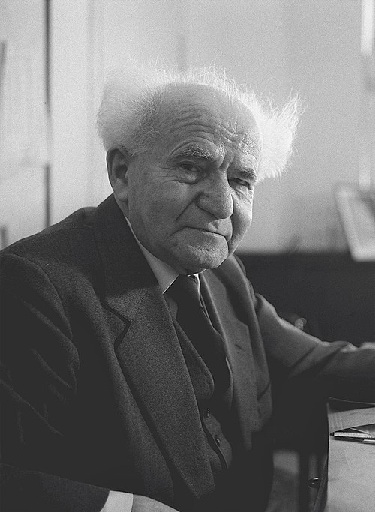
“Why should the Arabs make peace? If I was an Arab leader I would never make terms with Israel. That is natural: we have taken their country … There has been anti-Semitism, the Nazis, Hitler, Auschwitz, but was that their fault? They only see one thing: we have come here and stolen their country. Why should they accept that? They may perhaps forget in one or two generations’ time, but for the moment there is no chance. So it is simple: we have to stay strong and maintain a powerful army.” (from Wikipedia article, “David Ben-Gurion,” with their cited source, “Nahum Goldman, ‘The Jewish Paradox’, translated by Steve Cox, 1978, ISBN 0-448-15166-9, p. 98, p. 100, p. 99 )
With all of this known, quatrain IX-34 can be read so as to give a much better idea of what it is about, when the translation is as follows. Please keep in mind that the depth of each word’s meanings makes it impossible to write one translation of a quatrain that expresses the totality of the quatrain’s meaning. Understanding requires thinking with feeling.
It country careless scope ones manager of a household will be wearing a turban,
Returning battle will transport south them you anointed with oil:
For five rent of assist one will be betrayed will be entitled
Not one of business & this first King of Israel through cost to them possess from oil.


 Nostradamus Blog